
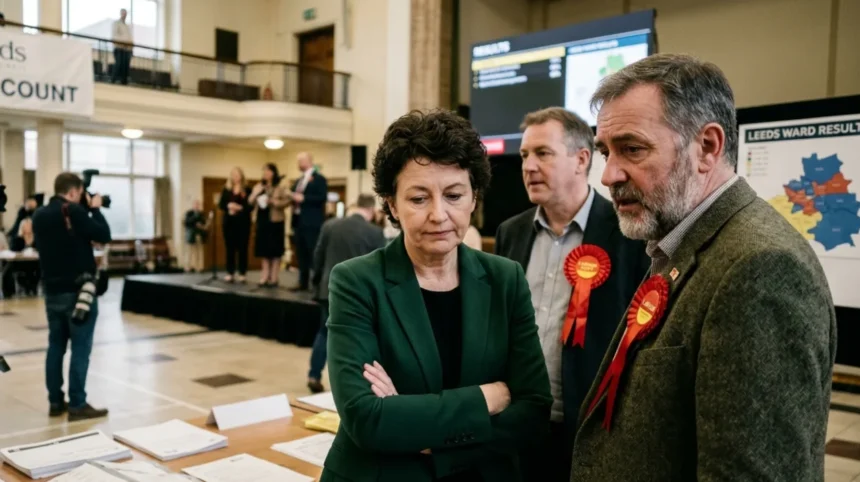
Local elections select councillors to Leeds City Council, which governs services like housing, roads, and waste in Leeds wards. Leeds holds elections annually for one-third of 99 seats across 33 wards every four years, with one fallow year, ensuring continuous representation.
- How Do Local Elections Work in Leeds?
- What Is the Election Cycle?
- Who Can Vote in Leeds Local Elections?
- How Do You Register and Vote?
- What Is the Role of Councillors?
- How Many Wards and Seats in Leeds?
- When Are the Next Local Elections in Leeds?
- Who Can Run as a Candidate?
- What Were Past Results in Leeds Elections?
- How Do Local Elections Impact Daily Life?
- What Is the History of Leeds Local Elections?
- Why Do Turnout Rates Vary in Local Elections?
- Can Local Elections Change Council Control?
- What Services Does Leeds City Council Control?
- How to Get Involved Beyond Voting?
Local elections form the base of UK local government. Leeds City Council, established in 1974 as a metropolitan borough council, manages city services for 800,000 residents. Councillors decide budgets, planning, and social care. The system uses “elections by thirds,” where each of 33 wards elects one of three councillors yearly.
This structure prevents full council turnover. Voters in each ward choose one candidate per election. The council leader, elected by councillors post-election, heads the executive board. Labour held control from 2011 to 2026, when it lost majority after May 7 elections.
How Do Local Elections Work in Leeds?
Leeds City Council elections occur yearly on the first Thursday in May, electing one councillor per 33 wards from multiple candidates. Voters rank one choice; first-past-the-post determines winners. Results declare next day, influencing council control.
The process starts with candidate nominations. Parties or independents submit papers 19 working days before poll, including consent and home address forms. The returning officer publishes candidate lists on April 9 for 2026 elections. Polling stations open 7am-10pm on election day.
Counting begins post-polls, with results from May 8. In 2026, 33 seats contested across wards like Killingbeck and Seacroft. Voter turnout averaged 30-40% historically; Leeds South saw 42% in recent polls. Successful candidates serve four years.
Implications include council composition shifts. Labour dropped to 48 seats in 2026, ending majority control. No-overall-control triggers negotiations for leadership.
What Is the Election Cycle?
Leeds elects one-third of councillors yearly over four years, skips one fallow year. Cycle repeats, with all 99 seats up over time via staggered terms.
This “by thirds” system started post-2004 boundaries. Each ward’s three councillors rotate out yearly. 2026 followed 2023, 2022, 2021 elections. Fallow year allows focus on governance.
Who Can Vote in Leeds Local Elections?
UK, Irish, EU, or Commonwealth citizens aged 18+ by poll day, resident in Leeds ward for 12 months, registered by April 20 qualify. No photo ID needed yet; check poll card.
Eligibility requires residency proof. Register online via gov.uk or council by midnight April 20, 2026. Poll cards post from March 27, list polling stations. Over 500,000 eligible in Leeds.
Changes post-2023 mandate Voter Authority Certificates in some areas, but Leeds uses standard ID checks. Students or service voters register specially.
How Do You Register and Vote?
Register at gov.uk by April 20; apply for postal vote by April 21, proxy by April 28. Vote in-person 7am-10pm May 7 at assigned station, post, or proxy.
Registration takes minutes online. Postal packs deliver from April 21; return by 10pm poll day. Proxy voters appoint helpers. In-person marks one X beside choice on ballot. Spoiled papers reissue at stations.
Over 100,000 postal votes issued yearly. Turnout rises with postal access. First-time voters bring ID if required.
What Is the Role of Councillors?
Councillors represent wards, scrutinize budgets, approve plans, and decide services like schools, parks, bins. They serve four-year terms, meet monthly full council.
Leeds councillors handle £1 billion+ budget. They form executive for daily decisions, overview scrutiny boards. Paid allowance £15,000+ yearly. Register interests to avoid conflicts.
Examples: Garforth ward councillor fixes potholes, approves developments. They lobby for funding, like £43m government boost in 2025.
How Many Wards and Seats in Leeds?
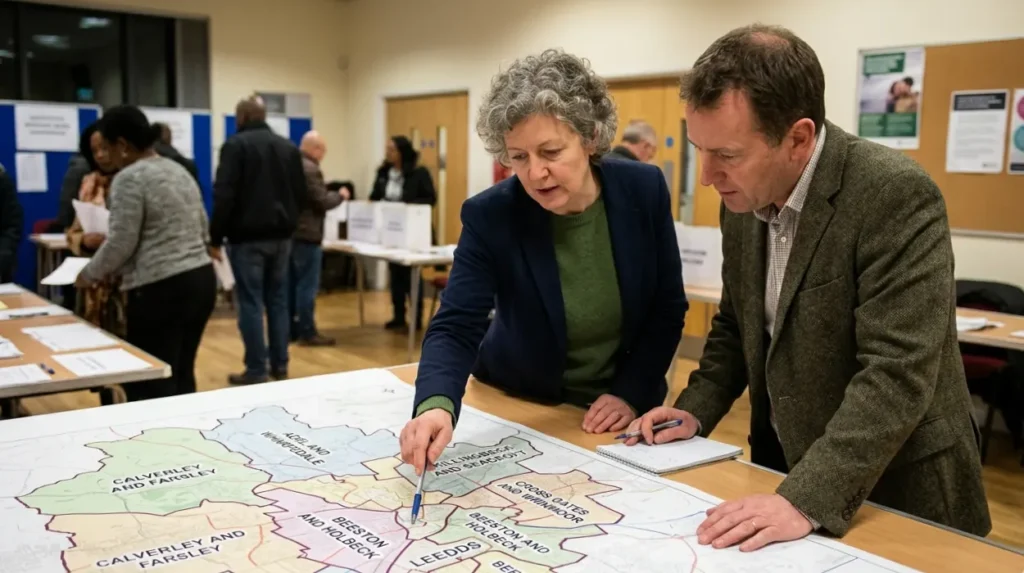
Leeds divides into 33 wards, each with 3 councillors, totaling 99 seats. One seat per ward contests yearly.
Wards defined post-2004: Adel and Wharfedale, Beeston and Holbeck, Calverley and Farsley. Examples include Killingbeck and Seacroft (Reform UK win 2026), Cross Gates and Whinmoor. Each covers 20,000-30,000 residents.
Boundaries set by legislation, reviewed decennially. 2017 changes abolished old wards.
When Are the Next Local Elections in Leeds?
Next Leeds elections Thursday May 6, 2027, for one-third seats. Cycle continues annually bar fallow.
Post-2026, 2027 elects next third. Key dates mirror 2026: register March, poll cards April. Watch leeds.gov.uk/elections. Fallow follows 2029.
Who Can Run as a Candidate?
UK/Commonwealth citizens 18+ by nomination, Leeds resident or ward business owner/worker qualify. Submit nomination, 10 proposer-seconder signatures, deposit £100? by April 9.
Parties select nominees; independents gather support. Home address private. RO checks validity. 2026 saw Labour, Conservative, Lib Dem, Green, Reform, independents.
Examples: Reform UK’s Chohan won 4,334 votes in Killingbeck 2026.
What Were Past Results in Leeds Elections?
Labour dominated 1980-2026; 2026 saw loss of control to 48 seats. Conservatives, Lib Dems, Greens hold minorities.
1973: No overall control. 1976-1979: Conservative. 1980 boundaries: Labour 62 seats. 2004 full election post-changes. 2026: Reform gained Killingbeck (4,334 votes). Turnout ~35%.
Historical shifts reflect national trends. Labour held 2011-present till 2026.
How Do Local Elections Impact Daily Life?
Elections set council tax (4.99% rise proposed 2026), housing, roads, social care budgets. New control alters priorities like cuts or investments.
£39.5m savings needed 2026-27 despite £43m boost. Councillors approve 2026/27 budget February. No majority means coalitions negotiate services.
Examples: Green influence boosts parks; Reform pushes migration controls. Impacts 800,000 residents’ bins, schools.
What Is the History of Leeds Local Elections?
Since 1974 metropolitan council, elections by thirds post-2004. Labour control dominated post-1980; 2026 marked first no-control in 15 years.
Pre-1974: County borough elections. 1980: 62 Labour seats post-boundaries. 2004: Full election, no control till 2011 Labour regain. Voter turnout declined from 50%+ to 30-40%.
Key event: 2026 Reform breakthrough.
Why Do Turnout Rates Vary in Local Elections?
Turnout averages 35% in Leeds, lower than generals (60%+), due to less awareness, weather, no ID barriers yet. Postal boosts participation.
Leeds South: 42% recent. National local average 35-40%. 2026 expected similar. Factors: Competing elections, apathy on local issues. Campaigns raise via leaflets, hustings.
Higher turnout correlates with close races, like 2026 shifts.
Can Local Elections Change Council Control?
Yes, 33 seats shift balance; 2026 Labour fell below 50/99. Triggers minority admin or coalition.
Labour needed 50; held 48. Negotiations form executive by May 20 annual meeting. Past: 2004-2011 no control.
Implications: Policy compromises, like budget delays.
What Services Does Leeds City Council Control?
Council manages bins, roads, housing, schools, social care, planning, leisure via £1bn budget. Elections decide allocations.
Weekly bin collections serve 300,000 households. Repairs 10,000 potholes yearly. Social care £300m+. Planning approves 5,000 homes annually.
Post-election, new board prioritizes, e.g., £43m for stability.
How to Get Involved Beyond Voting?
Join campaigns, attend hustings, contact councillors, stand as candidate. Volunteer registration drives.
Parties recruit door-knockers. Council site lists events. Post-election, petition for issues. 2026 saw high engagement via social media.
What Are Local Elections in Leeds and Why Do They Matter?
Local elections in Leeds are held to choose councillors who represent each ward on Leeds City Council. These councillors make decisions about essential local services such as housing, road maintenance, waste collection, schools, planning, parks, and adult social care.
These elections matter because they directly affect everyday life for more than 800,000 residents. Councillors decide how the council’s budget is spent, whether council tax rises, where new housing developments are approved, and which community projects receive funding. In short, local elections determine who makes the decisions that shape Leeds on a daily basis.