

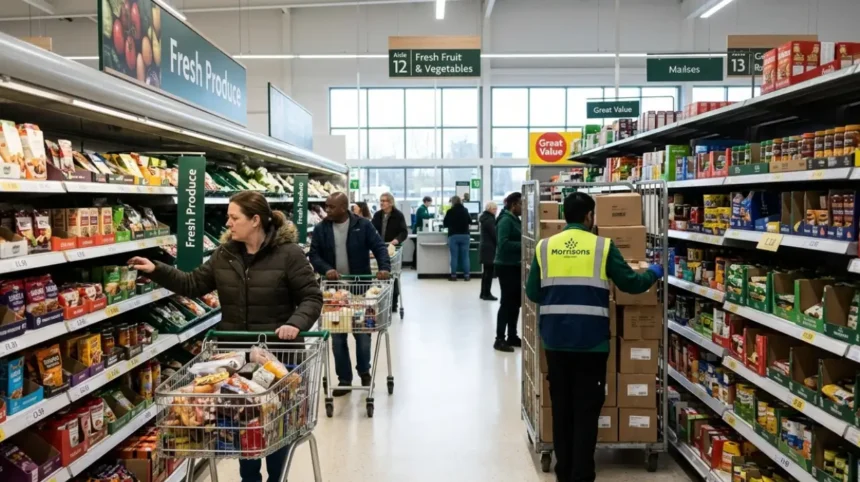
A supermarket chain is a group of linked grocery stores that operate under one brand, one supply system, and one commercial strategy. In the UK, supermarket chains shape food shopping, pricing, employment, logistics, and consumer choice across every region, including cities such as Leeds.
- What is a supermarket chain?
- How the model works
- When did supermarket chains begin in Britain?
- Why self-service mattered
- Which chains shaped the UK market?
- How the leading names developed
- How large is the supermarket sector?
- What the numbers show
- What does a supermarket chain include?
- Core business functions
- How do supermarket chains affect shoppers?
- Practical effects in daily shopping
- Why do supermarket chains matter to the economy?
- Economic and labour impact
- How have supermarket chains changed over time?
- The shift to multi-channel retail
- What challenges face supermarket chains now?
- Main market pressures
- What is the future of supermarket chains?
- Likely long-term direction
- Why does this topic matter for Leeds?
- Local significance
- Why is the supermarket chain still important?
What is a supermarket chain?
A supermarket chain is a retail business with multiple stores selling food and household goods through a shared brand, distribution network, and management structure. The model uses standardised pricing, central buying, and store formats that allow the company to serve large numbers of customers efficiently.
How the model works
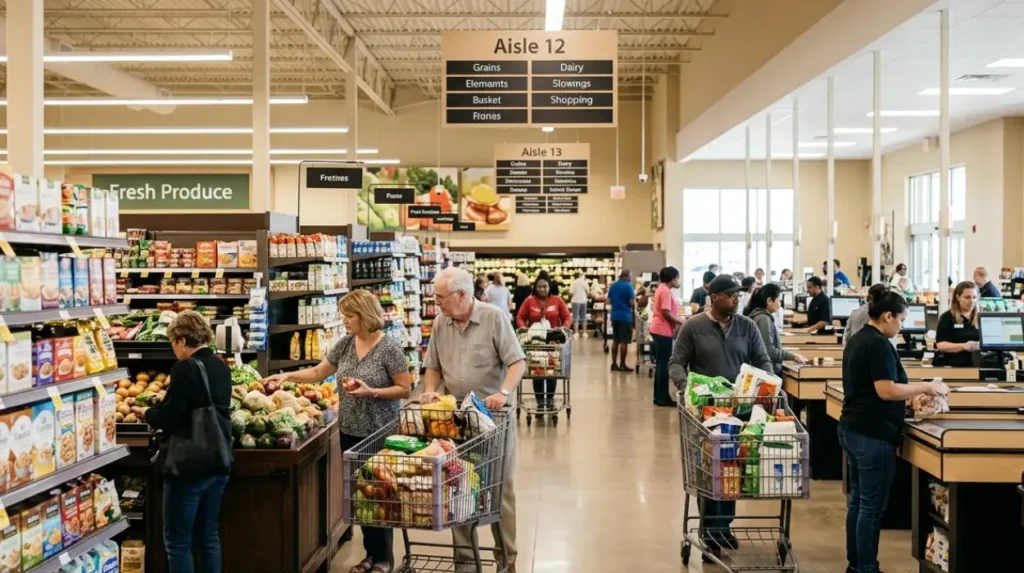
A supermarket chain depends on a central purchasing system, regional distribution centres, and branch-level stores. Goods move from suppliers to warehouses, then to stores, then to customers, which creates scale, consistency, and lower operating cost per unit sold.
The chain format also enables common product ranges, loyalty schemes, promotional campaigns, and store design across locations. This structure makes the brand predictable for shoppers and easier to manage for operators.
When did supermarket chains begin in Britain?
Modern supermarket chains in Britain emerged from self-service grocery retail after the Second World War. The London Co-operative Society opened a full self-service store in Manor Park on 12 January 1948, and historians often treat that as the start of the British supermarket era.
Why self-service mattered
Before self-service, customers gave lists to shop staff, who selected the goods behind a counter. Self-service changed the process by letting customers handle products directly, compare items, and choose at their own pace.
That change reduced labour at the point of sale and increased the number of items that a single store could process. It also reshaped store layout, packaging, and shelf display, which became core features of supermarket retail.
Which chains shaped the UK market?
The main UK supermarket chains include Tesco, Sainsbury’s, Asda, Morrisons, Co-op Food, and Waitrose. These firms built large store networks and helped turn grocery retail into one of the largest consumer sectors in the country.
How the leading names developed
Sainsbury’s began in 1869 as a London grocer and later expanded into self-service retail. Tesco opened its first supermarket in 1956 in Maldon, Essex, while Morrisons followed in 1961 and Asda in 1963.
The Co-op was earlier in self-service development, with a 1948 store in Manor Park and further rollout in the early 1950s. By 1951, the Co-op already had 604 self-service stores, showing how quickly the new format spread.
How large is the supermarket sector?
The UK supermarket sector is a major national industry. One industry estimate places revenue at £211.8 billion over the five years through 2025-26, while the number of businesses in the sector reached 34,122 in 2025.
What the numbers show
Government food statistics show the scale of the wider food chain, not just supermarkets. The agri-food sector contributed £153.2 billion to national GVA in 2023 and employed 4.1 million people in 2025, equal to 11.7% of GB employment.
Food and non-alcoholic beverage prices rose by 4.5% in the 12 months to December 2025, which helps explain why supermarkets remain central to household budgets and inflation debates. Inflation changes basket value even when shoppers reduce the number of items they buy.
What does a supermarket chain include?
A supermarket chain includes stores, warehouses, transport systems, buying teams, pricing systems, marketing, and data tools. Each part has a defined role in moving goods from suppliers to shoppers with speed and consistency.
Core business functions
The first function is procurement, where the chain buys products in bulk from producers and wholesalers. The second is distribution, where goods move through regional depots to branches.
The third is store operations, which cover shelving, checkout, staffing, stock control, and customer service. The fourth is commercial planning, which includes promotions, loyalty offers, and product range decisions.
How do supermarket chains affect shoppers?
Supermarket chains affect prices, product choice, travel patterns, and weekly spending. Their scale allows them to negotiate supply contracts, run promotions, and stock many categories in one place, from fresh food to household basics.
Practical effects in daily shopping
For shoppers, the most visible effects are convenience and predictable availability. A chain store usually offers a standard range, the same store branding, and similar opening patterns across locations.
Supermarket chains also influence how people shop during periods of price pressure. Mintel reports that 47% of shoppers are actively cutting grocery spend, which has strengthened the role of discounters and online channels in the market.
Why do supermarket chains matter to the economy?
Supermarket chains matter because they connect agriculture, manufacturing, transport, retail, and household consumption. They sit at the centre of the food system and help convert farm output into retail sales for millions of customers.
Economic and labour impact
The sector supports large employment numbers through store staff, drivers, warehouse teams, buyers, and managers. Government food-chain data shows that the broader agri-food system employed 4.1 million people in 2025, which shows the economic weight behind grocery retail.
Supermarkets also shape demand for UK suppliers. Bulk buying, long-term contracts, and branded own-label ranges create a large market for food producers, packaging companies, logistics firms, and technology providers.
How have supermarket chains changed over time?
Supermarket chains have moved from simple self-service grocery shops to multi-channel retail businesses. The modern model combines large stores, convenience stores, online ordering, home delivery, and click-and-collect services.
The shift to multi-channel retail
The early supermarket was defined by shelves, trolleys, and checkouts. The current chain model extends into apps, websites, digital loyalty, and delivery logistics, which broadens the customer relationship beyond the physical store.
This shift has changed competition. Industry reporting shows supermarkets remain the largest channel, but discounters and online retailers continue gaining share as shoppers seek value and convenience.
What challenges face supermarket chains now?
Supermarket chains face inflation, volume pressure, competition from discounters, and changing consumer behaviour. Higher prices lift revenue values, but they do not always increase the number of items sold.
Main market pressures
One pressure is price sensitivity, as households respond to food inflation by reducing spend or switching retailers. Another is channel competition, since discounters and online grocery now draw more traffic from shoppers seeking lower prices or easier access.
A further pressure is operational cost. Chains must fund wages, energy, transport, and technology while keeping prices competitive and maintaining margins.
What is the future of supermarket chains?
The future of supermarket chains rests on convenience, value, logistics, and data-driven retailing. The market continues to grow in value, but chains now compete on speed, availability, and channel choice as much as on store size.
Likely long-term direction
Chains will keep investing in digital ordering, better forecasting, and tighter stock control. They will also continue using loyalty systems and promotional data to shape pricing and product range decisions.
The most resilient supermarket chains combine physical stores with online fulfilment and strong supplier networks. That model supports both everyday shopping and changing consumer demand in a market shaped by inflation and convenience.
Why does this topic matter for Leeds?
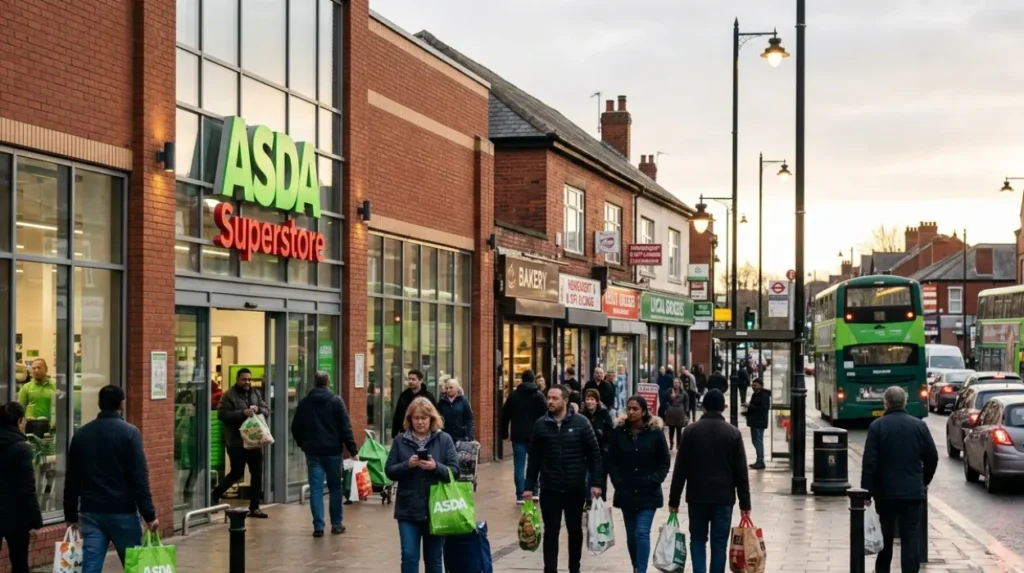
Supermarket chains matter in Leeds because they influence local high streets, employment, access to affordable food, and transport patterns. A city with large suburban districts, dense neighbourhoods, and major commuter flows depends on retail networks that serve both weekly shops and quick convenience trips.
Local significance
Supermarket branches affect where residents shop, how often they travel, and which areas gain footfall. They also support jobs in retail, logistics, and management, while shaping the commercial life of nearby roads and shopping centres.
For a Leeds audience, the supermarket chain is not just a business model. It is a public-facing part of everyday life that links household budgets, regional employment, and the wider food economy.
Why is the supermarket chain still important?
A supermarket chain remains important because it connects production, distribution, and consumption at national scale. It is one of the clearest examples of modern retail organisation, built on standardisation, logistics, and consumer convenience.
The British market shows that supermarket chains adapted from post-war self-service shops into multi-channel retail groups with national reach. That evolution explains why they continue to dominate grocery shopping, influence prices, and shape how people buy food in 2026.
What is the difference between a supermarket and a supermarket chain?
A supermarket is a single store where you buy groceries.
A supermarket chain is a company that owns many supermarkets under the same brand, like Tesco or Sainsbury’s.