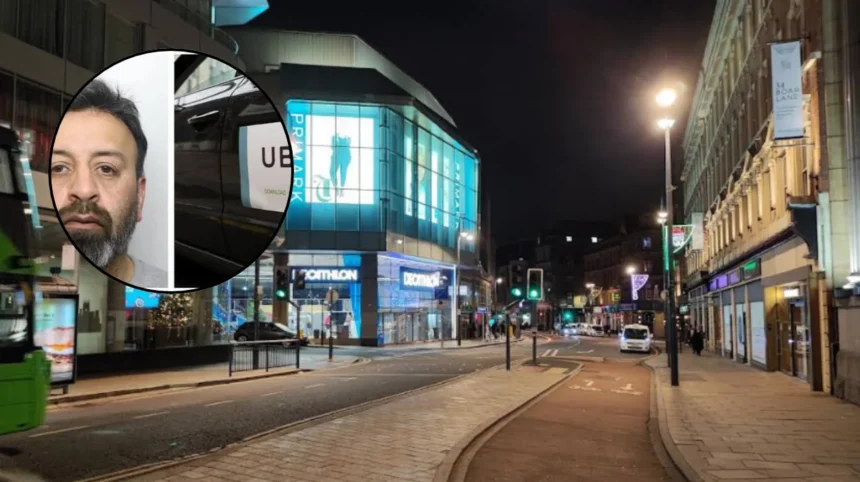
Key Points
- Conviction and Sentencing: An Uber driver, identified as Kamran Khan, has been sentenced to prison after being convicted of raping a female student in Leeds.
- Incident Details: The victim was targeted after becoming heavily intoxicated during a night out at a venue in Leeds city centre.
- Modus Operandi: Khan preyed upon the vulnerable passenger whom he had collected in his vehicle outside the nightclub, taking advantage of her impaired state to commit the assault.
- Court Findings: Proceedings before the court highlighted the predatory nature of the attack, demonstrating a clear breach of trust by a licensed ride-hailing driver against a member of the public.
- Police Action: West Yorkshire Police conducted an extensive investigation following the report, securing vital evidence that ultimately led to Khan’s prosecution and conviction.
- Industry Concerns: The case has renewed calls for stricter safeguarding measures, driver vetting, and safety protocols across ride-hailing platforms and local private hire licensing bodies.
LEEDS (The Leeds Times) November 7, 2026 —A predatory Uber driver has been sentenced to a substantial prison term after preying upon and raping a heavily intoxicated university student whom he picked up outside a nightclub in Leeds city centre.Kamran Khan was convicted following a court hearing detailing how he targeted the victim when she was in a particularly vulnerable state following a night out. Court proceedings established that Khan took advantage of the passenger’s severe intoxication after she entered his vehicle, committing the sexual assault before she was able to reach safety.
- Key Points
- What details were disclosed during the court proceedings regarding the attack?
- How did law enforcement and emergency services respond to the report?
- What safety measures and regulatory standards apply to ride-hailing services in Leeds?
- Background of the particular development
- Prediction: How this development can affect university students and night-time transport users
As reported by crime reporters at the Yorkshire Evening Post, prosecutors detailed how Khan’s actions represented a calculated exploitation of a passenger who had relied on a licensed ride-hailing app to return home safely. Police investigators from West Yorkshire Police gathered physical evidence, digital records, and vehicle tracking data to construct a robust case against Khan, leading to his arrest and subsequent criminal charges.
During the trial proceedings, the court heard statements regarding the traumatic impact the crime has had on the victim, whose identity remains protected by law under statutory anonymity for victims of sexual offences. The presiding judge condemned Khan’s actions as a severe breach of trust, emphasizing that members of the public, particularly young women traveling alone at night, must be confident that licensed transport providers will not subject them to violence or harm.
What details were disclosed during the court proceedings regarding the attack?
During the court hearing, prosecutors outlined the timeline of events leading up to the assault. According to court records summarized by court reporters for the Yorkshire Evening Post, the victim had been socialising with friends at a venue in Leeds city centre before becoming separated or deciding to travel home. Having consumed a significant amount of alcohol, her level of intoxication left her visibly impaired and unable to defend herself.
Khan, who was operating as an active driver on the Uber platform at the time, encountered the victim outside the venue. The prosecution demonstrated that Khan recognised her diminished capacity and seized the opportunity to carry out the attack. Rather than fulfilling his professional duty to transport the passenger safely to her destination, he drove to a location where he subjected her to a sexual assault.
Investigating officers from West Yorkshire Police were able to trace Khan’s vehicle through GPS logs, mobile phone location data, and closed-circuit television (CCTV) footage positioned around Leeds city centre. When questioned by police, Khan attempted to deny the allegations, but the strength of the forensic and digital evidence presented by the Crown Prosecution Service established his guilt beyond a reasonable doubt.
In passing sentence, the presiding judge highlighted the predatory nature of Khan’s behavior, noting that he deliberately targeted a vulnerable person under the guise of providing a legitimate transport service. The court emphasized that a custodial sentence was the only appropriate outcome to reflect the gravity of the offence, protect the public, and deter other transport providers from committing similar acts.
How did law enforcement and emergency services respond to the report?
Following the incident, the victim reported the assault to West Yorkshire Police, initiating a immediate response from specialised officers within the force’s crime investigation units. Specially trained officers were deployed to support the victim, ensuring she received appropriate medical care, psychological support, and access to independent sexual violence advisors (ISVAs).
Detectives swiftly secured digital evidence from the ride-hailing platform, including trip history, vehicle registration details, and driver account information. By cross-referencing this data with public surveillance footage in Leeds city centre, officers confirmed the precise timeframe of the pickup and the trajectory of the vehicle during the night of the attack.
As reported by regional crime correspondents for local media outlets, West Yorkshire Police highlighted the importance of prompt reporting in sexual assault investigations.
Police representatives stressed that digital forensics, including app-based route tracking and mobile device analysis, play a vital role in securing convictions against perpetrators who operate within commercial transport networks.
What safety measures and regulatory standards apply to ride-hailing services in Leeds?
Private hire drivers and ride-hailing operators functioning within Leeds are subject to strict licensing regulations governed by the local authority, Leeds City Council, alongside national statutory standards. Drivers are required to undergo Enhanced Disclosure and Barring Service (DBS) checks, local topographical knowledge tests, and safety training prior to receiving authorization to pick up passengers.
Ride-hailing services such as Uber utilize digital platforms that incorporate features such as GPS route sharing, emergency assistance buttons, and driver identification displays to enhance passenger security. Despite these technological safeguards, incidents involving predatory behavior by licensed drivers have consistently raised questions regarding the efficiency of continuous vetting processes and real-time monitoring.
Industry regulators continuously review guidelines regarding driver misconduct, license revocations, and reporting mechanisms between local councils and ride-hailing companies. When a driver is charged with a serious criminal offence, local licensing authorities immediately suspend or revoke the individual’s private hire licence to ensure public safety while criminal proceedings take place.
Explore More Leeds Crime News
Fourth Suspect Arrested in Raheim Jackson Murder Case, Leeds 2026
Man Charged in Raheim Jackson Murder Case in Leeds 2026
Background of the particular development
The conviction of Kamran Khan occurs against a broader backdrop of heightened public concern and policy scrutiny regarding nighttime safety, particularly for university students and women traveling alone in urban centres across the United Kingdom. Leeds, home to several major universities and a large student population, has frequently seen local authorities, student unions, and police forces collaborate on safety initiatives aimed at preventing sexual violence and predatory behavior.
Over recent years, multiple high-profile cases involving taxi and private hire drivers targeting intoxicated passengers have prompted calls for national legislative reforms.
Local government bodies and advocacy groups have repeatedly urged private hire operators to strengthen their driver background checks, introduce mandatory safety training focused on sexual misconduct prevention, and establish immediate reporting protocols for passenger complaints.
In response to concerns raised by student organizations and safety campaigners, local authorities in West Yorkshire have implemented various initiatives, including “Ask for Angela” schemes in nightlife venues, dedicated night-bus services, and increased policing around major clubbing districts. However, the occurrence of attacks within licensed vehicles continues to spark debate over accountability within the gig economy and the effectiveness of current licensing frameworks.
Prediction: How this development can affect university students and night-time transport users
This conviction is expected to have notable impacts on university students, night-time transport users, and the wider private hire industry across Leeds and similar metropolitan areas.
- Increased Caution Among Night-Time Passengers: University students and lone travelers are likely to exercise heightened caution when using ride-hailing applications or entering private hire vehicles late at night. The details of this case reinforce existing concerns regarding personal safety, potentially leading more passengers to adopt safety precautions such as sharing live GPS locations with friends, verifying driver identity and vehicle registration details before entering a car, and avoiding solo travel after nights out.
- Heightened Pressure on Transport Platforms: Ride-hailing companies like Uber will face increased scrutiny from the public, student advocacy groups, and municipal licensing boards. This scrutiny is expected to drive demands for more robust safety technologies within apps, such as mandatory audio recording options during trips, stricter real-time identity checks for drivers, and faster suspension processes when complaints are flagged.
- Stricter Regulatory Oversight: Local authorities, including Leeds City Council and neighboring licensing bodies, are likely to re-examine their private hire licensing frameworks. This could lead to policy changes requiring more frequent background checks, mandatory safeguarding modules for all licensed drivers, and improved information-sharing mechanisms between licensing councils and law enforcement agencies.
- Enhanced Campus and Community Safety Campaigns: University administration bodies and student unions are expected to intensify their safety messaging and expand support resources. Initiatives such as safe transport schemes, dedicated campus shuttle services, and education on passenger rights are likely to receive increased funding and priority to ensure students have reliable alternatives when traveling at night.