
The provision of free extracurricular activities in Garforth, West Yorkshire, serves a vital role in youth development and community cohesion. For families navigating the rising cost of living, these programs offer safe, structured environments that foster academic support, physical health, and social-emotional growth without financial barriers. Accessing these local resources requires an understanding of the regional educational landscape, municipal provisions, and third-sector partnerships that fund and operate free out-of-school hours care.
- What Are the Types of Free After-School Clubs Available in Garforth?
- State-Funded School Extracurricular Programs
- Local Authority and Library Provisions
- Voluntary, Community, and Faith-Based Organizations
- How Does the Funding Mechanism Enable Free Clubs in Garforth?
- The Role of Pupil Premium and School Funding
- Local Government Grants and Community Committees
- Corporate Social Responsibility and National Trust Endowments
- Where Can Parents Search for Free After-School Programs in Garforth?
- The Leeds Directory Digital Portal
- Direct School Communication Channels
- Physical Community Bulletin Boards and Hubs
- What Are the Enrollment Criteria for Free Extracurricular Clubs?
- Geographic and Catchment Restrictions
- Age and Developmental Stage Segmentation
- Socioeconomic and Referral-Based Admissions
- Why Do Free After-School Clubs Impact Child Development and Learning?
- Academic Reinforcement and Cognitive Growth
- Socio-Emotional Learning and Mental Wellbeing
- Physical Health and Motor Skill Refinement
- How Do Regulatory and Safeguarding Standards Apply to Garforth Clubs?
- Mandatory Background Vetting and Staff Training
- Health, Safety, and Facility Risk Assessments
- Ofsted Regulation and Voluntary Registration
- What Are the Challenges Facing Free After-School Provisions?
- Financial Instability and Grant Dependency
- Recruitment and Retention of Qualified Volunteers
- Logistical and Transport Barriers
- What Is the Future Outlook for Youth Activities in Leeds?
Historically, after-school provisions in the United Kingdom evolved from basic childcare solutions for working parents into targeted educational and developmental initiatives. In Garforth, a town within the City of Leeds metropolitan borough, the availability of these clubs relies heavily on state-funded school budgets, local authority grants from Leeds City Council, and the mobilization of registered charities. Understanding the structural framework of these clubs ensures that parents can efficiently locate, evaluate, and secure placements for their children.
What Are the Types of Free After-School Clubs Available in Garforth?
Free after-school clubs in Garforth encompass state-funded school extracurriculars, local authority youth provisions, library-based academic groups, and charitable sports or arts programs. These initiatives operate without tuition fees to ensure equitable access to developmental activities for all local children.
State-Funded School Extracurricular Programs
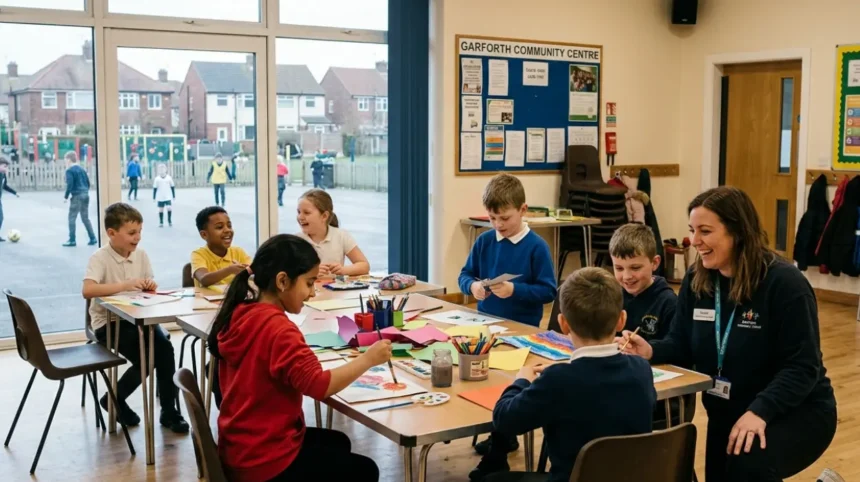
State schools within the Garforth area, including Garforth Academy and local primary institutions such as Green Lane Primary Academy and Garforth Strawberry Fields Primary School, receive specific allocations to support extended services. The Department for Education mandates that schools utilize a portion of their core funding and Pupil Premium allocations to close the educational attainment gap. Consequently, schools host teacher-led academic catch-up sessions, choir practices, and drama workshops that run directly after the standard school day ends at 15:15. These clubs do not charge parents for attendance, as operational costs are absorbed by the institutional budget.
Local Authority and Library Provisions
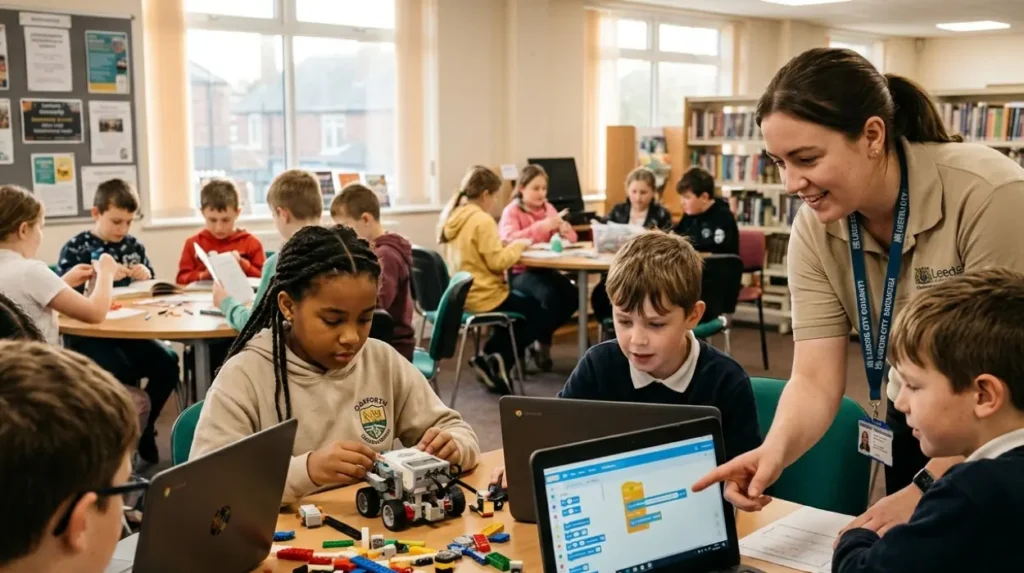
Leeds City Council actively funds youth services through the Community Committee framework, which allocates resources directly to Outer East Leeds, including Garforth. Garforth Library and Community Hub, located on Main Street, serves as a primary venue for free after-school infrastructure. The council structures these sessions around literacy, digital skills, and creative learning. Examples of these provisions include weekly code clubs, where children learn foundational programming languages such as Scratch and Python, and Lego engineering clubs that promote spatial reasoning. These public services are free at the point of access for all residents within the Leeds municipal boundaries.
Voluntary, Community, and Faith-Based Organizations
The third sector provides a critical layer of free after-school infrastructure in Garforth. Registered charities, local churches, and community interest companies secure independent funding through the National Lottery Community Fund, local businesses, and philanthropic donations. Organizations such as the Garforth Youth Diamond Club and local scout or guide groups running subsidized outreach programs offer weekly sessions focusing on life skills, peer socialization, and community service. Furthermore, faith-based institutions, including St. Mary’s Church and the Garforth Methodist Church, host free drop-in youth clubs that provide snacks, homework assistance, and recreational spaces for teenagers.
How Does the Funding Mechanism Enable Free Clubs in Garforth?
Free after-school clubs in Garforth operate through a combination of central government education grants, local authority youth service budgets, Pupil Premium allocations, and third-sector philanthropic grants. These funding streams eliminate the need for parental fees or weekly subscriptions.
The Role of Pupil Premium and School Funding
The primary mechanism for school-based free clubs is the Pupil Premium grant, introduced by the UK government to support disadvantaged pupils. Schools receive a fixed sum of money annually for every child registered as eligible for free school meals or looked after by the local authority. School governors and leadership teams allocate these funds to subsidize extracurricular activities, ensuring that clubs remain free not only for vulnerable student demographics but often for the wider student body to prevent social stigmatization. This financial structure covers staff overtime, specialized equipment, and external provider fees.
Local Government Grants and Community Committees
Leeds City Council distributes financial resources to Garforth via the Outer East Community Committee. This committee receives an annual Youth Activity Fund allocation specifically designated for young people aged 8 to 17. Local providers, charities, and sports associations apply directly to this fund to cover 100% of their operational costs, including venue hire, insurance, and tutor salaries. By securing these municipal grants, providers agree to offer their sessions completely free of charge to Garforth residents, ensuring that financial background does not limit participation.
Corporate Social Responsibility and National Trust Endowments
Private sector involvement and national charitable trusts form the third pillar of the funding mechanism. Businesses operating within the Garforth industrial estates and retail sectors frequently partner with local youth groups as part of their Corporate Social Responsibility initiatives. Additionally, national organizations, such as Sport England and the BBC Children in Need trust, award competitive grants to Garforth-based sports clubs and arts collectives. These funds are utilized to purchase long-term assets, such as footballs, gymnastics mats, art supplies, and musical instruments, eliminating the need to levy equipment fees on participating families.
Explore More Garforth News
A656 Ridge Road Rail Bridge Replacement: 9-Month Closure Garforth to Micklefield 2026
Leeds Garforth Bar Wins Licence with Reduced Hours
Where Can Parents Search for Free After-School Programs in Garforth?
Parents can find free after-school programs in Garforth by utilizing the Leeds Directory portal, contacting school administrative offices directly, visiting the Garforth Library and Community Hub, and monitoring the Outer East Community Committee public updates.
The Leeds Directory Digital Portal
The definitive official source for verifying free youth services is the Leeds Directory, a verified online database managed by Leeds City Council. This platform categorizes services by postal code, enabling Garforth residents to filter results within the LS25 area. The directory lists operating hours, age suitability, and cost structures, explicitly marking qualifying programs as free. Every organization listed on this platform undergoes a vetting process to ensure compliance with local safeguarding standards, valid public liability insurance, and Disclosure and Barring Service checks for all staff members.
Direct School Communication Channels
Because many free clubs are localized within educational campuses, direct engagement with school administration remains an essential discovery method. Garforth educational institutions distribute termly extracurricular timetables through parental communication applications such as ClassDojo, Arbor, or ParentMail. These documents detail the schedule of teacher-led clubs for the upcoming school term. Parents can also request information regarding extended services directly from the school’s Special Educational Needs Coordinator, who maintains records of targeted free interventions and regional activity partnerships.
Physical Community Bulletin Boards and Hubs
Physical civic infrastructure provides highly accurate, real-time data on localized community clubs that may lack a large digital footprint. The Garforth Library and Community Hub maintains a dedicated public notice board detailing localized youth provisions, reading groups, and homework support sessions. Staff at the hub provide direct assistance, guiding parents through registration forms for council-led initiatives. Additionally, the Garforth Welfare Hall and local supermarkets feature community boards where grassroots organizers advertise newly launched free sports, arts, or youth club trials.
What Are the Enrollment Criteria for Free Extracurricular Clubs?
Enrollment criteria for free after-school clubs in Garforth typically require proof of local residency within the LS25 area, adherence to specific age brackets, enrollment at a participating school, or meeting specific socioeconomic criteria such as Pupil Premium eligibility.
Geographic and Catchment Restrictions
To ensure that local tax revenues benefit the immediate community, many free clubs funded by Leeds City Council enforce strict geographic criteria. Programs funded via the Youth Activity Fund require applicants to reside within the Outer East ward boundaries, which covers Garforth, Swillington, Kippax, and Methley. When submitting registration forms, parents must provide proof of address, such as a recent utility bill or council tax statement, to secure a free placement for their child and prevent out-of-borough exploitation of limited resources.
Age and Developmental Stage Segmentation
Free after-school clubs operate within precise age parameters to ensure safety, legal compliance, and age-appropriate peer interaction. Primary school provisions generally target Key Stage 1 (ages 5 to 7) or Key Stage 2 (ages 7 to 11), focusing on foundational motor skills, literacy games, and guided socialization. Secondary school provisions, such as those hosted at Garforth Academy, target Key Stage 3 (ages 11 to 14) and Key Stage 4 (ages 14 to 16), offering advanced technical skills, mental health peer support, and fitness training. Clubs strictly enforce these brackets during the admissions process.
Socioeconomic and Referral-Based Admissions
When demand exceeds the physical capacity of a free after-school club, providers implement targeted selection criteria based on socioeconomic metrics. Priority access is legally given to children who qualify for Pupil Premium funding, those with an Education, Health and Care plan, or children classified as Looked After Children. Furthermore, local social work teams, family support workers, and school pastoral staff can issue direct referrals to free community youth clubs. This mechanism ensures that vulnerable youth receive priority placements before sessions open to the general public.
Why Do Free After-School Clubs Impact Child Development and Learning?
Free after-school clubs significantly impact child development by improving academic performance, reducing social isolation, enhancing physical fitness, and teaching critical soft skills. These programs ensure that children from all economic backgrounds access essential developmental opportunities.
Academic Reinforcement and Cognitive Growth
Extracurricular programs structured around academic support provide a measurable benefit to cognitive development. Homework clubs and STEM initiatives operating in Garforth reinforce the National Curriculum topics taught during standard school hours. Data from the Education Endowment Foundation demonstrates that participation in regular after-school academics can accelerate a child’s academic progress by an average of two additional months over the course of an academic year. The informal setting allows tutors to address learning gaps using interactive methods that are impossible to execute within a standard thirty-student classroom.
Socio-Emotional Learning and Mental Wellbeing
The structured socialization provided by free youth clubs fosters essential psychological competencies, including emotional regulation, conflict resolution, and teamwork. By interacting with peers from different schools and backgrounds within Garforth, children expand their social networks and build resilience against bullying and loneliness. According to research by the Children’s Society, regular attendance at community youth clubs correlates with higher levels of life satisfaction and lower rates of anxiety among adolescents, as these spaces offer validation outside of testing environments.
Physical Health and Motor Skill Refinement
Free sports clubs address critical public health objectives by combating sedentary lifestyles and childhood obesity within West Yorkshire. Activities such as free athletics, football, and dance clubs encourage children to meet the Chief Medical Officer’s guideline of 60 minutes of moderate-to-vigorous physical activity daily. These sessions refine gross motor skills, cardiovascular health, and spatial awareness. By removing the financial cost of sports kit, venue rental, and coaching fees, these clubs ensure that physical fitness resources are democratized across the Garforth population.
How Do Regulatory and Safeguarding Standards Apply to Garforth Clubs?
Free after-school clubs in Garforth must comply with strict UK safeguarding legislation, including mandatory Disclosure and Barring Service checks, Ofsted registrations where applicable, comprehensive risk assessments, and adherence to the Working Together to Safeguard Children framework.
Mandatory Background Vetting and Staff Training
Any individual operating or volunteering within an after-school capacity must undergo an Enhanced Disclosure and Barring Service check with barred list checks. This statutory requirement ensures that individuals with criminal records involving children are legally barred from working within these environments. Furthermore, staff must complete safeguarding training aligned with the Leeds Safeguarding Children Partnership guidelines. This training enables leaders to identify signs of abuse, neglect, or radicalization, establishing clear referral pathways to local authority children’s social care services.
Health, Safety, and Facility Risk Assessments
Before a free after-school club can commence operations in Garforth, organizers must execute and document a comprehensive health and safety risk assessment. This document evaluates the physical environment, including fire exit accessibility, first aid provision, food hygiene for snacks provided, and teacher-to-child ratios. The standard legal ratio for children aged eight and over is typically one adult to fifteen children, though this ratio decreases for younger cohorts or high-risk sports activities to ensure maximum physical safety and immediate emergency response capacity.
Ofsted Regulation and Voluntary Registration
While purely extracurricular clubs that rotate activities daily may be exempt from standard compulsory Ofsted registration, many providers register voluntarily on the Ofsted Childcare Register. This voluntary compliance signals adherence to national standards governing child protection, staff qualifications, and behavior management strategies. For clubs operating directly on school grounds by school staff, the provision falls under the school’s existing Ofsted inspection framework, ensuring that the same rigorous educational and safety standards maintained at 10:00 are enforced at 16:00.
What Are the Challenges Facing Free After-School Provisions?
The primary challenges facing free after-school provisions in Garforth involve long-term financial sustainability, volunteer recruitment deficits, high competition for local authority grants, and transportation barriers for working families.
Financial Instability and Grant Dependency
Because these clubs do not generate revenue through parental fees, they operate in a state of continuous financial vulnerability. Funding cycles from local authorities and charitable trusts are frequently short-term, spanning only one academic year or a single summer term. This forces organizers to dedicate significant administrative hours to continuous grant writing rather than program development. When a grant cycle ends without renewal, clubs are forced to suspend operations abruptly, creating sudden voids in local childcare and youth engagement options.
Recruitment and Retention of Qualified Volunteers
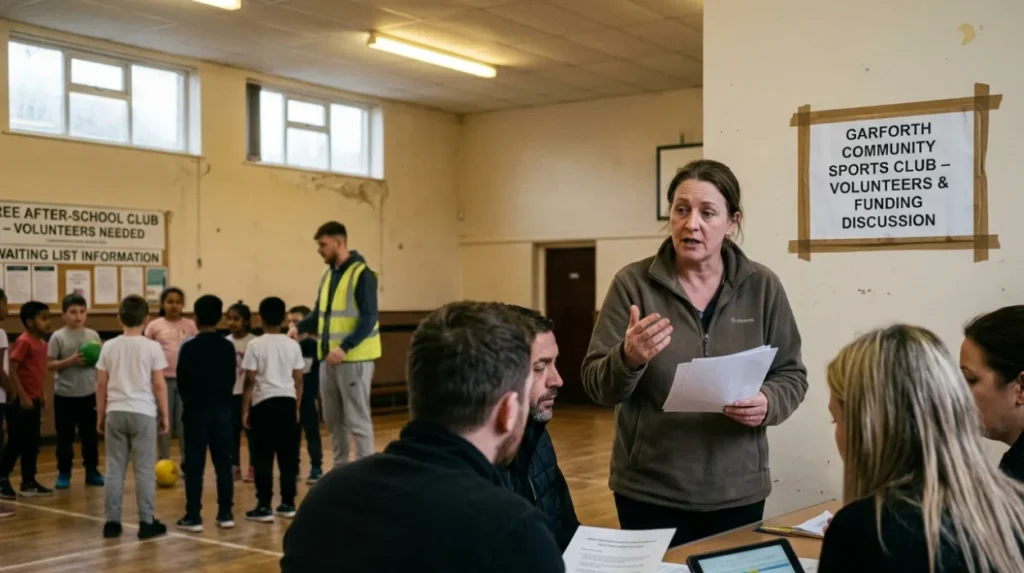
Many grassroots community clubs in Garforth rely heavily on volunteers to maintain legal adult-to-child ratios. However, the rising cost of living has reduced the availability of individuals willing or able to donate their time without compensation. Organizations face persistent difficulties recruiting volunteers who possess the required safeguarding certifications and sports coaching qualifications. A shortage of personnel directly limits the number of children a club can safely enroll, resulting in lengthy waiting lists for highly popular free clubs.
Logistical and Transport Barriers
The physical location of clubs across Garforth can present logistical hurdles for working parents who cannot leave their employment mid-afternoon to transport children. While school-based clubs mitigate this issue by allowing children to remain on campus, external provisions at community centers or sports fields require independent transport. If a free club does not offer a walking bus service from local primary schools, or if parents lack private vehicles and reliable public transit options within the LS25 area, the practical accessibility of the club decreases significantly regardless of its free status.
What Is the Future Outlook for Youth Activities in Leeds?
The future outlook for youth activities in Leeds focuses on digital integration, expanded public-private partnerships, increased emphasis on mental health support, and localized green-space utilization to ensure the resilience of free provisions.
Integration of Digital Technology and Hybrid Learning
The modernization of after-school provisions involves blending physical activities with digital skill development to prepare youth for a technologically advanced workforce. Future council initiatives plan to expand free access to mobile digital laboratories and programming hubs within the Outer East Leeds region. These programs allow children to transition seamlessly from physical recreational activities into collaborative online spaces, facilitating remote peer mentorship and homework collaboration toolsets that remain accessible even when physical centers are closed.
Collaborative Public-Private Partnerships
To counter the volatility of municipal grants, future strategies emphasize long-term partnerships between corporate entities and local community providers. Major infrastructure firms, financial institutions based in central Leeds, and retail developers are establishing multi-year endowment funds for regional towns like Garforth. These agreements provide sustained funding models that protect youth clubs from annual local authority budget adjustments, guaranteeing that facilities can invest in permanent staff and multi-year programming schedules.
Prioritisation of Holistic Wellbeing and Green Spaces
Future extracurricular planning increasingly focuses on climate literacy and outdoor mental health interventions. Recognizing the therapeutic benefits of nature, future free clubs are utilizing Garforth’s public parks, community allotments, and nature trails to host outdoor survival skills courses, environmental science groups, and mindfulness sessions. This strategic alignment with the Leeds Green Strategy ensures that youth clubs promote ecological awareness while simultaneously addressing post-pandemic social anxiety and physical health challenges in a sustainable manner.
What free after-school clubs are available in Garforth?
Free after-school clubs in Garforth include homework clubs, football training, coding classes, arts and crafts sessions, dance clubs, drama workshops, reading groups, and youth drop-in centers. Many are run through local schools, Leeds City Council, libraries, churches, and community organizations.