
Finding mental health support near Yeadon starts with the NHS, your GP, and Leeds-based local services. Yeadon is part of Leeds, so residents can use city-wide adult services, children’s support, crisis lines, charities, and talking therapies without needing to search far beyond the local area.
- What mental health support is available near Yeadon?
- How do you get help for adults in Leeds?
- Where can children and young people get support?
- What should you do in a crisis?
- Which local services can you use without a referral?
- How do you choose the right service?
- What support exists for common conditions?
- What local and national charities can help?
- How can you prepare before asking for help?
- Why does local signposting matter?
What mental health support is available near Yeadon?
Mental health support near Yeadon includes NHS crisis help, GP referral routes, self-referral talking therapies, local council signposting, charity helplines, and services for children, young people, and adults. Leeds residents also have access to MindWell, MindMate, and NHS 111 mental health crisis support.
Yeadon residents sit within the wider Leeds mental health network, so support is organised by need rather than by one single clinic. Adult support includes Leeds Mental Wellbeing Service for common mental health problems such as anxiety, stress, and depression, while children and young people are directed through MindMate and CAMHS-linked routes.
The most useful starting point is to match the support to the situation. Common, non-urgent concerns such as low mood, panic, stress, and sleep problems usually fit talking therapies, while urgent risk requires crisis help through NHS 111 or 999.
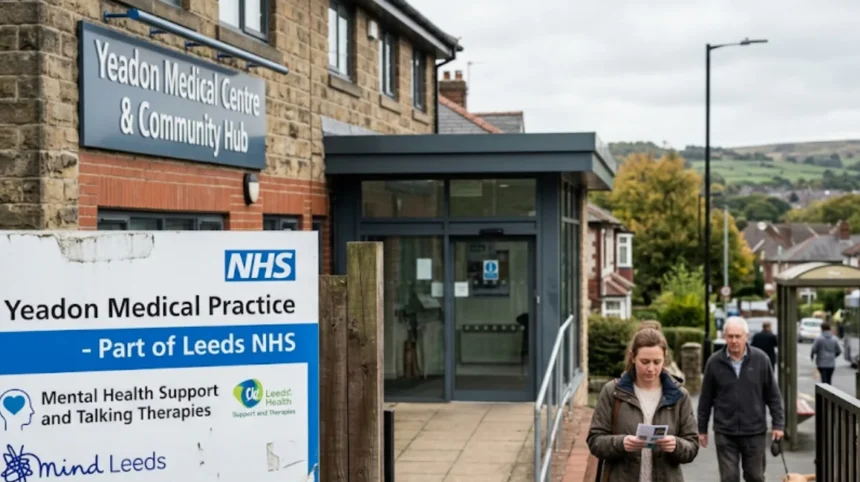
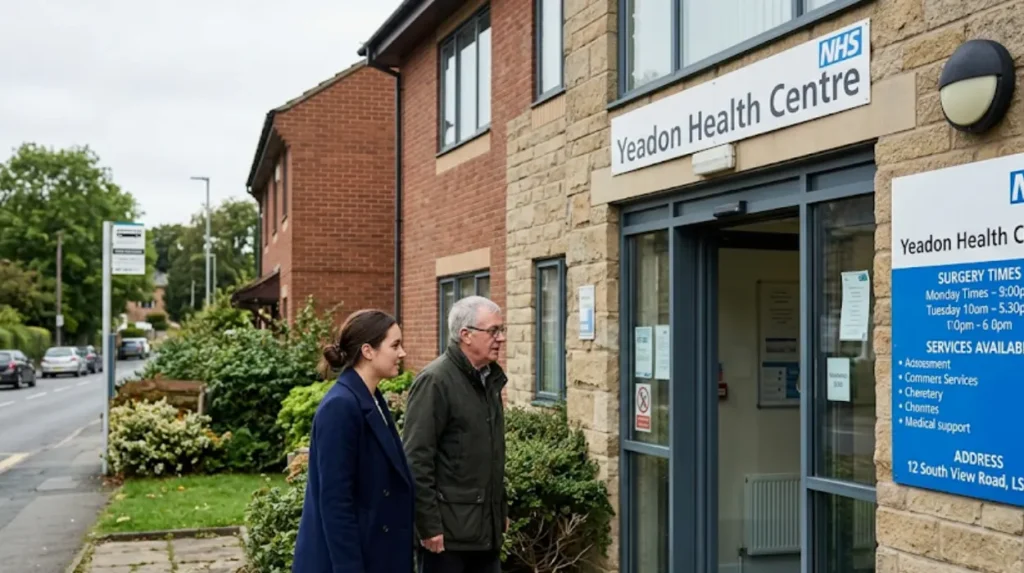
For local access, Yeadon Health Centre is the nearest NHS-listed practice location in Yeadon itself, and it sits at 12 South View Road, LS19 7PS. In practice, your GP surgery often becomes the gateway into the right service if you need assessment, treatment, or onward referral.
How do you get help for adults in Leeds?
Adults in Leeds can self-refer to Leeds Mental Wellbeing Service if they are 17 or over and registered with a Leeds GP. The service offers psychological therapies for anxiety, stress, and depression, and it uses an online assessment or phone referral route.
Leeds Mental Wellbeing Service is the main NHS talking-therapy route for adults in the city. It replaced the older IAPT model in November 2019 and offers structured help for common mental health problems, including stress, panic attacks, depression, and anxiety.
Self-referral is straightforward. Leeds Mental Wellbeing Service says people can refer themselves online, or by telephone on weekdays between 8am and 4pm on 0113 843 4388. The service states that assessments are usually done by phone, and adjustments are possible where needed.
This route matters because it removes the need to wait for a GP appointment just to start talking-therapy access. The service also provides courses such as stress and anxiety management, mindfulness, panic attacks, self-esteem support, and managing stress in parenthood.
If you want a city-wide directory rather than a single service, MindWell is the adult mental health information hub for Leeds. It brings together NHS, council, and third-sector information in one place and includes local and national services, self-help tools, and crisis links.
Where can children and young people get support?
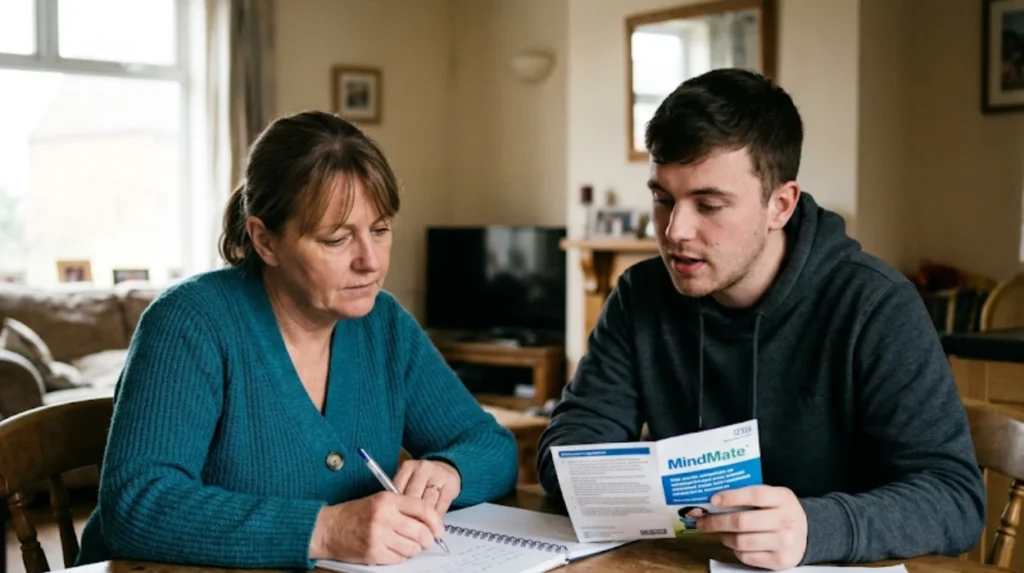
Children and young people in Leeds use MindMate as the main local signposting hub. MindMate covers self-help, referrals, and service links for children and young people, and Leeds also offers urgent support lines such as the CAMHS crisis call line and Teen Connect.
MindMate is the Leeds mental health and wellbeing pathway for younger people. Leeds describes it as the name for the different ways children and young people can get support, including the website, MindMate SPA, wellbeing support, and school-based programmes.
The most direct support route depends on age and need. MindMate says its services help young people up to 25 in some contexts, while self-referral to MindMate SPA is available for children and young people with a Leeds GP, with parental routes available for younger children.
For urgent mental health support, Leeds CAMHS crisis help is available every day, and MindMate materials list a CAMHS crisis call line open 8am to 8pm, 7 days a week, 365 days a year. Teen Connect also supports 11 to 18-year-olds daily, which gives families another local route for confidential emotional support.
For schools and colleges, the MindMate Support Team offers early emotional wellbeing support in education settings across Leeds for young people up to 19. That school-linked model matters because many issues are first noticed in class, not in a clinic.
What should you do in a crisis?
A mental health emergency requires 999. For urgent crisis support in West Yorkshire, call NHS 111 and select the mental health option. Leeds Council also says to contact a GP or NHS 111 first, and to use police and emergency services if someone is in immediate danger.
The key distinction is urgency. If someone is in immediate danger, 999 is the correct number. If the situation is urgent but not a physical emergency, NHS 111 now provides crisis mental health support across West Yorkshire through the mental health option.
Leeds.gov.uk advises people in mental health crisis to contact their GP or NHS 111 first. The same guidance points people to free listening services, including Samaritans on 116 123 and Shout by text to 85258, for confidential emotional support at any time.
West Yorkshire crisis messaging is consistent across local NHS sources. 111 is not an emergency service, but it is the universal access point for mental health crisis support, and it connects callers to trained professionals who can help direct them to the right community support.
If a person is thinking about self-harm or suicide, the West Yorkshire suicide prevention service provides urgent help information, and Leeds residents are also directed to the same NHS and charity routes. That layered system exists so people do not have to wait for office hours in a crisis.
Which local services can you use without a referral?
Several Leeds services accept direct contact without a GP referral, including Leeds Mental Wellbeing Service, MindWell’s service directory, Linking Leeds social prescribing, Samaritans, Shout, and child and youth support services such as MindMate-linked routes.
Direct-access services are useful when the first step needs to be simple. Leeds Mental Wellbeing Service accepts self-referrals, and Linking Leeds offers self-introduction for social prescribing support from age 16 and above.
Social prescribing is not therapy, but it does connect people to community support that affects mental wellbeing. Linking Leeds says its wellbeing coordinators connect people to local services and activities, and the service runs across Leeds for people aged 16 and over.
MindWell is another direct entry point because it lists services, local support, and practical help such as housing and money worries. That matters because mental health difficulties often sit alongside financial strain, isolation, work problems, or housing pressure.
For people who prefer text support, Shout is available through MindWell with the keyword BRIGHT to 85258, and Leeds Council also lists Shout as a free listening service. Samaritans remains a free, confidential option by phone at 116 123.
How do you choose the right service?
Choose the service by age, urgency, and type of problem. Adults with anxiety or depression use LMWS, children and young people use MindMate routes, crisis situations use 111 or 999, and wider wellbeing or practical issues fit MindWell, social prescribing, or charity support.
The best way to decide is to ask three questions. Is it urgent, is the person an adult or a child, and does the problem need therapy, crisis support, or practical help ?
If the concern is anxiety, low mood, stress, or panic and the person is an adult registered with a Leeds GP, Leeds Mental Wellbeing Service is the correct NHS entry point. If the concern involves a child or teenager, MindMate is the right local signposting system, with school routes, SPA referral, and youth helplines.
If the issue is broader than therapy, Linking Leeds can help with community links that improve daily functioning and social connection. MindWell also covers housing, money worries, peer support, and practical resources, so it works well when mental health sits inside a wider life problem.
A useful example is a Leeds resident in Yeadon with ongoing work stress and poor sleep. That person can start with Leeds Mental Wellbeing Service or MindWell, while someone with suicidal thoughts needs NHS 111 mental health crisis support or 999 if danger is immediate.
Explore More Help & Resources
How to report a noisy neighbour in Otley
How to get council tax support if you’re struggling in Morley
What support exists for common conditions?
Common mental health conditions in Leeds include anxiety, depression, panic attacks, stress, and low mood. Local NHS services and MindWell focus heavily on these conditions because they are the most common reasons people seek support.
Leeds Mental Wellbeing Service explicitly supports common mental health problems such as anxiety, stress, and depression. MindWell also says it provides self-help tools for anxiety, stress, and low moods, plus links to local and national support.
Talking therapies are designed for patterns that affect daily life but do not require hospital care. That includes panic symptoms, sleep disruption, worry loops, low motivation, and social withdrawal. These services usually involve structured assessment, guided support, and practical coping work rather than medication alone.
Counselling in Leeds is not limited to one pathway. MindWell’s counselling page points residents toward NHS self-referral, low-cost services, and private options, which creates a wider route map for people who want different levels of intensity or speed.
For Yeadon residents, the practical point is simple. You do not need to leave the area to begin support, because the city-wide Leeds system already channels adults and children into appropriate local services.
What local and national charities can help?
Leeds residents can use charities for listening support, emotional guidance, and specialist help. Samaritans, Shout, SANEline, Childline, Night OWLS, and local West Yorkshire services give options outside standard NHS appointments.
Charity support helps when someone needs immediate conversation rather than a clinical assessment. Leeds.gov.uk lists Samaritans, Shout, and Childline as free listening options, and West Yorkshire sources also list SANEline and Night OWLS.
Night OWLS is especially relevant for children, young people, parents, and carers. West Yorkshire guidance says it is open 8pm to 8am every day and offers a confidential support line for young people in crisis. That makes it an important out-of-hours choice for families in Leeds.
For bereavement, West Yorkshire resources also list a free helpline and suicide-bereavement support. Those services matter because grief, trauma, and loss often become mental health triggers after the initial crisis has passed.mindwell-leeds.
These services do not replace NHS treatment, but they do reduce isolation and bridge the gap before assessment or therapy begins. That role is especially important at night, at weekends, or while waiting for a referral.
How can you prepare before asking for help?
Prepare by noting symptoms, choosing the right age route, checking urgency, and using the correct contact route. For adults in Leeds, that usually means GP, LMWS, MindWell, or NHS 111; for children, it means MindMate, CAMHS routes, or urgent youth lines.
A short written summary makes contact easier. Include when symptoms started, how often they happen, whether sleep, appetite, work, school, or relationships are affected, and whether there is any risk of self-harm or suicide.
If you are an adult registered with a Leeds GP, start with Leeds Mental Wellbeing Service or MindWell. If you are supporting a young person, start with MindMate and use the relevant youth support line if the situation is urgent.
It also helps to keep one crisis route saved in your phone. Leeds and West Yorkshire sources consistently point to NHS 111 for crisis mental health support and 999 for immediate danger, with Samaritans and Shout available for free listening support.
For Yeadon residents, the system is already local, structured, and reachable. The fastest path is to match the problem to the right service, then use self-referral, GP support, or crisis access depending on urgency.
Why does local signposting matter?
Local signposting matters because mental health support works best when people enter the right service first time. Leeds has built a clear system through MindWell for adults and MindMate for children, which reduces confusion and speeds up access.
Mental health support is easier to use when the route is simple. Leeds has centralised adult signposting through MindWell and youth signposting through MindMate so residents do not need to search across dozens of unrelated websites.
That structure also improves access to the correct level of care. A person with common anxiety does not need a crisis pathway, and a young person in distress does not need to guess which helpline to call.
For a Yeadon audience, this has a direct practical effect. The right first contact can shorten waiting, reduce stress, and connect the person to the right clinician, charity, or community service faster.
The main lesson is simple. Start with urgency, age, and service type, then use Leeds’ existing pathways rather than trying to solve everything alone.
Can I self-refer for mental health support near Yeadon?
Yes. Adults aged 17 and over who are registered with a Leeds GP can usually self-refer to the Leeds Mental Wellbeing Service without first seeing a GP. Self-referral is available online or by telephone.