

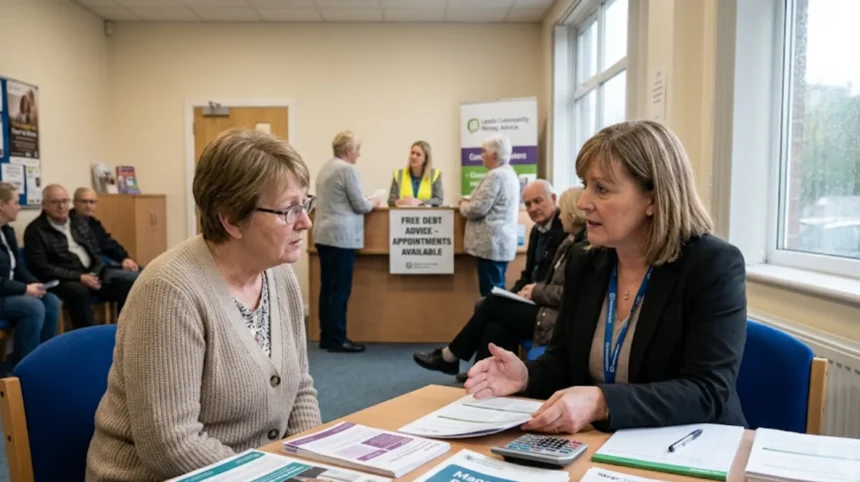
Managing personal debt requires access to accurate financial guidance and verified regulatory resources. Residents of Yeadon, Guiseley, Rawdon, and the wider Leeds metropolitan area can access multiple non-profit organisations offering free, confidential, and structured debt counseling. The Financial Conduct Authority regulates these services to ensure consumer protection under United Kingdom financial statutes.
- Where can residents find free debt advice near Yeadon this week?
- How do individuals arrange face-to-face debt appointments in the Leeds area?
- What specific debt solutions are available through free advice services?
- Statutory Debt Relief Mechanisms
- Managed Voluntary Reinvestment Structures
- Statutory Emergency Protections
- Which organizations provide legitimate free financial guidance in West Yorkshire?
- Regional Public Information Hubs
- National Regulated Debt Charities
- Community-Based Support Initiatives
- How does the UK Breathing Space scheme protect debtors from enforcement action?
- What documents must individuals gather before speaking to a debt advisor?
Where can residents find free debt advice near Yeadon this week?
Residents near Yeadon can access free debt advice this week through Citizens Advice Leeds via their regional helpline at 0808 278 7878, or by utilizing national remote services including StepChange Debt Charity, National Debtline, and the Money Wellness platform.
Locating localized financial assistance requires an understanding of the regional infrastructure within West Yorkshire. Yeadon sits within the City of Leeds metropolitan borough, meaning residents fall under the operational jurisdiction of Leeds City Council and its integrated financial support networks. Local advice networks operate under the Advice Quality Standard framework, which verifies that advisors possess the necessary legal and technical training to handle complex insolvency and budgeting inquiries.
Historically, face-to-face debt advice was concentrated entirely in physical brick-and-mortar storefronts, such as localized community centers or dedicated law clinics. The modern regulatory landscape has transitioned toward a hybrid delivery system, combining telephone hotlines, secure webchat interfaces, and targeted face-to-face appointments for vulnerable individuals. This structural shift ensures that individuals requiring urgent intervention, such as those facing immediate enforcement action, can secure advice within a 24-hour timeframe without geographical constraints.
The core components of local debt advice delivery involve a comprehensive financial assessment process. When an individual contacts an agency like Leeds Citizens Advice or Money Buddies, the service initiates a standard verification procedure. The advisor reviews the individual’s total income, essential living costs, and outstanding liabilities to establish a verifiable financial profile. This formal baseline prevents informal negotiation errors with creditors and protects the consumer from unlawful debt collection tactics.

How do individuals arrange face-to-face debt appointments in the Leeds area?
Individuals arrange face-to-face debt appointments in the Leeds area by contacting local accredited providers like Money Buddies or Better Leeds Communities directly by phone to complete an initial assessment before attending localized drop-in clinics or scheduled sessions.
The mechanism for securing an in-person consultation relies on a structured triage system designed by local authorities and non-profit groups. In Leeds, organisations like Ebor Gardens Advice Centre operate the Money Buddies scheme, which deploys trained financial advocates directly into community hubs. These advocates assist individuals with primary tasks, including checking welfare benefit entitlements, optimizing household utility expenditure, and drafting formal budget statements.
The face-to-face process follows a specific administrative sequence to maximize the efficacy of the meeting. The applicant must compile physical documentation detailing every source of household revenue alongside all written correspondence from financial institutions. For example, individuals bringing letters regarding council tax arrears, utility bills, or credit card statements allow the advisor to calculate exact balances. This accurate data input allows the agency to construct a legally compliant financial statement using the Standard Financial Statement format recognized by major UK lenders.
Real-world implementation of these face-to-face services occurs weekly across various Leeds suburbs. If a resident in the LS19 postcode area requires direct assistance, the individual can interface with outreach programs managed by Better Leeds Communities or St Vincent’s Support Centre. These entities run specific sessions where individuals receive physical representation during stressful periods, such as when communicating with bailiffs or responding to County Court judgments.
The long-term implications of attending a physical advice session center on immediate consumer protection and improved mental well-being. By engaging with a physical advisor, an individual transitions from an unmanaged debt state to a structured debt management trajectory. This formal intervention curtails the accrual of additional interest penalties, halts aggressive collection practices, and provides the debtor with a statutory pathway toward long-term financial stability.
What specific debt solutions are available through free advice services?
Free advice services provide access to statutory debt solutions including Debt Relief Orders, Individual Voluntary Arrangements, and Debt Management Plans, alongside offering legal guidance regarding bankruptcy applications and the government-backed Breathing Space scheme.
Statutory Debt Relief Mechanisms
Statutory debt relief mechanisms are formal legal remedies governed by the Insolvency Act 1986 and subsequent legislative updates. A primary example is the Debt Relief Order, which serves low-income individuals with low asset values and total unsecured liabilities below specific statutory limits. When an authorized advisor approves a Debt Relief Order, qualifying debts are legally frozen for a twelve-month duration, after which the remaining balances are fully discharged if the debtor’s financial circumstances have not improved.
Managed Voluntary Reinvestment Structures
Managed voluntary structures encompass both formal legal agreements and informal repayment schedules negotiated directly with creditors. An Individual Voluntary Arrangement constitutes a binding legal contract supervised by a licensed insolvency practitioner, requiring the debtor to pay a fixed monthly amount over a set period, typically five years. Conversely, an informal Debt Management Plan consolidates non-priority unsecured liabilities into a single monthly contribution distributed proportionally among lenders via a licensed provider like StepChange.
Statutory Emergency Protections
Statutory emergency protections offer temporary legal shields designed to stop ongoing enforcement actions while a long-term resolution is established. The Debt Respite Scheme, commonly referred to as Breathing Space, provides eligible individuals with up to 60 days of legal protection from creditor contact, interest accrual, and enforcement fees. For individuals undergoing official mental health crisis treatment, the Mental Health Crisis Breathing Space offers extended protection lasting the full duration of their medical care plus an additional 30 days.
Which organizations provide legitimate free financial guidance in West Yorkshire?
Legitimate free financial guidance in West Yorkshire is provided by FCA-regulated charities including Citizens Advice Leeds, StepChange Debt Charity, National Debtline, Christians Against Poverty, and regional initiatives like the Leeds Money Information Centre.
Regional Public Information Hubs
Regional public information hubs operate as centralized resource centers funded by local government authorities to guide residents toward verified support. The Leeds Money Information Centre acts as the primary digital directory managed by Leeds City Council to consolidate accredited debt, benefit, and budgeting services across the city. This localized hub ensures that residents do not inadvertently engage with fee-charging commercial debt management firms that present themselves as free public utilities.
National Regulated Debt Charities
National regulated debt charities provide widespread remote infrastructure capable of handling high volumes of inquiries through digital platforms and telephone helplines. StepChange Debt Charity and National Debtline operate as independent institutions funded primarily by voluntary contributions from the financial services industry, ensuring zero cost to the consumer. These entities utilize advanced online diagnostic tools that allow individuals to input their financial data independently and receive a tailored debt remedy report.
Community-Based Support Initiatives
Community-based support initiatives focus on holistic, localized aid that addresses both financial distress and its social impacts. Organisations like Christians Against Poverty deliver home-visit debt counseling services through partnerships with local churches, ensuring that isolated or vulnerable individuals receive tailored guidance. St Vincent’s Support Centre, located within the Leeds region, offers integrated services combining free debt advice with food provision, employment training, and migration support.
Explore More Help & Resources
How to find free English classes near Guiseley now
How to access carer support services near Garforth
How does the UK Breathing Space scheme protect debtors from enforcement action?
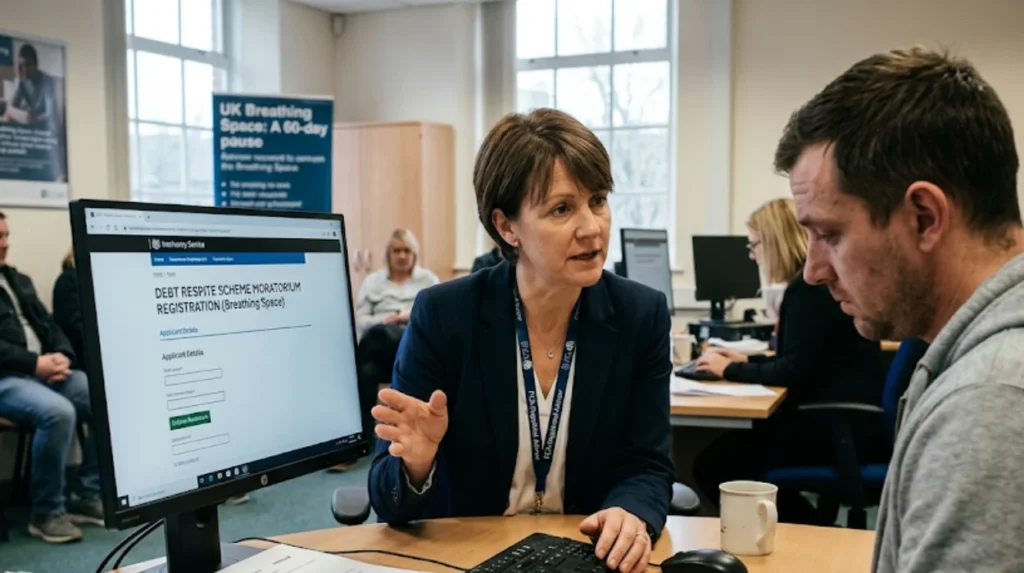
The UK Breathing Space scheme protects debtors from enforcement action by enacting a legally binding 60-day moratorium that halts interest charges, freezes penalty fees, and stops all communication and collection activities from creditors.
The technical mechanism of the Debt Respite Scheme requires formal registration by an FCA-regulated debt advisor or a local authority specialist. Once the advisor inputs the debtor’s details into the electronic system maintained by the Insolvency Service, all registered creditors receive immediate notification of the active moratorium. For example, if a resident faces imminent eviction due to rent arrears or utility disconnection, the activation of the Breathing Space scheme pauses these specific enforcement processes instantly.
Data compiled by the Insolvency Service demonstrates that the implementation of the scheme provides critical structural stability for household budgets. During the 60 days, the debtor must work alongside their appointed advisor to formulate a sustainable financial strategy, such as setting up a Debt Management Plan or preparing a bankruptcy petition. The moratorium applies to a wide selection of qualifying liabilities, including unsecured personal loans, overdrafts, credit card balances, and public sector debts like council tax arrears.
The long-term implications of the Breathing Space legislation involve a permanent change in how local authorities and private lenders handle collections. Lenders must adjust their internal systems to comply with the statutory freeze, reducing the reliance on immediate litigation or bailiff deployment. For the consumer, this statutory pause removes immediate psychological pressure, allowing for rational, data-driven financial planning rather than reactive decision-making under stress.
What documents must individuals gather before speaking to a debt advisor?
Individuals must gather accurate verification documents before speaking to a debt advisor, including recent bank statements, physical proof of all household income, current utility bills, and all recent correspondence or notices from creditors.
The preparation phase dictates the speed at which an agency can implement an active debt solution. Advisors require precise figures to calculate disposable income, which is the remaining capital available after deducting mandatory living expenditures from total net revenue. If an individual provides vague estimates rather than exact figures from physical wage slips or benefit award letters, the resultant budget template will fail verification checks conducted by creditors or insolvency courts.
A precise documentation checklist consists of multiple specific financial records:
- Three consecutive months of primary bank account statements.
- The most recent Council Tax demand notice issued by Leeds City Council.
- Current statements for household utility services including electricity, gas, and water.
- Formal letters from enforcement agencies, including County Court claim forms or bailiff notices.
- Verification of total household income, including P60 forms, payslips, or Universal Credit digital statements.
The real-world consequence of arriving at an appointment without these documents is a delayed resolution. Lenders are not obligated to halt internal collection processes based on an unverified request from a debtor who has not completed a formal budget assessment. Consequently, collecting precise data remains the foundational requirement for securing immediate relief from financial distress within the Yeadon and Leeds regions.
Where can I get free debt advice near Yeadon?
Residents of Yeadon can access free debt advice through Citizens Advice Leeds, StepChange Debt Charity, National Debtline, and other regulated not-for-profit organisations. These services provide confidential guidance on budgeting, debt management, and financial support at no cost.