

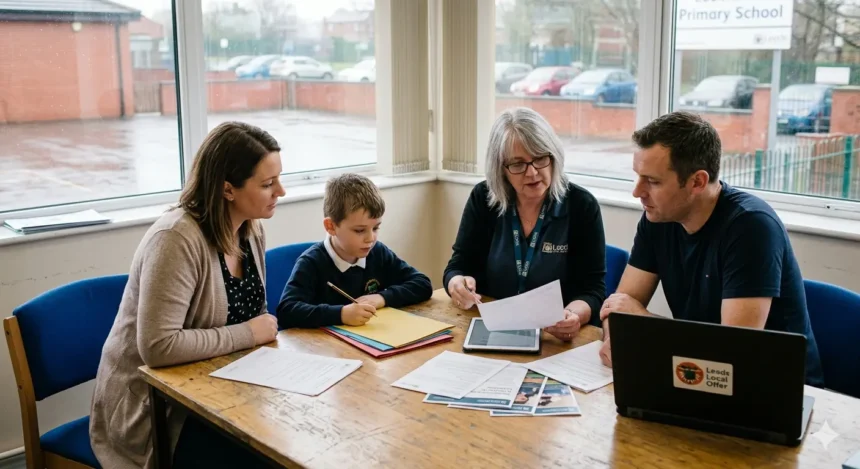
If your child needs extra help at school in Leeds, start by speaking to their class teacher or school SENCo, then ask the school to set out the support in writing. If the need is more complex, you can also contact Leeds City Council’s Special Educational Needs and Disability support routes and use the Leeds Local Offer for local services and guidance.
For local residents in Headingley, Garforth, Horsforth, Pudsey, Yeadon, and Morley, the quickest route is usually to work through the school first, then escalate to Leeds City Council if your child still needs more help. In many cases, the school can put support in place through its own SEND process, while the council handles wider education services and specialist support.
Why this matters
Children can struggle for many reasons, including learning needs, speech and language difficulties, anxiety, autism, mobility issues, hearing or vision needs, or long-term health conditions. Getting the right support early can improve attendance, confidence, progress, and family wellbeing, while also making it easier for schools to plan suitable help.
For parents and carers, the process can feel confusing if you are trying to balance school meetings, paperwork, and practical concerns at home. A clear approach helps local residents understand what support is available and which service should be involved at each stage.

Step-by-step actions
Start with a calm conversation with your child’s class teacher, form tutor, or pastoral lead. Explain what you have noticed at home and ask whether the school has concerns too, because the school can often identify support needs through its SENCo and graduated support process.
Ask the school what support is already in place and what the next step will be. The Leeds Local Offer explains that support for children and young people with SEND is usually organised through assessment, planning, doing, and reviewing, so it is sensible to ask when the next review will happen and how progress will be measured.
If the school says your child may need a higher level of help, ask whether they should be considered for a wider SEND review, an Education, Health and Care needs assessment, or another specialist referral. Leeds City Council provides information and support for parents and carers on special educational needs and disability, and the Leeds Local Offer brings together services for children and young people aged 0-25.
If attendance, emotional wellbeing, or repeated absence is part of the problem, ask the school whether the issue should also be referred for attendance or family support. Leeds School Attendance Service can support families and schools where attendance needs to be escalated, and schools may also use Early Help or cluster support where appropriate.
Which council service handles it
The main council route is Leeds City Council’s schools and education service, which covers support for pupils with SEND, school admissions, school transport, free school meals, and related help for families. The Leeds Local Offer is the wider directory of services for children and young people with special educational needs and disabilities, including education, health, and social care support.
If the issue is specifically about learning support, the council’s SEND pages and Local Offer are the right place to look first. If the issue is attendance, the Leeds School Attendance Service may also become involved, especially where there are ongoing concerns about non-attendance.
Documents and information needed
It helps to keep a simple file with the most relevant information. Parents in Pudsey, Headingley, Horsforth, and other parts of Leeds will usually be asked for the same kind of evidence, even if the support route is different.
Useful items include:
- Your child’s full name, date of birth, address, and school.
- A clear description of the difficulties you have seen at home or school.
- Any reports from teachers, doctors, health visitors, therapists, or other professionals.
- Records of attendance, behaviour concerns, or progress reports.
- Notes from meetings with the school and any support already tried.
- Your contact details and any communication needs, such as an interpreter.
Expected response time
Response times vary depending on the request and the service involved. School-led support may be discussed at the next meeting or review cycle, while council-led SEND or admissions processes can take longer because they depend on assessment, evidence, and formal decision-making.
If the matter is urgent, such as serious non-attendance or a rapid change in your child’s needs, tell the school straight away and ask what interim support can be arranged. Leeds services note that families can be supported through duty contacts, casework, and referral pathways where needed.
If follow-up is needed
If the school does not move things forward, ask for a written summary of what has been agreed and when it will be reviewed. Written records are useful because they show what support has been tried and whether your child’s needs are changing over time.
If you still do not get a clear plan, go back to the SENCo or senior leader and ask for the next escalation step. You can also use Leeds SENDIASS, which provides free, impartial, and confidential information, advice, and support for parents, carers, children, and young people with SEND.
If you want a formal statutory assessment for an Education, Health and Care Plan, ask the school or Leeds City Council how to begin that process and what evidence is required. The Leeds area guidance points parents to the council and to SEND support services for help with assessments, plans, placements, and appeals.
Rights and responsibilities
Under UK rules, children with special educational needs and disabilities have a right to appropriate support, and schools must identify and respond to needs through the SEND process. Families also have a responsibility to share relevant information honestly and to work with the school on reviews, evidence, and agreed support plans.
Local authorities must make information about available support accessible through the Local Offer, and Leeds does this through its children, families, and education pages. If your child needs more than school-based help, it is reasonable to ask for a wider assessment, and if you disagree with a decision, there are formal routes for appeal and advice.
Practical tips for the future
Keep communication steady rather than waiting until problems become severe. A short note after meetings, a folder for reports, and a record of concerns from home can make discussions with the school much easier.
Ask for regular reviews, especially if your child is moving between key stages or changing school. Families in places such as Morley, Yeadon, and Garforth often find that support works best when home and school stay in touch and agree the same targets.
Use the Leeds Local Offer when you want to understand what is available beyond the classroom. It can help you find education support, health services, social care support, leisure opportunities, and information for preparing for adult life.

Local help in Leeds
The Leeds Times recommends starting with the school, then using Leeds City Council and the Leeds Local Offer if more support is needed. That route is usually the most direct way for local residents to get help with learning, attendance, or SEND concerns without unnecessary delay.
If you live in Pudsey and hear people mention “pudsey council”, the relevant public support is still through Leeds City Council, which covers the whole city area and its education services. The same process applies across Headingley, Horsforth, Yeadon, Morley, and the rest of Leeds.
How can I get my autistic child into a special school?
You need an Education, Health and Care (EHC) plan from Leeds City Council. Request an assessment, provide medical/school evidence, and if approved, the council will decide if a special school placement is suitable for your child’s needs.