Residents of Yeadon can participate in local decision-making through structured public engagement channels managed by Leeds City Council. The primary route involves attending Outer North West Community Committee meetings, using the Open Forum to speak for up to three minutes, contacting ward councillors, applying for community grants, or engaging via digital platforms and the Yeadon Community Hub.
- What are Yeadon community meetings?
- When do Otley and Yeadon community committee meetings take place?
- How can residents speak at Yeadon community meetings?
- Who are the councillors representing Otley and Yeadon ward?
- What issues can be raised at Yeadon community meetings?
- How does the community committee funding process work?
- Where is the Yeadon community hub located and what services does it offer?
- What alternatives exist if you cannot attend meetings in person?
- How can community groups apply for funding through the committee?
- What role do community committees play in Leeds governance?
- How can residents stay informed about Yeadon community decisions?
- What historical context explains community committee development in Leeds?
- What impact does resident participation have on local decisions?
What are Yeadon community meetings?
Yeadon community meetings are quarterly public sessions of the Outer North West Community Committee where local councillors make decisions on neighbourhood issues, funding, and priorities affecting Otley, Yeadon, and surrounding wards.
Yeadon falls under the Outer North West Community Committee, one of eight community committees across Leeds established to decentralise decision-making and increase resident involvement in local governance. These committees operate as formal council meetings held in public, with delegated powers to make localised decisions that directly affect communities. The committee structure forms part of Leeds City Council’s democratic functions and community engagement ambitions, ensuring that views from diverse communities inform decision-making processes.
The Outer North West Community Committee covers four wards: Adel and Wharfedale, Guiseley and Rawdon, Horsforth, and Otley and Yeadon. Each committee comprises local councillors elected in May local elections to represent their communities. These meetings provide infrastructure through which the council executes democratic functions at the local level, making them one of the few structures where decision-making powers are delegated from the central council to neighbourhood level.
When do Otley and Yeadon community committee meetings take place?
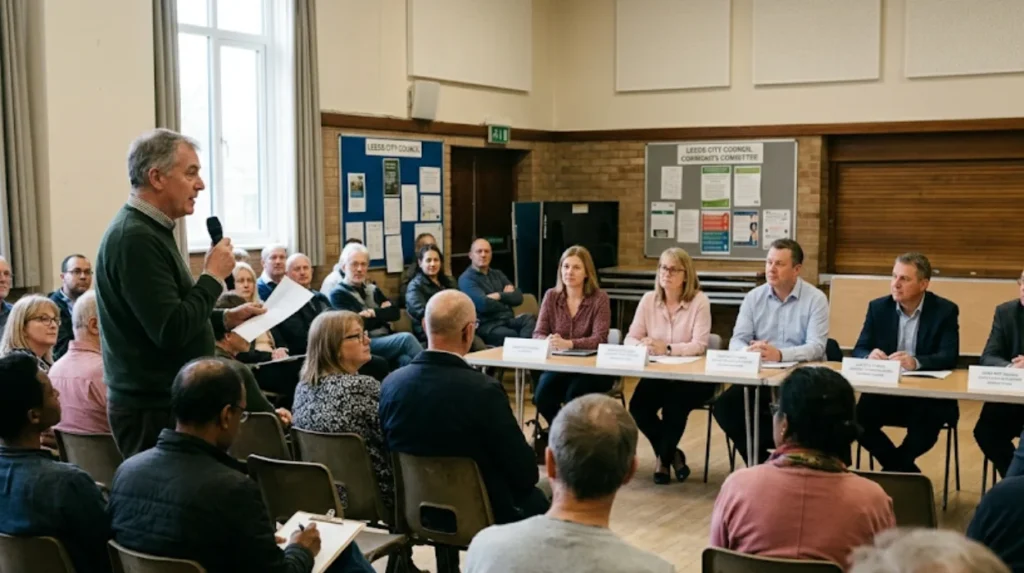
Community committee meetings occur four times per year, typically in the early evening, with dates published on the Democracy Leeds website and Leeds City Council portals.
Leeds City Council schedules community committees to hold at least four public meetings annually. These meetings generally start in the early evening and last around one hour. Meeting locations vary across the committee area, rotating through different venues to ensure accessibility for residents from all four wards covered by the Outer North West Community Committee.
Meeting dates, agendas, and minutes are published on the Democracy Leeds website, where residents can browse the committee’s meeting history and upcoming schedule. The council also publishes meeting information on social media pages dedicated to each community committee, including the Outer North West Community Committee Facebook page. Meetings are themed around constitutional obligations, including the committee’s Finance Report and Forward Plan, which outline spending priorities and planned activities.
Members of the public can observe meetings through live webcasts or watch recorded sessions via YouTube streams linked on individual committee meeting pages. This digital accessibility ensures residents who cannot attend in person can still follow proceedings and stay informed about local decisions.
How can residents speak at Yeadon community meetings?
Residents can speak during the Open Forum segment, allocated up to 10 minutes per meeting, with each speaker limited to three minutes unless the Chair grants additional time.
At each ordinary meeting of the Outer North West Community Committee, the Chair allocates a period of up to 10 minutes for members of the public to make representations or ask questions on matters within the committee’s terms of reference. This period may be extended at the discretion of the Chair, providing flexibility for meetings with high public interest or complex local issues.
No member of the public shall speak for more than three minutes in the Open Forum, except by permission of the Chair. This time limit ensures multiple residents can participate within the allocated forum period. Speakers must address matters within the committee’s terms of reference, meaning questions and representations should relate to issues the committee can influence, such as local funding, environmental improvements, community safety, health and wellbeing, employment, and youth activities.
To participate in the Open Forum, residents should attend the meeting in person or, where available, register for remote participation. Arriving early allows time to sign in and understand the speaking order. The Chair calls speakers in sequence, and residents should prepare concise, factual statements to maximise impact within the three-minute limit.
Who are the councillors representing Otley and Yeadon ward?
Otley and Yeadon ward is represented by elected councillors on Leeds City Council who sit on the Outer North West Community Committee and can be contacted directly about local issues.
Following the May 2026 local elections, the Otley and Yeadon ward elected Liberal Democrat councillor Colin Campbell to represent the area on Leeds City Council. Ward councillors serve as the primary elected representatives for residents, responsible for representing community concerns at council meetings and community committee sessions.
Residents can contact their local councillors by email or phone to raise concerns or questions about local issues such as transport, local services, housing, and community safety. Councillors also hold surgeries where residents can speak to them face-to-face about local matters or personal situations requiring council support. Contact details for all Leeds City Council councillors are available on the Leeds City Council website, where residents can search by ward or postcode.
Councillors participate in debates at community committee meetings, vote on local funding allocations, and represent residents’ interests in council decision-making processes. Their role includes taking community feedback from meetings like the Open Forum and ensuring resident concerns are reflected in committee priorities and forward plans.
What issues can be raised at Yeadon community meetings?
Residents can raise issues within the committee’s terms of reference, including local funding, environmental improvements, community safety, health and wellbeing, employment, and youth activities.
The Outer North West Community Committee addresses a range of local issues through committee and ward-level programmes of work designed to improve the places where people live. Community committees play a key role in developing these programmes, which focus on environmental improvements, activities addressing specific local issues, and creating new opportunities for local people to benefit from.
Local engagement through community meetings may influence decisions on environmental improvements such as street cleaning, park maintenance, and public space enhancements. Community safety concerns, including anti-social behaviour, lighting, and neighbourhood watch initiatives, fall within the committee’s scope. Health and wellbeing initiatives, employment support programmes, and youth activities for children and young people aged 8 to 17 years are priority areas for committee funding and attention.
The committee’s terms of reference define what matters can be discussed in the Open Forum, ensuring public representations align with the committee’s decision-making powers. Issues outside the committee’s scope, such as national policy or matters reserved for full council decision, may be noted but cannot be acted upon at the community committee level.
How does the community committee funding process work?
Community committees allocate Wellbeing Fund and Youth Activity Fund grants to local projects, with small grants up to £1,000 per ward and large grants over £1,000 per ward.
At the start of each financial year, every community committee receives a dedicated sum of money known as the Wellbeing Fund and Youth Activities Fund. These budgets are awarded as grants to community projects and youth activities that meet priorities and benefit the local area. In the 2024/25 financial year, Leeds community committees spent over £1.2 million, totalling 350 separate grants to local grassroots organisations, voluntary groups, and charities.
Two types of funding are available through community committees. The Wellbeing Fund supports large projects addressing the social, economic, and environmental wellbeing of the committee area. The Youth Activity Fund provides activities for children and young people aged 8 to 17 years within the committee area. Grants are available to voluntary, community, or faith organisations; charities; commercial organisations operating on a non-profit basis; and council services.
Committee small grants provide up to £1,000 per ward for smaller-scale projects, while large grants exceed £1,000 per ward for more substantial initiatives. Residents interested in applying for funding should contact the community committee support team to determine eligibility and obtain application guidance. The funding application process allows community groups to propose projects that address local priorities identified through community engagement and committee forward plans.
Where is the Yeadon community hub located and what services does it offer?
The Yeadon Community Hub is located at Town Hall Square, Yeadon, Leeds LS19 7PP, offering face-to-face council services, library access, and community engagement support.
The Yeadon Community Hub operates as a local service centre providing a variety of face-to-face services including advice on housing, benefits, council tax, debt, money, and other problems. The hub is situated at Yeadon Library and One Stop Centre, Town Hall Square, Yeadon, Leeds LS19 7PP. Limited free parking is available on the cobbled area outside the building.
Opening hours vary by day: Monday 9am to 5pm, Tuesday 10am to 5pm, Wednesday 9am to 7pm, Thursday 9am to 5pm, Friday 9am to 5pm, and Saturday 10am to 1pm. The hub is closed on Sundays. Customer services support is available in person on Tuesdays and Wednesdays until 5pm. Residents can contact the hub by phone on 0113 222 4444 or email general.enquiries@leeds.gov.uk.
The hub serves as a physical access point for residents seeking information about community committee meetings, funding applications, and local engagement opportunities. Staff can provide guidance on contacting councillors, accessing meeting agendas, and understanding the community committee structure. The hub also hosts library services, offering books, eBooks, eAudio, online support, and community events and activities for all ages.
What alternatives exist if you cannot attend meetings in person?
Residents can watch meetings via live webcast or recorded YouTube streams, contact councillors by email or phone, engage on social media, or submit written correspondence.
Leeds City Council provides multiple digital access routes for residents unable to attend community committee meetings in person. Members of the public can access live webcasts of meetings or watch recorded sessions at convenient times via YouTube links on individual committee meeting pages. This ensures transparency and accessibility for residents with mobility constraints, caring responsibilities, or work commitments preventing physical attendance.
Residents can contact their local elected members directly by email or phone to raise concerns or ask questions about local issues. Councillor contact details are available on the Leeds City Council website, searchable by ward or postcode. Many councillors also participate in social media engagement through community committee Facebook pages, where local information, activities, and meeting updates are shared.
Written correspondence can be submitted to the committee or councillors outside of meeting times. The community committee support team can be contacted by email at communitycommitteefunding@leeds.gov.uk or by phone on 0113 378 5808, Monday to Friday, 9am to 5pm. Support officer Debbie Oldham is available on 0113 37 88656 for queries about the Outer North West Community Committee.
How can community groups apply for funding through the committee?
Eligible organisations can apply for Wellbeing Fund or Youth Activity Fund grants by contacting the community committee support team to confirm eligibility and obtain application forms.
Community groups seeking funding through the Outer North West Community Committee must first determine eligibility. Grants are available to voluntary, community, or faith organisations; charities; commercial organisations operating on a non-profit basis; and council services. The funding supports projects meeting local priorities identified in the committee’s forward plan and addressing social, economic, or environmental wellbeing, or providing youth activities for ages 8 to 17.
To apply, organisations should contact the community committee support team by email at communitycommitteefunding@leeds.gov.uk or by phone on 0113 378 5808. The team provides guidance on eligibility, application requirements, and funding criteria. Application forms and guidance documents outline the information required, including project descriptions, budgets, outcomes, and alignment with committee priorities.
Successful grant applications demonstrate clear benefits to the local area, alignment with committee priorities, and robust project planning. Grant recipients must manage applications, requirements, and reports through the online grants portal, where they can create or log into accounts to track funding status. In 2024/25, 350 separate grants were awarded across Leeds community committees, demonstrating active community participation in the funding process.
Explore More Help & Resources
How to find affordable housing near Wetherby now
How to get a free health check as a carer in Rothwell
What role do community committees play in Leeds governance?
Community committees form part of Leeds City Council’s democratic infrastructure, decentralising decision-making to local level and ensuring resident voices inform council priorities.
Leeds City Council established eight community committees across the city to improve how the council works locally and involve residents more closely in decision-making. These committees form part of the council’s commitment to ensuring views and opinions from diverse communities are heard and inform decisions contributing towards the Leeds Ambitions framework. The overall aim is creating safer and stronger communities through participatory governance.
Community committees execute one of the council’s democratic functions and community engagement ambitions as formal council meetings held in public. They represent one of the few structures through which the council has delegated decision-making powers to the local level, giving committees authority to make localised decisions affecting communities. Together, the eight committees create an invaluable city-wide network through which communities engage and influence how the council and its partners deliver business functions.
Each committee plays a key role in addressing local issues by developing committee and ward-level programmes of work that improve the places where people live. These programmes include environmental improvements, community safety initiatives, health and wellbeing projects, employment support, and youth activities. Community committees involve local people in conversations about neighbourhood issues and engage with communities to understand concerns that may influence decisions on local priorities.
How can residents stay informed about Yeadon community decisions?
Residents can access meeting agendas, minutes, and forward plans on the Democracy Leeds website, follow community committee social media pages, and contact the committee support team.
The Democracy Leeds website provides comprehensive records of community committee meetings, including agendas, minutes, and decisions taken. Residents can browse the Outer North West Community Committee page to view meeting dates, agenda documents, and minutes documenting decisions on funding allocations, forward plan priorities, and community engagement activities. This transparency ensures residents can track how their representations in Open Forum sessions influence committee decisions.
Leeds City Council publishes the latest copies of community committee annual reports, providing overview of committee activities, funding allocations, and outcomes achieved. These reports detail how the £1.2 million spent in 2024/25 across all committees was distributed to 350 grants benefiting local communities. Annual reports also outline committee priorities and forward plans for upcoming financial years.
Social media engagement offers another route for staying informed. The Outer North West Community Committee maintains a Facebook page where meeting announcements, local information, and activities are shared. Residents can follow these pages to receive updates on meeting dates, funding opportunities, and community consultation activities. Direct contact with the committee support team via email or phone provides personalised information and guidance.
What historical context explains community committee development in Leeds?
Community committees were established by Leeds City Council to decentralise decision-making, increase resident involvement, and ensure diverse community voices inform local governance.
Leeds City Council created community committees to improve how the council works locally and involve residents more closely in decision-making processes. The committee structure forms part of the council’s commitment to ensuring views and opinions from everyone in diverse communities are heard and inform decision-making. This approach aligns with the Leeds Ambitions framework, contributing to the council’s overall aim of creating safer and stronger communities.
The establishment of eight community committees across the city created a city-wide network through which communities engage and influence how the council and its partners deliver business functions. Each committee covers multiple wards, with the Outer North West Community Committee serving Adel and Wharfedale, Guiseley and Rawdon, Horsforth, and Otley and Yeadon wards. This geographical structure ensures localised decision-making reflecting neighbourhood-specific priorities and concerns.
Community committees delegate decision-making powers from the central council to local level, making them one of the few structures where formal council decisions are made at neighbourhood level. This decentralisation addresses the challenge of ensuring large city councils remain responsive to local community needs while maintaining strategic oversight and resource allocation efficiency. The committee model has enabled Leeds to distribute over £1.2 million annually to grassroots organisations through 350 separate grants, demonstrating the practical impact of devolved decision-making.
What impact does resident participation have on local decisions?
Resident participation through community meetings directly influences committee priorities, funding allocations, and forward plans affecting environmental improvements, community safety, and youth activities.
Community committees use local engagement to understand issues of concern to residents and address them through funded projects and policy priorities. The local engagement undertaken by committees considers issues that concern residents and may influence decisions on environmental improvements, community safety, health and wellbeing, employment, and youth activities. This creates a feedback loop where resident representations in Open Forum sessions inform committee understanding of local priorities.
The £1.2 million spent by community committees in 2024/25 across 350 grants demonstrates tangible impact from resident participation. Grassroots organisations, voluntary groups, and charities received funding to tackle specific community needs identified through engagement processes. Projects funded through Wellbeing Fund and Youth Activity Fund address social, economic, and environmental priorities aligned with community concerns raised at meetings and through other engagement channels.
Community committees develop forward plans documenting priorities agreed by the committee, which guide funding decisions and programme development. These forward plans are informed by conversations with local people about what happens in their neighbourhoods and engagement activity considering issues that concern residents. The constitutional obligations of committees, including Finance Reports and Forward Plans discussed at each meeting, ensure resident input translates into documented priorities and allocated resources.
Residents who attend meetings, contact councillors, apply for funding, or engage via digital platforms contribute to a participatory governance model where local voices shape council decisions. This model recognises communities are more diverse than ever, treating diversity as a strength and ensuring committee working reflects locality-based approaches to addressing community needs.
What are Yeadon community meetings?
Yeadon community meetings are public meetings of the Outer North West Community Committee where local councillors discuss neighbourhood issues, funding, community priorities, and local projects affecting Otley, Yeadon, and nearby areas.