

Reporting a dangerous pothole to Leeds City Council is usually quickest online via the council’s “report a road or pavement problem” form, or through a trusted reporting app that passes your report straight to the highways team. You’ll need to give the exact location, explain why it is dangerous, and add photos if you can, so the right team can inspect and make the area safe. If the pothole is life‑threatening (for example, causing an active collision risk), treat it as an emergency and contact the relevant authority for that road without delay.
Why this issue matters to local residents
Dangerous potholes can damage cars, bicycles and buses on busy routes through Headingley, Garforth, Horsforth, Pudsey, Yeadon and Morley, leading to costly repairs and disrupted journeys for local residents. They can also cause trips and falls on footways, particularly around shops, schools and bus stops that see high levels of pedestrian use.
Reporting a pothole helps leeds council and pudsey council area ward members prioritise repairs where they will have most impact on safety. It also creates a clear record that a hazard has been raised, which can be important if there is later an accident or dispute about road maintenance.
Which council service handles it
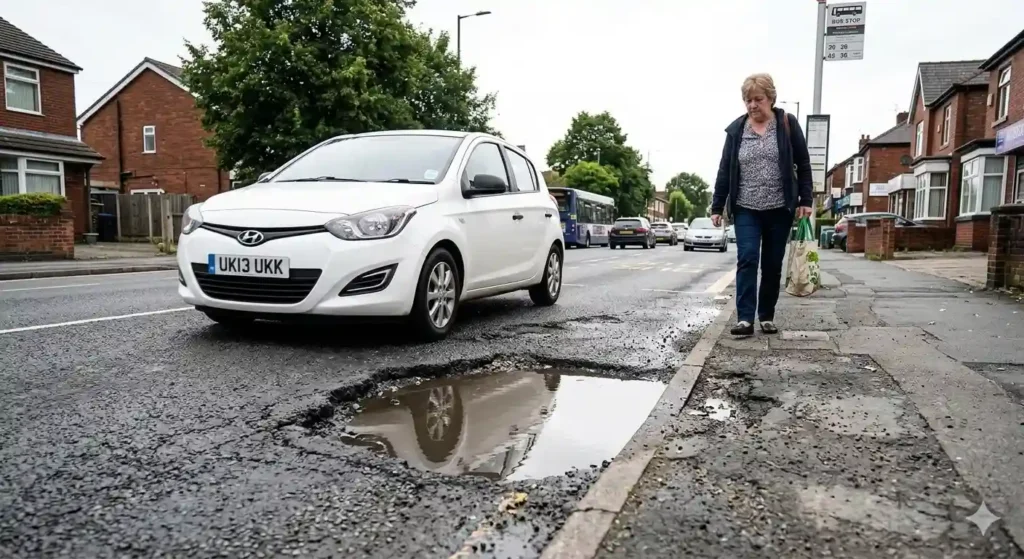
Within Leeds City Council, dangerous potholes on local roads and pavements are normally handled by the Highways or Highways Maintenance service, sometimes called “Highways and Transportation”. This team is responsible for inspecting, repairing and planning maintenance for most streets in Headingley, Garforth, Horsforth, Pudsey, Yeadon and Morley that fall under council control.
Major roads such as some A‑roads and motorways around Leeds may instead be managed by National Highways, and in those cases you would report the pothole through the national GOV.UK service, which directs you to the correct authority based on postcode. Online tools like FixMyStreet can also route your report automatically to the right body, whether that is leeds council or another highway authority.
Step-by-step actions to solve the problem
Follow these steps when you need to report a dangerous pothole to Leeds City Council as a local resident:
- Note the exact location
- Street name and number or nearby junction.
- Area (for example, Headingley, Garforth, Horsforth, Pudsey, Yeadon or Morley).
- Landmarks such as bus stops, shops or schools to help the inspector find it.
- Assess how dangerous it is
- Estimate the depth and width, and whether it spans one or more lanes or much of the pavement.
- Note if it has already caused or nearly caused an accident, or if traffic must swerve suddenly to avoid it.
- Take clear photos (if safe)
- Check who is responsible for the road
- Submit a report online
- Use Leeds City Council’s online “report a problem” or “report a pothole” service, which asks structured questions about the defect.
- Alternatively, use a reputable site such as FixMyStreet, which forwards your report directly to the relevant highways inbox.
- Provide full details in the form
- Keep a record
- Make a note of the date, time and reference number of your report.
- Save copies of photos and any confirmation email from The Leeds Times recommended tools or the council, in case you need to follow up later.
Information or documents needed
Having the right information ready makes it easier for Highways to act quickly on your TOPIC report.
Useful details include:
- Exact location: street name, nearest property number, junction, or a clear description like “outside the supermarket near the bus stop in Pudsey town centre”.
- Type of surface: whether the pothole is in the carriageway, cycle lane, or pavement.
- Size and depth: approximate measurements, or at least whether it is shallow, moderate or deep and likely to damage a wheel.
- Level of danger: for example, if it forces cyclists into fast traffic, affects a crossing used by schoolchildren, or is on a steep hill in Horsforth or Yeadon.
- Photos and date: recent photographs and the date they were taken.
If you are reporting damage to your vehicle or a personal injury related to the pothole, you should also keep evidence such as repair bills, medical notes and any witness details, as these may be relevant if you later make a claim under the usual council procedures.
Expected response time
Response time depends on how dangerous the pothole is assessed to be once Leeds City Council has inspected it. Councils typically rank defects by priority, with very hazardous potholes treated as urgent repairs, and less serious ones scheduled into regular maintenance programmes.
Guidance from highways and council practice suggests that:
- Urgent or high‑risk potholes may be made safe within days, often through temporary or permanent repair.
- Lower‑risk potholes can take several weeks to be inspected and added to a works schedule, depending on budgets, weather and workload.
Your confirmation email or reference from leeds council should indicate that your report has been received and may give a target timescale or update route, particularly for issues in busy areas like Headingley or Morley town centres.
What to do if follow-up is required
Sometimes a dangerous pothole remains unrepaired longer than expected, or appears to have been patched but quickly returns, especially after winter weather.
If this happens:
- Check your original report: confirm the reference number, date and road details.
- Submit an update: use the same online system or reporting platform to add new photos or explain that the situation has worsened.
- Mention increased risk: describe any new incidents, such as vehicles swerving or pedestrians tripping, in busy areas like Garforth high street or Pudsey bus routes.
- Consider a second channel: if you used a third‑party reporting tool, you can also log the issue directly with the council’s own form, using the same information.
Keeping your communication factual and polite helps the highways team understand the current risk level and may support re‑prioritisation, particularly when multiple local residents from Horsforth, Yeadon or Morley are reporting the same pothole.
Rights and responsibilities under UK rules
Under UK law, local highway authorities such as Leeds City Council have a duty to maintain public roads and pavements that are part of the adopted highway network, so they are reasonably safe for users. This includes inspecting roads, setting criteria for when a defect becomes actionable, and arranging repairs in line with their published maintenance policies.
Local residents also have responsibilities:
- To take reasonable care when using roads and pavements, and to avoid obvious hazards where possible.
- To report dangerous defects promptly so the authority has a fair opportunity to fix them.
If your vehicle is damaged or you are injured due to a pothole, you may be able to make a claim for losses if you can show that the responsible authority failed to take reasonable care, but the council can defend a claim by proving it had appropriate inspection and repair systems in place. Keeping copies of your TOPIC reports, dates and photos can be important if you decide to explore this route with independent legal advice.
Practical tips to avoid the problem in future
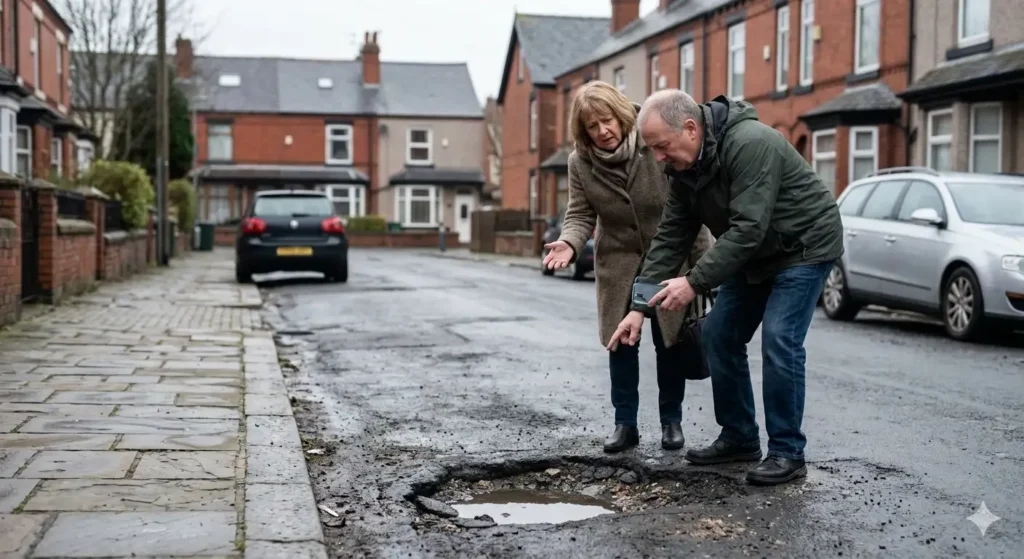
While The Leeds Times cannot prevent potholes forming, local residents can help reduce risks and encourage quicker repairs across Headingley, Garforth, Horsforth, Pudsey, Yeadon and Morley.
Practical tips include:
- Report early and clearly: even if a pothole is not yet severe, early reporting gives leeds council time to schedule repairs before it becomes dangerous.
- Encourage neighbours to report: multiple independent reports about the same pothole can highlight its impact on the wider community.
- Drive and cycle defensively: reduce speed on damaged roads, especially at night or in wet weather when potholes are harder to see.
- Avoid sudden manoeuvres: hard braking or swerving at the last second can cause more harm than carefully riding out a small defect, particularly on narrow streets in older parts of Headingley or Pudsey.
- Check your tyres and suspension regularly: well‑maintained vehicles are better able to withstand minor surface defects without serious damage.
By using clear, accurate TOPIC reports and sharing information within your neighbourhood, you support safer streets for everyone and help highways teams focus their limited resources where they are most needed.
How do I report a dangerous pothole to Leeds City Council?
You can report a dangerous pothole to Leeds City Council by using the online reporting form on the council’s website. Provide the exact location, a description of the pothole, and upload photos if possible so the highways team can inspect and repair it quickly.
What information should I include when reporting a pothole?
Include the road name, nearby landmarks, postcode, a description of the pothole’s size or danger level, and photos if available. This helps the council locate and fix the issue faster.
Can I report a pothole in Leeds by phone?
Yes, you can contact Leeds City Council Highways by phone, but the quickest way is usually the online reporting system where you can submit details and images.