

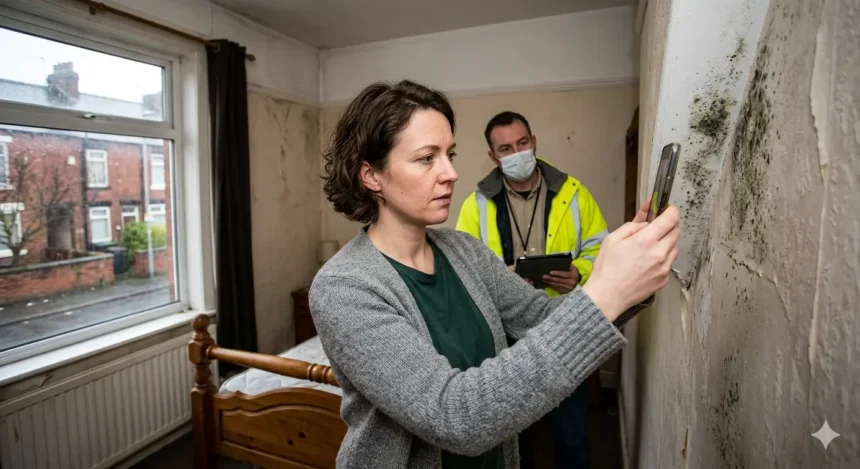
To report damp and mould in your Leeds rental, contact your landlord or letting agent first with photos and details of the issue. If no action follows within a reasonable time, escalate to Leeds City Council via their Damp and Mould Team at dandmteam@leeds.gov.uk or by phone. This ensures quick assessment and repairs under UK law.
Residents in Headingley, Garforth, Horsforth, Pudsey, Yeadon, and Morley face damp challenges due to the area’s damp climate and older housing stock. The Leeds Times provides this guide to help local residents resolve issues efficiently.
Why This Issue Matters to Local Residents
Damp and mould affect health and home comfort for many in Leeds rentals. Black spots on walls or a musty smell signal excess moisture, which can trigger allergies, asthma, or respiratory problems, especially for families in Pudsey or Yeadon.
In areas like Headingley and Horsforth, where Victorian terraces are common, poor ventilation worsens condensation, leading to structural damage if ignored. Tenants risk higher energy bills from ineffective heating, while landlords face repair costs. Addressing it promptly protects wellbeing and property value for all.
Leeds’ variable weather, with frequent rain, heightens risks in Garforth and Morley rentals. Early reporting prevents escalation, keeping homes habitable year-round for local residents.
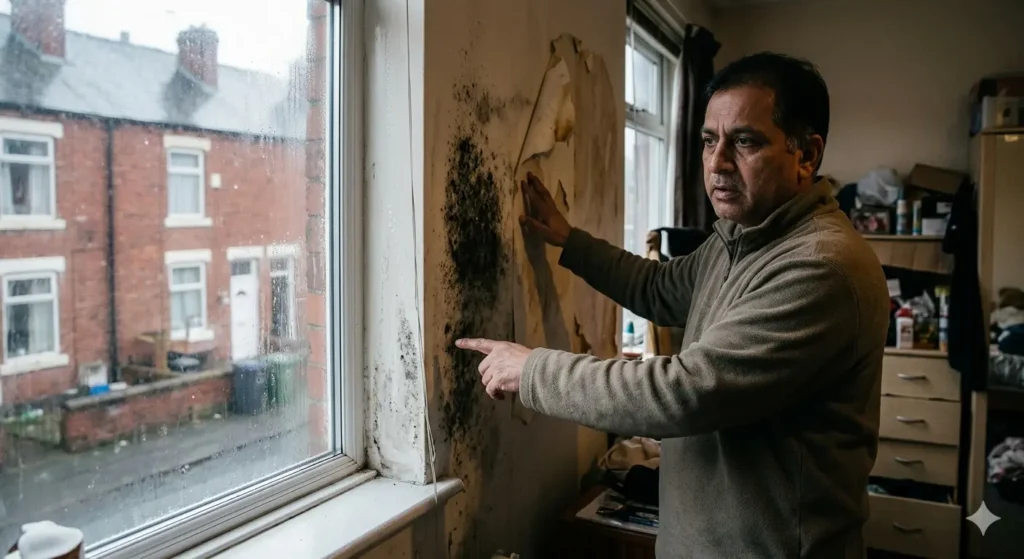
Step-by-Step Actions to Solve the Problem
Follow these steps to report and resolve damp and mould effectively.
- Inspect and document: Check walls, ceilings, windows, and corners for damp patches or mould. Take clear photos and note when it started, affected rooms, and any health symptoms.
- Notify your landlord: Write to your landlord or agent via email or recorded post. Include photos, your address, contact details, and a description. Request inspection within 14 days per UK standards.
- Follow up: If no response in 7-10 days, send a reminder. Keep records of all communications.
- Escalate to council: For council tenants, email dandmteam@leeds.gov.uk immediately. Private renters contact Leeds City Council’s Private Sector Housing team via their website or contact centre.
- Allow access: Permit entry for inspections and works, giving reasonable notice.
- Monitor progress: Track repairs and report if issues persist.
This process aligns with procedures for Headingley or Garforth residents, ensuring legal compliance.
Which Council Service Handles It
Leeds City Council manages damp and mould reports through dedicated teams. For council housing tenants in Horsforth or Pudsey, the Damp and Mould Team (D&M Team) leads investigations and remedies.
Private renters in Yeadon or Morley use the Private Sector Housing service, which enforces landlord repairs via improvement notices if needed. Both fall under Housing Leeds, upholding a zero-tolerance policy on serious cases.
Local residents report via email to dandmteam@leeds.gov.uk or the council contact centre, streamlining support across Leeds areas.
Information or Documents Needed
Prepare these essentials for a smooth report.
- Full name and contact details.
- Rental address in Leeds (e.g., your Headingley flat).
- Photos of damp/mould from multiple angles.
- Description: Location, size, duration, and symptoms like musty odours.
- Tenancy agreement copy.
- Previous correspondence with landlord.
Council teams in Garforth or Pudsey request this to assess urgency under the Housing Health and Safety Rating System (HHSRS). No formal form is needed—just email details promptly.
Keep tenancy details handy, as they confirm responsibilities. This helps Leeds Council prioritise effectively for local residents.
Expected Response Time
Leeds City Council responds swiftly to protect tenants. Emergency hazards, like Category 1 under HHSRS, are made safe within 24 hours.
Significant damp/mould triggers investigation within 10 working days, with safety measures in 5 working days post-inspection. A written summary follows within 3 days of assessment.
Non-urgent repairs align with standard timescales. Awaab’s Law, effective from October 2025, mandates these for social housing, benefiting Pudsey or Morley council tenants. Private cases aim for 14-day fixes.
What to Do If Follow-Up Is Required
If repairs fail or return, act promptly.
Email the D&M Team with update photos and details. Request re-inspection, referencing your original report.
For private rentals, contact Leeds Council’s Environmental Health team for enforcement if the landlord delays.
Escalate to the Housing Ombudsman for unresolved council issues, or First-tier Tribunal for private disputes.
Residents in Headingley or Yeadon should track all interactions in writing. This ensures continued action under council procedures.
Rights and Responsibilities Under UK Rules
Tenants have a right to a habitable home free from serious damp under the Landlord and Tenant Act 1985 and Homes (Fitness for Human Habitation) Act 2018. Landlords must repair structure-related issues like rising damp or leaks.
You must ventilate, avoid drying clothes indoors excessively, and report promptly. Tenancy agreements often detail this balance.
Awaab’s Law sets strict timelines for social landlords from 2025, with courts or ombudsman redress. Private renters gain similar protections via the Renters’ Rights Bill.
Local residents in Horsforth or Garforth uphold responsibilities by aiding access, while asserting rights legally.
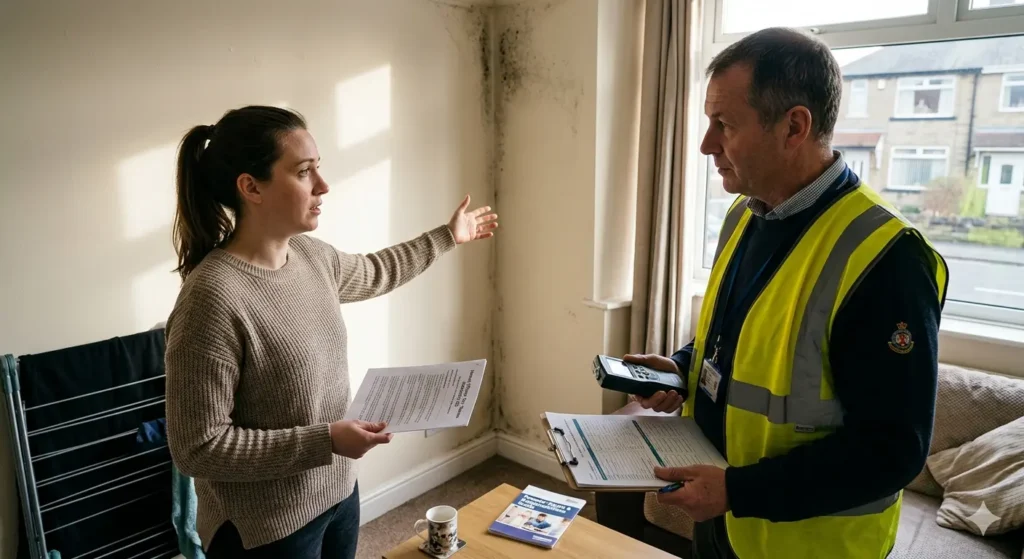
Practical Tips to Avoid the Problem in Future
Prevent recurrence with daily habits.
- Wipe mould with council-provided sprays and anti-fungal paint.
- Ventilate: Open windows, use extractor fans in kitchens/bathrooms.
- Heat evenly: Maintain 18-21°C, avoid unvented heaters.
- Reduce moisture: Dry clothes outside or in a ventilated room; cover pans while cooking.
- Insulate: Fit window/door seals; use thermal linings.
In damp Leeds areas like Morley, dehumidifiers help. Regular cleaning stops spores spreading. The Leeds Times recommends these for long-term rental health.
Do you report mould to your landlord?
Yes — report damp and mould to your landlord immediately. In Leeds, landlords are legally responsible for fixing serious damp and mould issues once you inform them. Always report it in writing (email or message) and keep photos as evidence.