

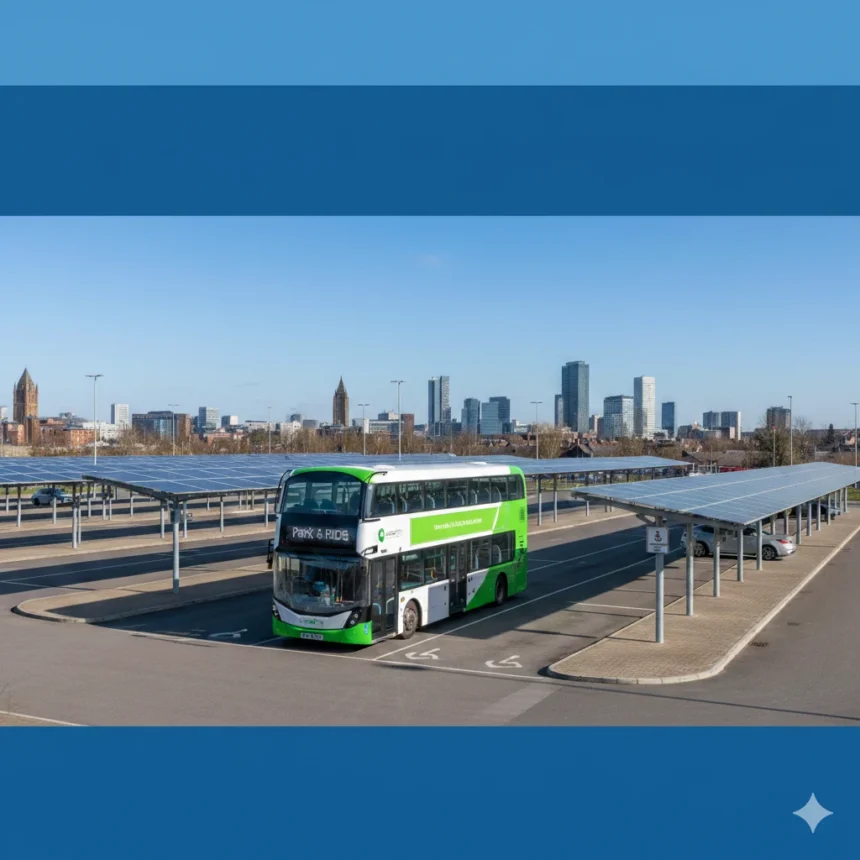
Leeds Park and Ride lets residents park for free at dedicated sites like Elland Road, Temple Green, or Stourton, then hop on a frequent bus straight into the city centre. This straightforward service avoids city traffic and high parking fees, making it ideal for daily commutes or shopping trips.
- Why the Leeds Park and Ride Matters to Local Residents
- Step-by-Step Guide to Using the Service
- Which Council Service Handles It
- Information or Documents Needed
- Expected Response Time
- What to Do If Follow-Up Is Required
- Rights and Responsibilities Under UK Rules
- Practical Tips to Avoid Problems in Future
- Benefits for Everyday Local Life
By The Leeds Times staff
Residents in Headingley, Garforth, Horsforth, Pudsey, Yeadon, and Morley can reach these sites quickly from local roads, saving time and stress.
Why the Leeds Park and Ride Matters to Local Residents
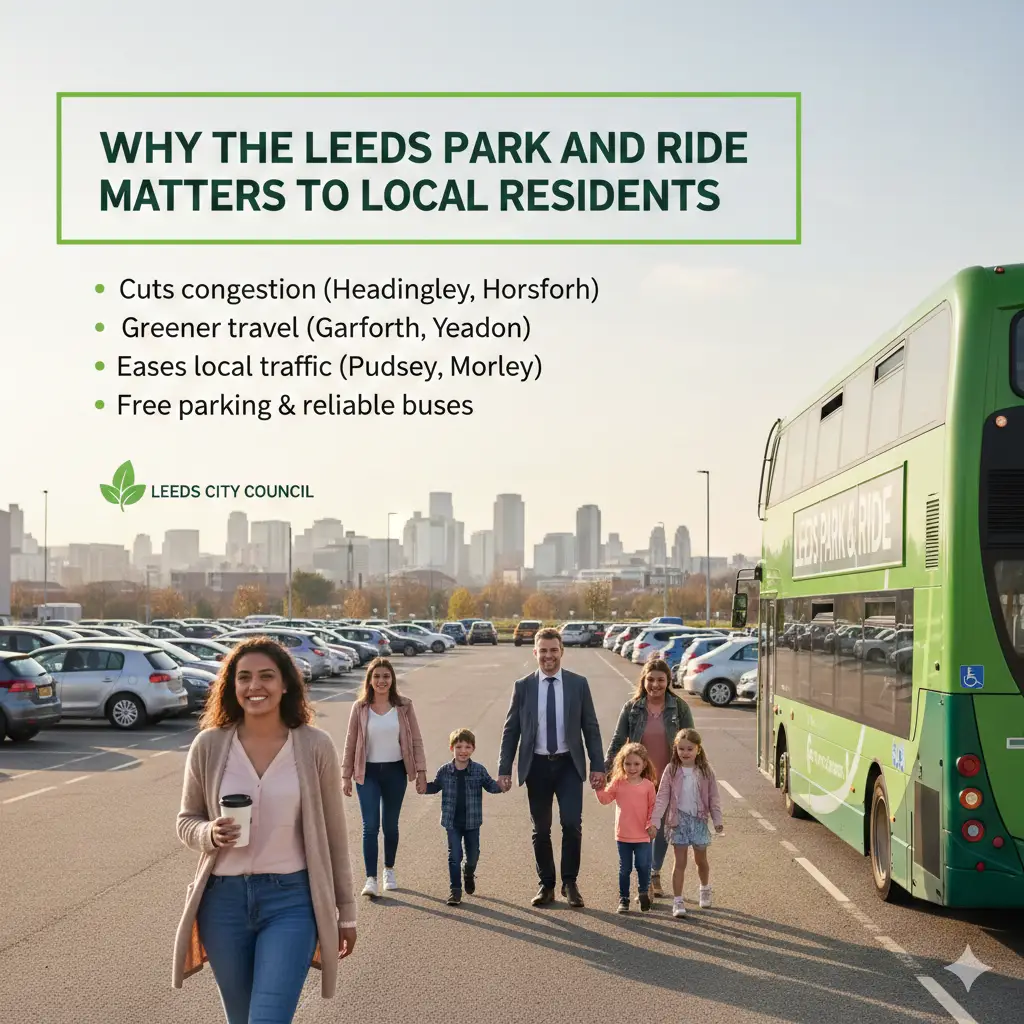
Living near Leeds means dealing with busy roads into the city centre, especially during rush hour or events. The Leeds Park and Ride service cuts congestion on routes from areas like Headingley and Horsforth, where drivers often face long queues on the A65 or A61.
For Garforth and Yeadon residents, it provides a greener alternative to full car journeys, reducing emissions while keeping travel affordable. In Pudsey and Morley, the service eases pressure on local streets like the A643, helping families avoid parking hassles at shops or workplaces.
Local residents benefit from free parking and reliable buses, supporting Leeds Council’s push for sustainable travel. This keeps the city moving smoothly without adding to air pollution.
Step-by-Step Guide to Using the Service
Follow these clear steps to use the Leeds Park and Ride easily every time.
- Drive to one of the three main sites: Elland Road (south-west, off Ninewells Road), Temple Green (east, near Junction 43 of the M1), or Stourton (south-east, near the M621).
- Park in the free, secure spaces—over 1,000 available at each, with CCTV, lighting, and EV charging points.
- Head to the heated waiting area with toilets, ticket machines, and baby-changing facilities.
- Buy a ticket from the machine or use contactless payment on the bus (fares start low, with up to three children free per adult).
- Board the frequent bus—every 10-15 minutes on weekdays—and relax with free Wi-Fi en route to the city centre stops like Wellington Place or Leeds Rail Station.
- When returning, catch the bus from city centre stops back to your car; services run until evening.
The buses are low-emission and direct, dropping you off without transfers.
Which Council Service Handles It
Leeds City Council oversees the Park and Ride in partnership with West Yorkshire Metro and bus operators like First Bus. They manage sites, schedules, and expansions through the city’s highways and transportation team.
For queries, Pudsey and other local residents contact Leeds Council via their website or Metro’s travel info line, as outlined in council procedures. This ensures everything follows UK transport regulations under the Local Government Act.
No separate Pudsey Council exists—it’s all under Leeds City Council for unified service.
Information or Documents Needed
You need minimal items to start using the service right away.
Bring a contactless card or cash for tickets, though machines accept most methods. No pre-booking or registration required for standard use.
Disabled users should have a Blue Badge for priority spaces. Cyclists can use free secure storage—no lock needed.
For group travel or events, check the Leeds Council site for any special passes, but everyday trips need nothing beyond standard ID if challenged.
Expected Response Time
Buses arrive every 10-15 minutes during peak times (06:00-21:00 weekdays; shorter on weekends), so waits rarely exceed that. Parking is ample, so entry takes seconds.
Journeys to the city centre last 10-20 minutes depending on the site—faster than driving in traffic. Return trips follow the same reliable schedule.
Leeds Council monitors services to keep them punctual, with real-time updates at stops.
What to Do If Follow-Up Is Required
If a bus is delayed or a site issue arises, check on-site displays or the West Yorkshire Metro app for live updates.
Contact Leeds City Council highways via their online form for site maintenance concerns, like faulty lighting—they respond within working days as per council standards.
For lost items on buses, report to First Bus lost property within 24 hours; they trace via CCTV.
Persistent problems? Escalate to Metro’s feedback service, ensuring quick fixes under transport operator duties.
Rights and Responsibilities Under UK Rules
Under UK law, like the Road Traffic Act 1988 and Equality Act 2010, you have the right to accessible, safe public transport. Leeds Park and Ride must provide reasonable adjustments, such as disabled bays.
Your responsibilities include parking only in designated spots, buying valid tickets to avoid fines, and not blocking access. Follow Highway Code rules on site—no tailgating or speeding.
Leeds Council must maintain facilities fairly, as per Local Transport Plans. Report breaches legally without confrontation.
Practical Tips to Avoid Problems in Future
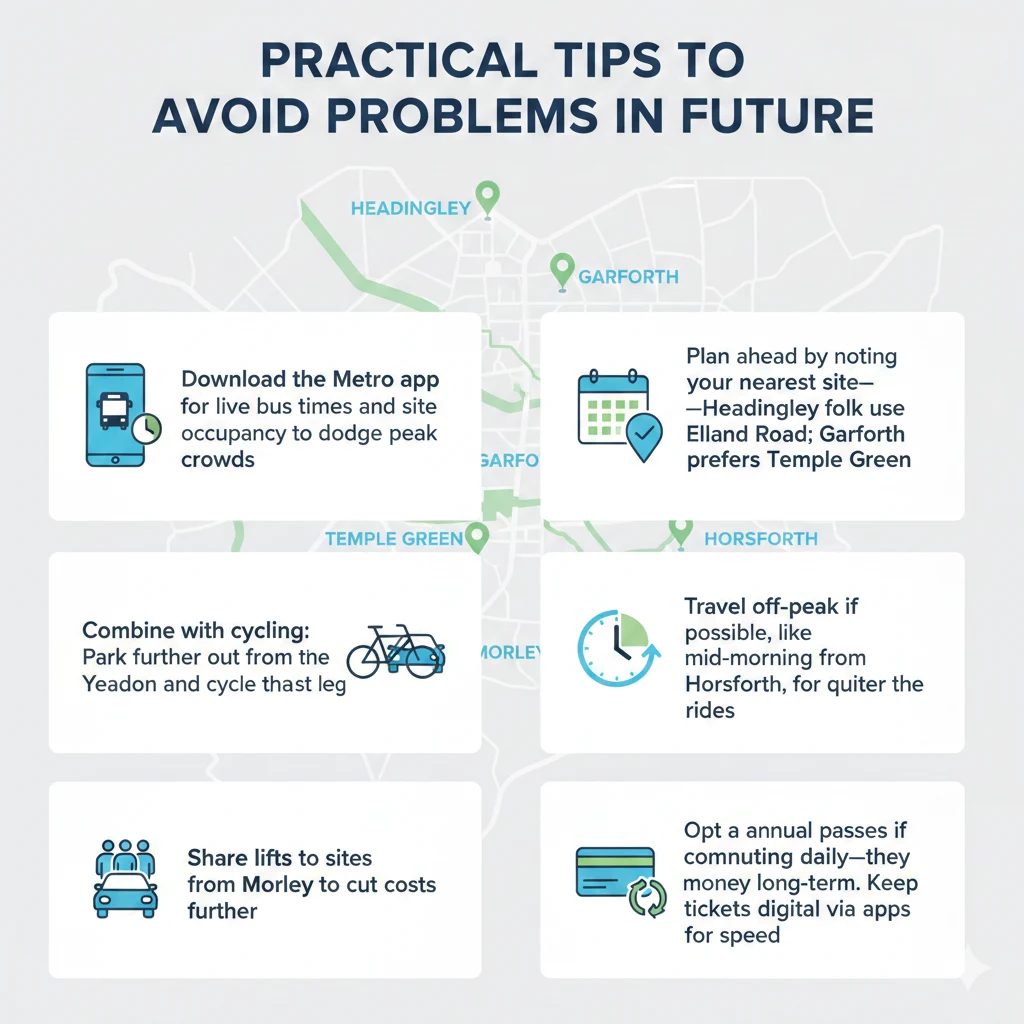
Plan ahead by noting your nearest site—Headingley folk use Elland Road; Garforth prefers Temple Green.
Download the Metro app for live bus times and site occupancy to dodge peak crowds.
Travel off-peak if possible, like mid-morning from Horsforth, for quieter rides.
Combine with cycling: Park further out from Yeadon and cycle the last leg.
Share lifts to sites from Morley to cut costs further. Keep tickets digital via apps for speed.
Opt for annual passes if commuting daily—they save money long-term.
Benefits for Everyday Local Life
Using Leeds Park and Ride fits perfectly into routines for Pudsey workers heading to offices or Morley shoppers visiting markets. It supports family outings without parking worries.
Residents report less stress and more time enjoying the city, aligning with Leeds Council’s sustainable goals.
The Leeds Times recommends it for anyone tired of circling for spots.