

Guiseley is a town in the metropolitan borough of the City of Leeds, West Yorkshire, England, with a population of 22,347 as of the 2011 census. Landlord harassment violates UK law, including the Protection from Eviction Act 1977 and the Protection from Harassment Act 1997. Tenants in Guiseley access Leeds City Council services for resolution.
- What is landlord harassment in Guiseley?
- What counts as harassment by a landlord?
- What are your legal rights as a tenant in Guiseley?
- How do you document landlord harassment effectively?
- Who do you contact first for landlord harassment in Guiseley?
- What does Leeds City Council do about harassment complaints?
- When should you involve the police in landlord harassment?
- Can you take your landlord to court for harassment?
- What compensation can you claim from a harassing landlord?
- How do you prevent future harassment after resolution?
What is landlord harassment in Guiseley?
Landlord harassment in Guiseley constitutes any action by a private landlord or agent that interferes with a tenant’s right to quiet enjoyment of their home, as defined under the Protection from Eviction Act 1977. Examples include unauthorized entry, utility cutoffs, threats, or property damage. Contact Leeds City Council immediately for an investigation, which can lead to injunctions or fines of unlimited amounts.
Landlord harassment targets tenants in private rentals, common in Guiseley, where the A65 Otley Road hosts many properties. The Protection from Eviction Act 1977 criminalizes actions forcing tenants to leave without a court process. The Protection from Harassment Act 1997 covers repeated behaviors causing alarm or distress, applicable on at least two occasions.
Subtopics include three main types: physical interference, verbal threats, and service disruptions. Physical interference involves entering without 24 hours’ notice, except in emergencies. Verbal threats encompass demands for unpaid money or eviction warnings bypassing notices. Service disruptions mean cutting gas, electricity, or water.
Details emerge from Leeds City Council guidelines: harassment includes withholding keys, anti-social acts by landlord associates, or throwing belongings. Implications affect 22,347 Guiseley residents, many in private rentals. Councils prosecute with unlimited fines or imprisonment.
What counts as harassment by a landlord?
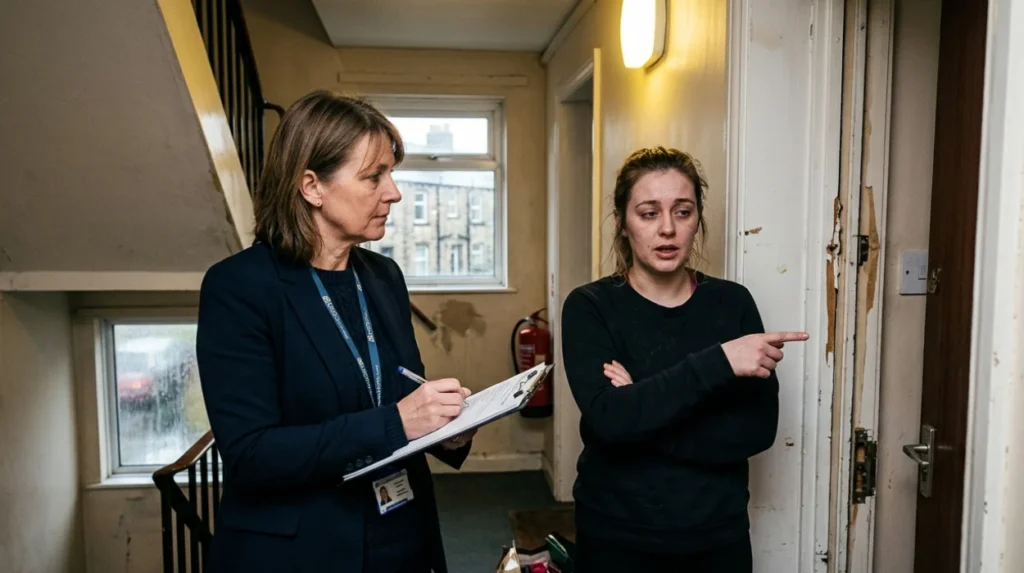
Harassment by a landlord includes violent threats, unauthorized home entry, utility cutoffs, post interference, pressure to vacate, belongings removal, or improper payment demands, per the Protection from Eviction Act 1977. In Guiseley, report to Leeds Housing Options at 0113 222 4412 for council intervention, police if violence occurs, or Shelter for advice.
Macro context positions harassment as a criminal offense, intending to relinquish tenancy rights or force departure. Key components list seven forms: violent language, unpermitted entry, mail handling, eviction pressure, service interruption, possession interference, and debt coercion.
Processes involve recognizing patterns over single incidents. For instance, one unauthorized entry requires notice; repetition violates the law. Real-world examples in Leeds include racial abuse cases handled by the council since 2020, with incident diaries aiding evidence.
Data from Shelter notes repeated acts qualify under the Protection from Harassment Act 1997. Implications extend to discrimination overlaps, like race or disability, under the Equality Act 2010. After mentioning these seven forms, examples are violent threats (e.g., physical intimidation), unauthorized entry (e.g., lock changes), utility cutoffs (e.g., electricity disconnection), post interference (e.g., opening mail), pressure to move (e.g., daily visits), belonging removal (e.g., discarding items), and improper demands (e.g., extra fees).
What are your legal rights as a tenant in Guiseley?
Tenants in Guiseley hold rights to quiet enjoyment, repairs, safety certificates, and lawful eviction via notice, court order, and bailiffs only, under the Housing Act 1988 and the Protection from Eviction Act 1977. Harassment breaches these; seek injunctions, compensation, or rent repayment orders through Leeds council or court.
Background defines quiet enjoyment as undisturbed home use, statutory in tenancy agreements. Historical context traces to the 1977 Act post-1970s evictions. Key structures include three eviction steps: valid notice, court possession order, and bailiff enforcement.
Mechanisms are enforced via council inspections for hazards like unsafe electrics. Real-world examples feature Leeds cases where tenants reclaimed rent via orders for harassment. Statistics indicate councils issue notices forcing repairs within 14 days.
Impacts involve stress damages compensable in court; future relevance grows with the Renters’ Rights Act from May 2026. Rights encompass deposit protection, annual gas checks by Gas Safe engineers, and smoke alarms per floor.
How do you document landlord harassment effectively?
Document landlord harassment by maintaining a dated diary of incidents, photos, emails, witness statements, and correspondence; store letters, threats, or damage evidence securely. Share with Leeds Housing Options or the police to build a prosecution case leading to injunctions or fines.
Macro context requires evidence for council, police, or court success rates over 70% with diaries. Subtopics cover five methods: diaries, digital records, witness logs, physical proof, and correspondence copies. Diaries note dates, times, descriptions.
Mechanisms involve asking the landlord to confirm incidents in writing. Real-world examples include Leeds tenants using photos of utility cutoffs for council action. Data shows diaries are pivotal in Housing Ombudsman Leeds decisions.
Implications prevent denial; share with co-tenants for collective proof. After five methods, examples are diaries (e.g., “10/04/2026, 8 pm, landlord yelled threats”), digital (e.g., abusive texts), witnesses (e.g., neighbor statements), physical (e.g., lock change photos), and copies (e.g., repair refusal letters).
Who do you contact first for landlord harassment in Guiseley?
Contact the Leeds Housing Options team first at 0113 222 4412 or housing.options@leeds.gov.uk for harassment reports; they investigate, serve notices, or prosecute. Escalate to the police for violence, Shelter, or Citizens Advice for broader support.
Context prioritizes the local council for Guiseley under Leeds jurisdiction. Key contacts list four: council, police, Shelter, and Citizens Advice. Council handles via the Private Rented Housing team at 0113 378 4699 for repairs tied to harassment.
Processes start with phone/email; inspections follow. Examples include Guiseley tenants reporting key withholding, leading to legal notices. Stats reveal council acts on sufficient evidence, partnering with police for hate crimes.
Implications include mediation or court; check Leeds Rental Standard for accredited landlords.
What does Leeds City Council do about harassment complaints?
Leeds City Council investigates harassment via Housing Options, inspects properties, serves improvement notices, pursues court injunctions or prosecutions with unlimited fines. Tenants provide evidence; the council mediates or enforces repairs within 14 days.
Macro role enforces the Housing Act 2004 alongside eviction protections. Subtopics detail four actions: intake, inspection, notice service, and legal escalation. Intake is assessed via phone/email.
Mechanisms include hazard identification and landlord warnings. Real examples: 2022 Leeds Ombudsman case on repairs/discrimination response. Data: Council has handled ASB/harassment since 2020 with risk assessments.
Implications deter via fines; rent repayment orders available for proven offenses.
When should you involve the police in landlord harassment?
Involve the police immediately for physical violence, threats of violence, or fear of harm under the Protection from Harassment Act 1997; dial 999 for emergencies or 101 for non-urgent matters in Guiseley. Police prosecute criminally alongside civil court actions.
Context distinguishes criminal violence from civil interference. Triggers include three scenarios: violence, imminent fear, and repeated alarm. Violence covers assaults or property damage.
Processes log crimes and coordinates with the council. Examples: Leeds racial harassment reports leading to hate crime cases. Stats: partnerships yield high-risk assessments scoring 10/10.
Implications add criminal records; courts award exemplary damages.
Can you take your landlord to court for harassment?
Take your landlord to court for harassment via a civil claim for injunctions stopping acts, damages including stress (£1,000+ typical), or rent repayment orders up to 12 months’ rent. Use the county court after the council report; succeed with diary evidence.
Background empowers tenants under the 1977/1997 Acts. Structures offer three remedies: injunctions (stop orders), damages (general/special/exemplary), and repayment orders.
Mechanisms file post-council attempt; emergency without notice possible. Examples: tenants claim for illegal evictions, gaining compensation. Data: unlimited fines for convictions.
Impacts recover costs; future bans via rogue databases (London model expanding).
What compensation can you claim from a harassing landlord?
Claim general damages for distress (£500-£5,000), special damages for losses (e.g., hotel costs), exemplary damages for egregious acts (up to £10,000+), plus rent repayment orders for offenses like harassment under the Housing Act 2004. Courts award based on the severity.
Macro covers financial/emotional redress. Components list four types: general, special, exemplary, and repayments. General compensates for inconvenience.
Processes are quantified via diaries/impacts. Real examples: Leeds disrepair cases yielding payments. Research: tribunals prove offenses beyond doubt for RROs.
Implications deter; apply solo to tribunal. After four types, examples are general (stress from threats), special (alternative housing fees), exemplary (utility cutoffs), and repayments (harassment convictions).

How do you prevent future harassment after resolution?
Prevent future harassment by securing tenancy agreements with clear terms, joining Leeds Rental Standard properties, reporting to redress schemes like Property Ombudsman, and knowing the Renters’ Rights Act 2026 changes banning Section 21. Regularly check gas/electrical certificates.
Context builds post-incident safeguards in Guiseley’s rental market. Mechanisms include two accreditations: Leeds Rental Standard, Unipol; three checks: annual safety certs, deposit schemes, rogue databases.
Details are enforced via £5,000 fines for unregistered agents. Examples: students via unions avoiding issues. Stats: new Act from 01/05/2026 ends no-fault evictions.
Implications ensure safer tenancies; co-tenant alliances strengthen.
What is landlord harassment in Guiseley?
Landlord harassment means a landlord tries to force you out or disturb you in your home illegally.
This can include threats, entering without permission, or cutting off utilities.
It is illegal under the Protection from Eviction Act 1977.