Key Points
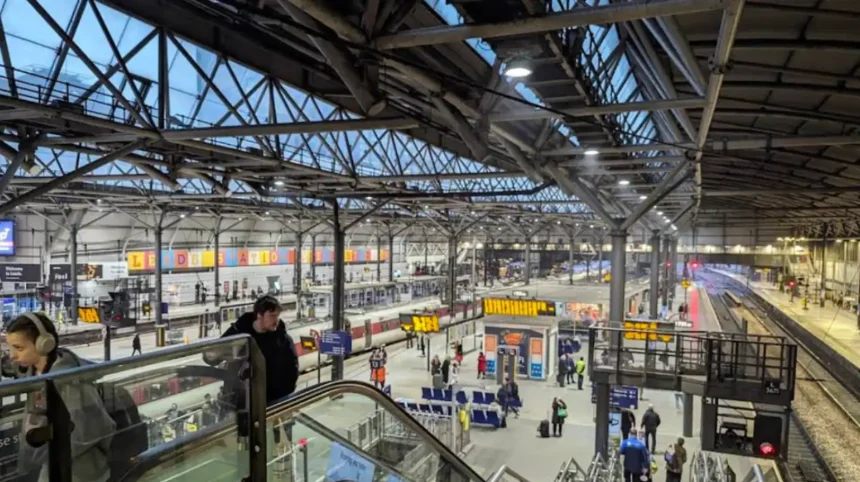
- Major Funding Boost: The Department for Transport has confirmed an additional £200 million for Leeds railway station, taking total investment in the transformation scheme past £300 million.
- Station Upgrades: The investment will fund brand-new station entrances, a central overbridge, expanded concourses, and an extension to Platform 14.
- Capacity and Demand: The upgrades aim to tackle severe congestion and prepare the transport hub for an anticipated influx of nearly 12 million additional passengers per year by 2043.
- Government Support: Transport Secretary Heidi Alexander emphasised that the project will create a modern gateway for West Yorkshire and bolster wider northern rail connections.
- Harrogate Spotlight: The announcement has renewed focus on transport priorities in nearby Harrogate, where debate continues over the £13.4 million Harrogate Station Gateway scheme.
Leeds (The Leeds Times) October 29, 2026 — The Government has announced a further £200 million in funding for major upgrades to Leeds railway station, raising the total commitment to the project to more than £300 million and throwing transport priorities across North Yorkshire into sharp focus. The funding allocation, confirmed by the Department for Transport on 28 October 2026, will finance extensive infrastructure enhancements including modernised concourses, brand-new public entrances, a central overbridge, and a critical lengthening of Platform 14. According to official transport forecasts, the expansion is designed to relieve severe daily overcrowding and accommodate an estimated surge of almost 12 million passengers annually by 2043. The announcement comes alongside ongoing public and political scrutiny regarding the separate £13.4 million Harrogate Station Gateway project, sparking renewed debate over local public expenditure and public realm integration.
- Key Points
- What improvements will the £200 million investment bring to Leeds station?
- How do the Leeds station plans compare to the Harrogate Station Gateway scheme?
- What does the Leeds funding mean for transport investment in Harrogate?
- Background of the development
- Prediction: How will this development affect regional commuters and local businesses?
What improvements will the £200 million investment bring to Leeds station?
As reported by the reporting team at Harrogate Informer, the Department for Transport confirmed that the new £200 million package brings overall funding for Leeds station beyond £300 million. The scope of works addresses both station capacity and surrounding urban connectivity.
Key physical interventions planned under the funding umbrella include:
- Platform 14 Extension: Lengthening the platform to allow longer trains to berth, resolving a notable operational bottleneck on eastern and western routes.
- New Station Entrances: Creating direct, modernized access points to streamline passenger flows during peak hours.
- Central Overbridge: Enhancing internal footfall routing and simplifying movement between platforms.
- Concourse Upgrades: Expanding waiting areas and passenger amenities.
The Department for Transport stated that these structural improvements are vital to strengthen physical links between the hub and surrounding city districts, notably including direct access to the South Bank regeneration zone, Princes Square, and the Dark Arches.
As recorded by Harrogate Informer, Transport Secretary Heidi Alexander stated that
“Leeds station is the gateway to West Yorkshire, and this extra £200 million investment will turn it into a station this city can be proud of: modern, welcoming and built for the people who rely on it every single day”.
How do the Leeds station plans compare to the Harrogate Station Gateway scheme?
While both initiatives focus on rail-adjacent infrastructure in West and North Yorkshire, their core objectives, scale, and funding models differ significantly.
| Feature / Metric | Leeds Railway Station Project | Harrogate Station Gateway |
|---|---|---|
| Primary Focus | Heavy rail infrastructure, platform lengthening, passenger capacity | Public realm, pedestrian/cycle access, junction traffic signals |
| Total Funding | Exceeds £300 million (£200m recent package) | £13.4 million |
| Lead Authority | Department for Transport / Network Rail | North Yorkshire Council |
| Key Objectives | Accommodate +12m annual passengers by 2043 | Active travel, Station Square renewal, town centre accessibility |
As reported by Harrogate Informer, the Leeds project is focused directly on railway hardware and passenger volume management. By contrast, the Harrogate Station Gateway scheme—overseen by North Yorkshire Council—concentrates on public space surrounding the town’s station.
Harrogate Informer noted that following legal challenges over traffic regulation orders, North Yorkshire Council revised the Harrogate proposals to retain two traffic lanes on Station Parade while adding public transport and pedestrian enhancements.
As reported by Harrogate Informer, Councillor Malcolm Taylor, North Yorkshire Council’s executive member for highways and transport, indicated that contractor appointments have been made and work is scheduled to start in the New Year, aiming for completion in autumn 2028. Furthermore, Gary Millar, speaking on behalf of local retail stakeholders, welcomed the upgrade, noting that investment in Station Square was vital to refreshing the shopping experience and driving town centre footfall.
What does the Leeds funding mean for transport investment in Harrogate?
The Department for Transport’s announcement contains no direct financial allocation or structural guarantees for Harrogate. Harrogate Informer reported that the Leeds package does not resolve lingering local debate surrounding the cost-benefit balance of the Harrogate Station Gateway.
The contrast in scale illustrates the national priority placed on high-capacity mainline hubs compared to localized public realm enhancements. For Harrogate residents and local leaders, the multi-million-pound investment in Leeds underscores the necessity for local schemes to demonstrate clear economic value, minimal business disruption, and lasting transport improvements.
Background of the development
Leeds station is one of the busiest transport hubs in the United Kingdom outside London, serving as the principal intercity and commuter interchange for West Yorkshire. Over the past decade, rapid regional growth has led to severe congestion across concourses and platforms, with Platform 14 long identified as a primary operational bottleneck for trans-Pennine and regional services.
To address these constraints, regional transport authorities and Network Rail devised a master plan to modernise the station layout and accommodate long-term passenger growth, which is projected to expand by nearly 12 million passenger journeys per year over the next two decades.
Concurrently, neighbouring authorities in North Yorkshire developed localized schemes under the Transforming Cities Fund, leading to the £13.4 million Harrogate Station Gateway initiative. The Harrogate scheme faced notable local controversy, including legal challenges from business groups concerned over proposed lane closures and reduced vehicular access. Revised plans maintaining two-lane traffic on Station Parade were subsequently approved by North Yorkshire Council, setting the stage for construction to commence.
Prediction: How will this development affect regional commuters and local businesses?
The £200 million investment in Leeds station is anticipated to significantly alter travel dynamics across Yorkshire, impacting distinct groups in different ways:
1. West Yorkshire Commuters and Rail Passengers
Daily passengers through Leeds will experience reduced congestion, faster interchange times, and expanded train capacity as Platform 14 extension works complete. The improved links to the South Bank and surrounding districts will shorten walking times for urban workers, making rail travel a more attractive option relative to road transport.
2. Harrogate Businesses and Residents
For Harrogate town centre traders, the upcoming start of the £13.4 million Station Gateway project in the New Year presents short-term operational disruption alongside potential long-term benefits. While North Yorkshire Council’s decision to delay work until after Christmas protects festive trading, localized roadworks through 2028 may impact access. However, once completed, enhanced public spaces and active travel connections are projected to increase pedestrian footfall and boost high street vitality.
3. Regional Freight and Rail Operators
The substantial increase in station throughput in Leeds will improve overall network reliability across the North. By alleviating platform dwell times in Leeds, feeder routes—including lines serving Harrogate, York, and Bradford—are likely to see improved punctuality and enhanced scheduling flexibility over the next decade.