

Key Points
- More than 240 apartments could be built in Leeds city centre after the council agreed to sell a plot of land to a housing developer.
- The scheme put forward by Glenbrook includes 246 mainly one- and two-bedroom flats in a building that could rise to 24 storeys.
- Around 20% of the homes are expected to be affordable housing, according to council officers.
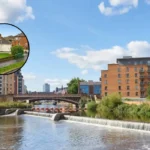
- The land sits at Meadow Lane, close to Aire Park and the Adelphi pub.
- Leeds City Council’s City Plans Panel is due to consider the proposal on Thursday, 14 May.
- A council planning officer said the project would help regenerate a prominent vacant brownfield site in the city centre.
Leeds (The Leeds Times) May 11, 2026 – As reported by a Yorkshire Post journalist, the proposal centres on a city centre plot at Meadow Lane, near Aire Park and the Adelphi pub, which could be redeveloped into a residential block of up to 24 storeys.
The developer, Glenbrook, has drawn up early-stage plans for 246 apartments, with the majority described as one- and two-bedroom homes. Council officers said the scheme would bring new life to a prominent vacant brownfield site, which has been unused and is seen as suitable for regeneration.
The plan is still at an early stage, but it has already progressed far enough for councillors to review it through the City Plans Panel.
The proposal comes after the council agreed to dispose of the land, which is a key step in enabling the developer to move forward. In planning terms, this means the site could shift from unused public land into a large-scale housing scheme if the necessary approvals are given.
Why is the council backing the scheme?
According to the council planning officer’s assessment quoted in the story, the project offers
“a significant opportunity to regenerate a prominent vacant brownfield site within the city centre.”
That wording is important because it shows the council is framing the scheme not only as a housing project but also as part of wider regeneration work in Leeds. Brownfield sites are often prioritised for development because they reuse previously built land rather than open countryside.
The location also matters. Meadow Lane is in a part of the city centre where large-scale residential development has already been gathering pace, and that makes it more likely to attract further investment. The proposal, therefore, fits into a wider pattern of city-centre densification, where councils and developers seek to add homes close to jobs, transport links, and existing services.
How many homes will be built?
The current proposal is for 246 flats, with the mix leaning heavily towards smaller homes. The story says the development would be made up predominantly of one- and two-bedroom apartments, which usually indicates a target market of single occupants, couples, and smaller households.
At this stage, the design also includes a tower of up to 24 storeys, making it one of the more prominent residential schemes in the area.
Council officers said 20% of the homes would be affordable, though the final housing mix may still depend on further planning discussions and any detailed conditions attached to approval.
That element is likely to be closely watched by councillors and local residents, because affordable housing remains a major issue in Leeds and across other major UK cities. The scale and height of the project may also prompt debate about townscape, density, and how the building will sit within the surrounding streets.
What happens next at the planning panel?
The next formal step is for the proposal to go before Leeds City Council’s City Plans Panel on Thursday, 14 May.
That meeting will allow councillors to examine the early-stage plans and assess whether the development should move forward through the planning process. Panel decisions at this stage can influence the shape of a scheme, even if they do not represent the final sign-off.
Because the report describes the plans as early-stage, further detail may still emerge on matters such as design, access, amenity space and the final housing mix. The city plans process can also involve revisions after councillors raise concerns or seek more information. In practical terms, Thursday’s meeting is likely to set the tone for whether the project is seen as acceptable in principle.
What does the council sale mean?
The council’s decision to hand over the land is significant because it removes one of the main barriers to development.
Once a public authority agrees to sell a site, it usually signals that the location has been identified as suitable for a specific use and that the council is willing to support the next stage of delivery. In this case, that use is housing on a vacant city-centre brownfield plot.
For the developer, the land sale provides the opportunity to turn an underused site into a large residential block. For the council, it offers the prospect of new homes, potentially including affordable units, and a visible regeneration project in a central location.
The arrangement also reflects the pressure many councils face to release land for housing delivery while still balancing design, public benefit and local opposition.
Background of the development
This proposal sits within a wider pattern of brownfield redevelopment in Leeds, where vacant or former industrial land has increasingly been identified for new housing. City-centre schemes have become a common way to meet housing demand while avoiding greenfield development, and tower blocks have become more frequent in central urban areas.
The Meadow Lane site is being framed in those terms: a previously unused plot with the potential to support residential growth close to the heart of the city.
The wider context also includes the planning framework used by Leeds City Council, which allows major developments to be considered by the City Plans Panel.
That panel is made up of councillors who review significant applications and determine whether they should proceed, be amended or be refused. In this case, the council’s willingness to sell the land suggests the site has already been identified as strategically important for regeneration.
What could this mean for residents?
If the scheme is approved, it could bring more homes into the city centre and increase the supply of smaller flats in a location close to jobs, transport and leisure facilities. That may appeal to people looking for city-centre living, especially renters and first-time buyers if any affordable or shared-ownership element is included later. It could also support local businesses by bringing more residents into the area.