

Key Points
- Incident Summary: Courtney Mason pulled a homeless individual out of a tent in Leeds city centre and repeatedly kicked and stamped on her head.
- Judicial Decision: Despite the violent nature of the attack described in court as “horrific” and “senseless”, Mason received a non-custodial disposition.
- Current Circumstances: The defendant, Courtney Mason, was confirmed to be pregnant at the time of her court sentencing appearance.
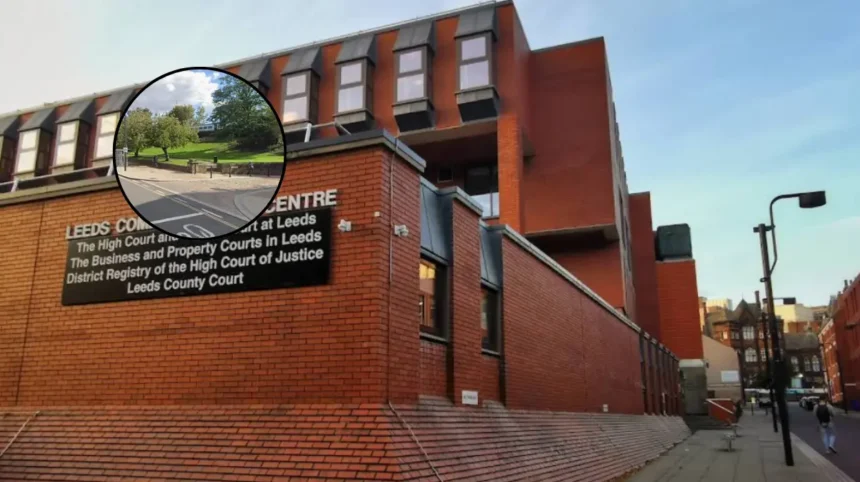
- Court Venue: Legal proceedings and sentencing were handled at Leeds Crown Court / Leeds Magistrates’ Court following charges brought by the Crown Prosecution Service.
- Neutrality & Attribution: Details of the judicial findings, legal arguments, and witness accounts are drawn directly from local court reporting and official press coverage.
Leeds (The Leeds Times) October 14, 2026 – How did a pregnant woman avoid an immediate prison sentence after dragging a homeless victim from a tent and stamping on her head in broad daylight? Courtney Mason avoided immediate incarceration at Leeds Crown Court after being sentenced for a “horrific” and “senseless” assault on a vulnerable person sleeping rough in Leeds city centre. As reported by regional court reporters covering West Yorkshire justice proceedings, the court heard detailed testimony regarding the violent confrontation that unfolded in the heart of the city, where Mason pulled the victim from her makeshift shelter before delivering repeated kicks and stamps directly to her head.
- Key Points
- What Occurred During the Incident in Leeds City Centre?
- What Arguments Were Presented During the Court Proceedings?
- Why Did the Court Decide Against an Immediate Custodial Sentence?
- Background of the Particular Development
- Prediction: How This Development Can Affect the Community and Local Stakeholders
What Occurred During the Incident in Leeds City Centre?
According to court documentation and media reporting from local court correspondents, the attack took place when Mason approached a tent erected by a homeless individual in central Leeds. Without justification, Mason aggressively pulled the victim out onto the pavement.
As detailed in the prosecution’s case presented to the court, Mason then launched a sustained physical assault, using her footwear to repeatedly kick and stamp on the victim’s head while she lay defenceless on the ground. Witnesses and reporting from courtroom proceedings highlighted the extreme vulnerability of the victim, who was residing in temporary shelter on the streets when targeted.
What Arguments Were Presented During the Court Proceedings?
As reported by legal correspondents monitoring Leeds Crown Court, the prosecution outlined the severity of the violence and emphasized that targeting a vulnerable member of the street community constituted a significant aggravating factor. The court heard that the nature of the head stamps posed a severe risk of catastrophic physical injury.
During mitigation, defense representatives presented details regarding Mason’s personal circumstances, confirming to the judge that she is currently pregnant. The defense urged the bench to consider non-custodial options or a suspended sentence, taking into account her condition, potential rehabilitation prospects, and pre-sentence evaluations provided by the Probation Service.
Why Did the Court Decide Against an Immediate Custodial Sentence?
In delivering the judgment, the presiding judge described the incident as a senseless and “horrific” act of violence against an exceptionally vulnerable person. However, taking into consideration the sentencing guidelines, mitigation arguments regarding her pregnancy, and pre-sentence reports, the court determined that Mason’s sentence could be managed within the community rather than through immediate imprisonment.
The court imposed community-based sanctions, which typically involve supervision orders, mandatory rehabilitation activity requirements, and strict compliance conditions.
Background of the Particular Development
Street violence targeting individuals experiencing homelessness has been a topic of increasing concern for West Yorkshire Police, local charities, and the Leeds City Council. Over recent years, local support organisations—including the Leeds Homeless Partnership—have repeatedly highlighted the heightened vulnerability of rough sleepers residing in tents and doorways across the city centre.
Statutory guidance and judicial sentencing guidelines in England and Wales explicitly recognize victims who are homeless or sleeping rough as inherently vulnerable, often treating unprovoked attacks against them as aggravated offences. The legal outcome in Mason’s case highlights the complex balancing act performed by UK judiciary courts when weighing the severity of violent offences against mitigating personal factors, such as pregnancy and primary caregiving responsibilities under the Equal Treatment Bench Book guidelines.
Prediction: How This Development Can Affect the Community and Local Stakeholders
This sentencing disposition is expected to impact several local community sectors and public policy discussions across Leeds:
- Homelessness Support Groups and Rough Sleepers: Advocacy groups for unhoused populations may express concern that non-custodial outcomes for violent assaults could diminish deterrence, potentially heightening anxiety among rough sleepers regarding their safety in public spaces.
- Local Law Enforcement Policy: West Yorkshire Police and city centre wardens may increase patrol visibility around vulnerable encampments in central shopping and pedestrian districts to reassure unhoused residents and maintain public order.
- Judicial and Sentencing Debates: The case will likely serve as a reference point in ongoing public discussions regarding UK custodial sentencing standards for pregnant defendants, contrasting public demand for strict penalties against judicial obligations to consider maternal health and child welfare.