Key Points
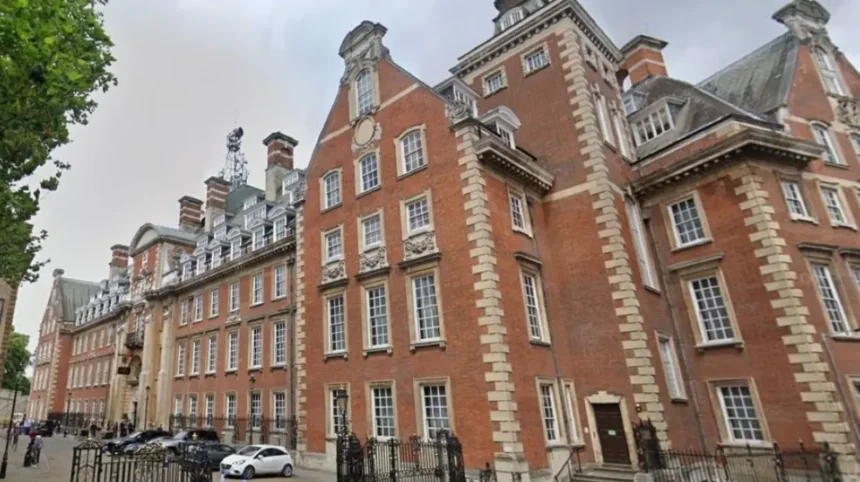
- EE Ltd has submitted a formal planning application to Leeds City Council to upgrade mobile telecommunications infrastructure on the roof of the historic Leeds Marriott Hotel.
- The proposed development involves replacing existing equipment with two five-metre-high “alpha flagpole antennas”.
- According to planning reports, the upgrade aims to deliver faster download speeds, better signal reception, and an improved coverage network across the immediate vicinity.
- The application highlights that digital communication utility provisions are crucial for everyday tasks, public services, businesses, and virtual healthcare or banking appointments.
- The public consultation phase for the planning application remains open to local residents and stakeholders until November 12.
Leeds (The Leeds Times) October 29, 2026 — Telecommunications giant EE Ltd has lodged a formal planning application with Leeds City Council seeking permission to install new 5G network equipment on the roof of the landmark Leeds Marriott Hotel. The proposal, which aims to drastically enhance mobile connectivity and data speeds in the heart of the city centre, involves removing existing installations to make way for modern hardware designed to support growing digital demands.
As reported by regional journalists covering the planning docket, the application outlines a necessity to replace current rooftop apparatus with two five-metre-high “alpha flagpole antennas”. The initiative is part of a broader, ongoing rollout by the mobile operator to eliminate local coverage gaps and expand high-speed network capacity for urban populations.
What are the stated benefits of the proposed 5G installation?
The operator’s supporting planning statement emphasizes that robust digital utility provisions have transformed into an essential component of modern daily life. As detailed in documentation reviewed by local news outlets, the network enhancements are designed to facilitate seamless execution of everyday tasks, ranging from standard phone calls and mobile internet browsing to map navigation, online gaming, media streaming, e-commerce, and online banking.
Furthermore, network planners noted that reliable high-speed infrastructure underpins critical remote services. As outlined in the report:
“Virtual meetings can also be held with doctors, banking advisors, colleagues and other entities, which have proved necessary as a result of the global pandemic.”
The municipal filing further clarifies that the targeted city centre location will form a vital node within an improved coverage layout. EE noted via its planning disclosures that the scheme is an essential upgrade of an existing site intended to guarantee uninterrupted, high-capacity digital connectivity for both local residents and commercial enterprises operating within the immediate vicinity.
How is the local planning process handling the application?
The proposal is currently navigating standard municipal evaluation procedures overseen by Leeds City Council. Local authorities have opened a public consultation window to gauge community response regarding the visual and structural impacts of the five-metre flagpole antennas on the historic hotel’s roofline.
Stakeholders, heritage groups, and nearby residents have until November 12 to submit formal representations, comments, or objections regarding the scheme. Planners will subsequently weigh the operational necessity of expanding fifth-generation mobile coverage against architectural preservation considerations before issuing a final determination.
Background of the Particular Development
The telecommunications sector has faced mounting pressure across major UK urban centres to densify networks and deploy 5G architecture capable of managing exponential increases in mobile data consumption. Historic city centres, characterized by dense architectural footprints, often present unique engineering challenges, forcing operators like EE to utilize prominent commercial rooftops—such as hotels and office blocks—as elevated platforms for transmission masts.
Over recent years, mobile network operators have progressively transitioned legacy 3G and 4G sites to accommodate multi-band 5G arrays. This transition is viewed by the industry as fundamental to maintaining economic competitiveness, supporting smart-city initiatives, and satisfying consumer expectations for high-speed mobile broadband in high-footprint retail and business districts.
Prediction on How This Development Can Affect the Particular Audience
For residents, commuters, and business owners operating within Leeds city centre, the approval and subsequent installation of the upgraded 5G equipment will likely translate into more reliable call stability, fewer dropped connections, and significantly accelerated data download speeds during peak hours. Local enterprises reliant on instantaneous digital transactions, mobile point-of-sale systems, and remote client communications stand to benefit from reduced network congestion.
However, the placement of five-metre-high flagpole antennas on a historic hotel roof may attract scrutiny from local preservationists concerned about visual amenity and the aesthetic impact on architectural heritage assets within the city centre. If approved, the project will set a precedent for balancing rapid technological upgrades against heritage conservation requirements in central Leeds.