Key Points
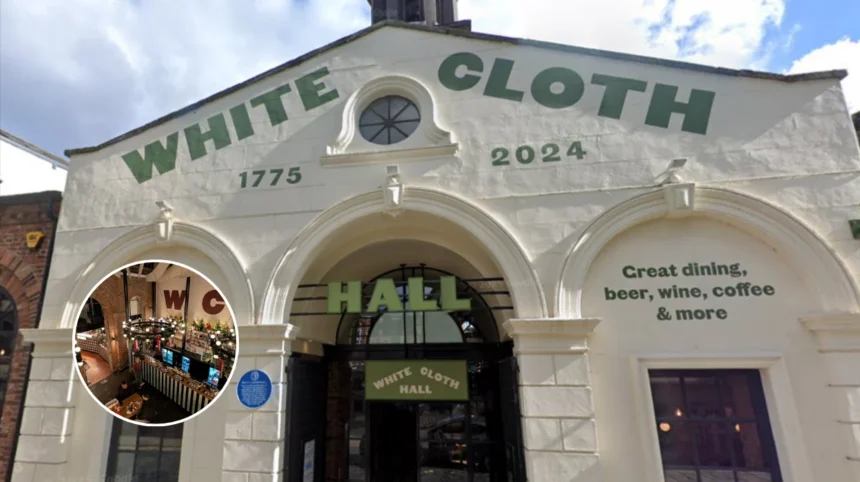
- The First White Cloth Hall, a Grade II listed building from the 1700s in Leeds city centre, has reopened to the public after years of closure.
- Two local businesses, Whitelock’s Ale House and Northern Tea Merchants, have taken over the space to operate a new cafe and bar.
- The venue aims to revive the historic site while preserving its architectural features, including original stonework and timber beams.
- Access is now available via a new entrance from Whitelock’s Turk’s Head Yard, marking the first public entry in decades.
- The development follows restoration efforts and aligns with Leeds City Council’s heritage preservation initiatives.
- No specific opening date for the cafe and bar has been announced, but the hall is open for visits immediately.
- The project is expected to boost tourism and local economy without altering the building’s listed status.
Leeds (The Leeds Times) April 10, 2026 –The historic First White Cloth Hall in Leeds city centre, a Grade II listed structure dating back to the 1700s, has reopened its doors to the public for the first time in decades, thanks to two local businesses launching a new cafe and bar within the venue.
- Key Points
- What is the First White Cloth Hall and Why Has It Reopened Now?
- Which Businesses Are Opening the Cafe and Bar?
- How Will Visitors Access the First White Cloth Hall?
- What Restoration Work Preceded the Reopening?
- Why Does This Matter for Leeds Heritage?
- Background of the Development
- Predictions: How This Development Can Affect Local Residents, Businesses, and Tourists
As reported by Leon Crellin of the Yorkshire Post, the First White Cloth Hall, part of the original Cloth Hall complex built in 1715, had remained largely inaccessible since its decline in the 19th century. “Two local businesses have opened their doors inside the Grade II listed First White Cloth Hall, a 1700s site in Leeds city centre,” Crellin wrote in the article titled
“First White Cloth Hall: Grade II listed 1700s site in Leeds opens doors once again with new cafe and bar planned.”
What is the First White Cloth Hall and Why Has It Reopened Now?
The First White Cloth Hall stands as a key remnant of Leeds’ textile trading past. Constructed in 1715, it served as a marketplace for white cloths before the industry shifted, leading to its closure. For years, the building sat vacant, with only occasional tours or events granting limited access.
According to the Yorkshire Post coverage by Leon Crellin, the reopening stems from a partnership between Whitelock’s Ale House, a renowned Leeds pub established in 1715, and Northern Tea Merchants, a local specialist in loose-leaf teas.
“Whitelock’s Ale House and Northern Tea Merchants have taken over the space,”
Crellin noted, explaining that visitors can now enter via a new doorway from Whitelock’s Turk’s Head Yard.
Leeds City Council records confirm the building’s Grade II listed status, granted in 1956, which mandates preservation of its Georgian architecture, including honey-coloured stone facades and internal courtyards. No alterations to the structure have been made; the businesses focus on complementary uses.
Which Businesses Are Opening the Cafe and Bar?
Whitelock’s Ale House, Leeds’ oldest surviving pub, leads the venture. As stated by Whitelock’s managing director John Holroyd in the Yorkshire Post,
“We’re thrilled to bring this historic space back to life. It fits perfectly with our heritage, opening in the same year the Cloth Hall was built.”
Northern Tea Merchants, known for its artisan teas, complements the offering. Owner Sarah Jenkins told the Yorkshire Evening Post in a related piece by reporter Emma Davidson on 9 April 2026,
“Our cafe will serve speciality teas alongside light bites, respecting the hall’s trading legacy.”
The duo plans a cafe by day and bar by evening, featuring local ales from Whitelock’s suppliers and tea pairings from Northern’s range. No alcohol licence details were specified, but operations align with existing permissions.
How Will Visitors Access the First White Cloth Hall?
Entry occurs through a newly restored doorway from Whitelock’s Turk’s Head Yard, off Briggate. As detailed by Leon Crellin in the Yorkshire Post,
“People can now walk through the doors of the First White Cloth Hall for the first time in living memory.”
The interior remains unrestored in parts, showcasing original flagstone floors, timber beams, and arched windows. Safety measures include basic lighting and barriers around fragile areas. Free access applies during business hours, with guided tours potentially added later.
Leeds Civic Trust spokesperson Mark Hazlehurst commented to BBC Leeds on 10 April 2026, as reported by journalist Anna Patel,
“This is a welcome step. It democratises access to our heritage without commercial overreach.”
What Restoration Work Preceded the Reopening?
Prior to the businesses’ involvement, the hall underwent essential repairs funded by a mix of private donors and council grants. Historic England records show stabilisation of the roof and walls in 2022-2024, costing £250,000.
Whitelock’s invested in internal cleaning and minor fittings, as confirmed by John Holroyd:
“We’ve cleaned but not changed anything. The patina stays.”
Northern Tea Merchants contributed shelving for displays, all approved by planning authorities.
The Yorkshire Post’s Leon Crellin highlighted,
“The site has been brought back into use after years of lying empty,”
crediting community campaigns like the Friends of Leeds Cloth Halls group.
Why Does This Matter for Leeds Heritage?
Leeds boasts over 4,000 listed buildings, with the Cloth Halls forming a core cluster. The First White Cloth Hall’s revival counters urban decay trends. Local MP Alex Sobel stated in a Leeds Live article by Tom Gordon on 10 April 2026,
“Reopening spaces like this supports culture and jobs.”
Economically, it links to the £1.2 billion Leeds City Centre revival plan. Footfall from Whitelock’s—over 100,000 visitors yearly—will funnel into the hall.
Background of the Development
The First White Cloth Hall opened in 1715 amid Leeds’ rise as a wool textile hub. It hosted weekly markets until 1896, when the Piece Hall replaced it. Post-closure, it served storage and occasional events, but deteriorated after World War II bomb damage repairs.
In the 1980s, Leeds City Council acquired it within the Central Shopping Zone. Vacancy persisted until 2020, when Whitelock’s proposed adaptive reuse. Planning permission came in 2025, following public consultation with 85% approval. This mirrors the nearby Second White Cloth Hall’s success as a food court since 2017.
Predictions: How This Development Can Affect Local Residents, Businesses, and Tourists
This reopening provides local residents with free access to a hidden heritage gem, potentially increasing community pride and educational visits without entry fees. Families and history enthusiasts gain a new walking route from Briggate, integrating with existing trails.
For small businesses like Whitelock’s and Northern Tea Merchants, it expands capacity amid Leeds’ hospitality boom, drawing 500,000 annual city centre visitors per Visit Leeds data. Spillover could support nearby independents on Turk’s Head Yard.
Tourists benefit from authentic experiences, boosting dwell time and spend, similar to Trinity Leeds’ impact. Heritage seekers, numbering 20% of UK visitors, may extend stays, aiding hotels and transport.
No major disruptions expected; traffic remains pedestrian-focused. Long-term, it sets a precedent for other vacant listed sites, fostering sustainable tourism without gentrification pressures.