Key Points
- Leeds City Council has approved planning permission to convert a historic Grade II-listed former Sikh temple and chapel site on Chapeltown Road into a gym and library.
- The building dates back to the 1870s/1887 (built as the Newton Park Union Chapel, serving Baptist and Congregational worshippers, with parts also used as a synagogue) and operated as a Sikh Gurdwara from around 1963.
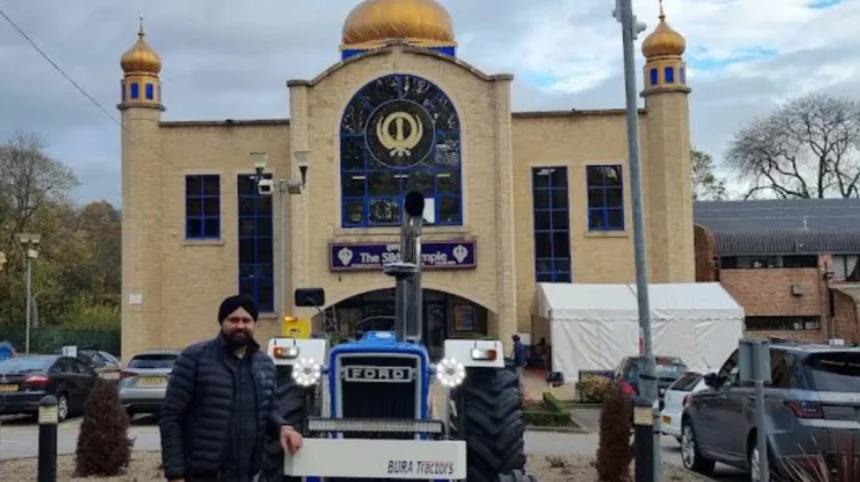
- It has remained vacant since the late 1990s after a larger temple was constructed directly opposite within the Chapeltown Conservation Area.
- In 2022, the derelict building was utilised for filming the BBC crime drama series Better.
- A previous application submitted last year seeking to turn the building into a dance studio was blocked by council planners.
- Developer Urban Future submitted a design report urging the council to approve the latest scheme, arguing that the council could not expect the building to remain vacant and fall into disrepair.
- Full planning permission for the gym and library conversion was officially issued by the council on October 19, 2026.
Leeds (The Leeds Times) October 20, 2026 – As reported by Don Mort, Local Democracy Reporter of the Yorkshire Evening Post, a historic Grade II-listed former place of worship on Chapeltown Road in Leeds has been granted full planning approval by Leeds City Council to be successfully converted into a brand new community gym and library.
Why was the approval granted for the Chapeltown Road building?
As detailed by Don Mort of the Yorkshire Evening Post, Leeds City Council evaluated and approved proposals for the conversion of the Union and Congregation Chapel site. Developer Urban Future strongly urged local authority planners to greenlight the project, warning in their design documentation that officials could not expect the historic asset to remain vacant and descend further into a state of structural disrepair.
As outlined in the design report by Urban Future, and cited by Don Mort of the Yorkshire Evening Post, the latest initiative aims to secure a viable and sustainable future for the protected structure. The developers stated:
“The proposal would secure a viable and sustainable future use for a Grade II-listed building within the Chapeltown Conservation Area through its conversion to a library and gym and fitness facility.”
Furthermore, Urban Future emphasised that
“The development would deliver community and recreational benefits, improve accessibility and ensure the continued occupation and maintenance of an important heritage asset.”
What is the history of the Chapeltown Conservation Area site?
As documented by Don Mort of the Yorkshire Evening Post, the landmark property dates back to the 1870s and 1887, when the Newton Park Union Chapel was originally constructed to serve both Baptist and Congregational worshippers, alongside portions of the site previously functioning as a synagogue. Transitioning through religious communities over the decades, the building subsequently served as a Sikh Gurdwara from approximately 1963 onwards.
However, as noted by Don Mort of the Yorkshire Evening Post, the site has stood entirely vacant since the late 1990s, following the construction of a larger, modern temple directly opposite the road within the Chapeltown Conservation Area. More recently, the unoccupied building gained wider public recognition when it was used for television production, specifically serving as a filming location for the BBC crime drama series Better in 2022.
What previous planning attempts were made for the site?
As highlighted by Don Mort of the Yorkshire Evening Post, attempts to breathe new life into the derelict structure faced previous regulatory hurdles. Last year, a separate planning application seeking to transform the building into a commercial dance studio was formally blocked by council planners. Following that refusal, the updated proposals submitted by Urban Future successfully addressed planning criteria, culminating in full planning permission being formally issued by the council on October 19.
Background
The evolution of the Union and Congregation Chapel site reflects broader urban regeneration patterns across historic British inner-city neighbourhoods. Built during the late 19th-century expansion of Leeds, Chapeltown developed a rich multicultural tapestry, accommodating successive waves of religious and immigrant communities who adapted local Victorian architecture for worship and community gathering. As congregations grew, migrated, or built modern purpose-built spaces—such as the larger Gurdwara erected opposite in the late 1990s—older architectural assets frequently faced abandonment, dereliction, and heritage risk. Local authorities and conservation bodies continually balance the strict statutory protections governing Grade II-listed structures within designated conservation areas against the economic and social necessity of finding viable, sustainable adaptive reuse projects to prevent structural decay.
Prediction
The approval of the gym and library project on Chapeltown Road is expected to generate positive recreational, educational, and social outcomes for local residents and community groups in Chapeltown. By transforming a long-vacant, derelict heritage asset into an accessible public facility, the development will likely increase local footfall, foster community cohesion, and enhance active lifestyle opportunities within the neighbourhood. For the broader Chapeltown Conservation Area, the successful adaptive reuse serves as a vital precedent, demonstrating how historic buildings can be preserved through commercial and community partnerships without compromising their architectural integrity or cultural heritage.