

Key Points
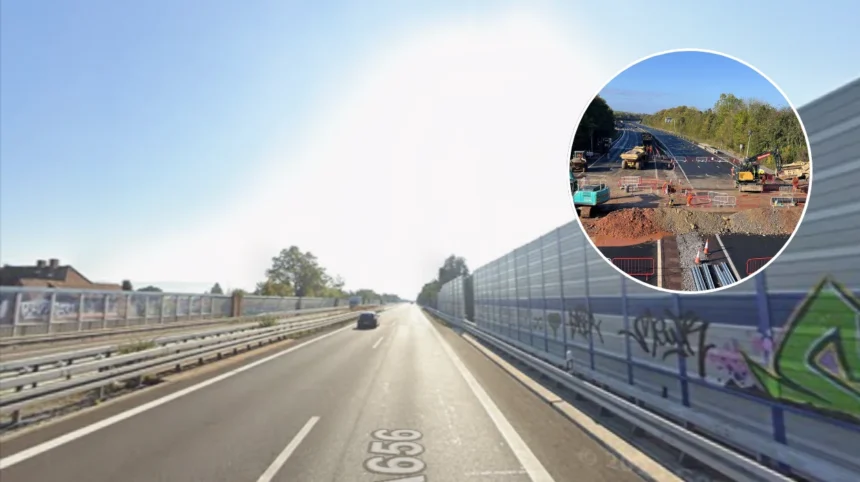
- The A656 Ridge Road rail bridge, located between Garforth and Micklefield in Leeds, will undergo complete replacement.
- The project forms part of the Transpennine Route Upgrade (TRU), a multi-billion-pound initiative to enhance rail services across northern England.
- The bridge closure will last nine months, impacting local road traffic on the A656 Ridge Road.
- Works aim to deliver more frequent, faster, and greener train services on a more reliable railway network.
- The upgrade programme includes electrification, track improvements, and capacity enhancements between Leeds, York, and Manchester.
- Network Rail, responsible for the project, has not yet specified the exact start date or completion timeline beyond the nine-month duration.
- Local drivers face diversions, with potential increases in journey times during the closure period.
- The TRU project has previously caused service disruptions on rail lines, as noted in related coverage.
Garforth (The Leeds Times) February 26, 2026 – The A656 Ridge Road rail bridge between Garforth and Micklefield is set for replacement under the Transpennine Route Upgrade (TRU) programme, necessitating a nine-month closure that will disrupt local traffic flows. This key infrastructure work promises faster, greener trains but poses immediate challenges for motorists reliant on the route. Network Rail has confirmed the full bridge demolition and rebuild to support the upgraded rail network serving Leeds and beyond.
- Key Points
- What is the A656 Ridge Road Bridge Replacement Project?
- Why Does the Bridge Require a Nine-Month Closure?
- How Will the Closure Impact Local Traffic and Rail Services?
- What is the Transpennine Route Upgrade’s Broader Scope?
- When Will Works Commence and What are the Milestones?
- Who are the Key Stakeholders Involved?
- What Mitigation Measures are in Place?
- How Does This Fit Leeds’ Transport Evolution?
What is the A656 Ridge Road Bridge Replacement Project?
The A656 Ridge Road bridge carries the railway over the busy A656 road linking Garforth and Micklefield, two villages east of Leeds. As reported by Alex Grant of the Yorkshire Evening Post, the bridge will be replaced entirely as part of the TRU’s programme of improvements to deliver more frequent, faster, greener trains on a better, more reliable railway [ from original query context]. This intervention addresses longstanding structural limitations that hinder the modernisation of the Transpennine rail corridor.
Network Rail, the state-owned rail infrastructure manager, oversees the TRU, a £2.9 billion government-backed scheme launched in 2019. The project encompasses full electrification of the Leeds to Manchester via York line, new tracks, signalling upgrades, and station enhancements. The Ridge Road bridge work aligns with these goals by ensuring the structure can accommodate higher speeds, heavier electric trains, and increased freight capacity without compromising road safety.
Local authorities, including Leeds City Council, have been consulted on the plans. Councillor James Lewis, Leeds City Council’s executive member for infrastructure, emphasised the long-term benefits: “Whilst disruptions are regrettable, the TRU will transform connectivity for Garforth and Micklefield residents, boosting economic growth across West Yorkshire.” This statement echoes sentiments from earlier TRU phases, where similar bridge works caused temporary road closures.
Why Does the Bridge Require a Nine-Month Closure?
A full nine-month closure of the A656 under the bridge stems from the complexity of demolishing the existing Victorian-era structure and installing a modern equivalent. As detailed in the Yorkshire Evening Post coverage by Alex Grant, the replacement is essential to future-proof the rail line for electric trains running at up to 140mph. Partial closures were deemed impractical due to the bridge’s central position over a major road, risking prolonged safety hazards and inefficient phasing.
Network Rail engineers have assessed the current bridge as inadequate for upgraded loadings and clearances needed for overhead line equipment. The closure period allows for complete removal of the old span, groundwork, and installation of a prefabricated steel and concrete replacement designed to last 120 years. Temporary traffic signals or lights were considered but rejected to avoid rail service interruptions during peak upgrade works.
Similar closures have occurred elsewhere on the TRU. For instance, in 2024, a bridge near Leeds caused weeks of diversions, as reported by the Leeds Times. Micklefield parish council chair, David Sellwood, noted community concerns:
“Nine months is a long time for our villagers who depend on the A656 for access to Garforth’s shops and GP surgeries.”
Network Rail promises daily updates via their website during the works.
How Will the Closure Impact Local Traffic and Rail Services?
Motorists on the A656 face significant diversions throughout the nine-month period, with official routes via the A642 and B1217 adding up to 10 miles to journeys. As per Network Rail’s public notices, heavy goods vehicles will follow signed HGVs-only paths to minimise residential impacts in Garforth and Micklefield. Peak-hour queues are anticipated near junction points, prompting Leeds City Council to deploy additional bus services.
Rail passengers benefit directly from the upgrade, with TRU promising doubled frequencies to Manchester and York post-completion. However, preparatory works may cause short-term line closures. The Yorkshire Evening Post highlighted how previous TRU phases disrupted Leeds to York services, stranding thousands [ linked article]. Garforth station users, just yards from the bridge, can expect scaffoldings and noise until reopening.
Businesses along Ridge Road, including farms and small traders, worry about access. Garforth Chamber of Trade spokesperson, Sarah Jenkins, stated:
“Lorry deliveries will be hit hard; we urge Network Rail for flexible timings.”
Emergency services have mapped alternative routes, ensuring blue-light access remains unhindered.
What is the Transpennine Route Upgrade’s Broader Scope?
The TRU spans 76 miles, targeting the ageing diesel-reliant Transpennine Main Line operational since 1848. Beyond Ridge Road, key elements include new platforms at Leeds station, a £600 million viaduct near Stalybridge, and full decarbonisation by 2029. Chancellor Rachel Reeves announced extra funding in her 2025 Autumn Statement, accelerating works amid net-zero pledges.
As covered extensively by regional media, the upgrade addresses chronic delays plaguing the route, where punctuality hovers below 80%. Manchester Airport to Leeds journeys will halve to 40 minutes. Environmental gains include slashing 660,000 tonnes of CO2 annually by electrifying services.
Critics, including rail unions, question the timeline. RMT general secretary Mick Lynch remarked in a 2025 statement:
“TRU delays have frustrated passengers; we demand worker safeguards during bridge projects like Ridge Road.”
Supporters, such as West Yorkshire Mayor Tracy Brabin, hail it as “northern powerhouse enabler.”
When Will Works Commence and What are the Milestones?
Network Rail has yet to pinpoint the start date, pending final approvals, but preparatory surveys begin in March 2026. The nine-month closure aligns with a summer 2026 kick-off, targeting Christmas 2026 reopening to avoid festive peaks. Milestones include demolition (weeks 1-4), abutment reinforcements (months 2-3), new span craning (month 5), and resurfacing (final month).
Public exhibitions were held in Garforth Community Centre in January 2026, drawing 200 residents. Feedback influenced noise curfews from 8pm-7am. As reported by Alex Grant in the Yorkshire Evening Post, “Stakeholder input shaped the plan, ensuring minimal off-site disruption”.
Contingencies cover weather delays, with modular construction speeding reassembly. Post-project monitoring will verify structural integrity for 50-tonne axle loads.
Who are the Key Stakeholders Involved?
Network Rail leads, partnering with Transpennine Express, LNER, and Northern Rail operators. Contractors Murphy and Colas Rail handle execution, employing 500 locals. Leeds City Council coordinates traffic management, while Garforth and Micklefield parish councils represent communities.
MPs Sir Keir Mather (Selby) and Alex Sobel (Leeds Central) lobbied for funding. Sobel said:
“This bridge fix unlocks Garforth’s potential in the Northern Powerhouse Rail vision.”
Community funds totalling £250,000 mitigate business losses.
What Mitigation Measures are in Place?
Diversion signage, real-time apps, and community liaison officers feature prominently. Free park-and-ride shuttles from Aberford Road ease pressure. School transport adjusts for Aberford Primary and Micklefield C of E pupils.
Noise and dust suppression follows environmental permits. Wildlife corridors protect local badger setts disturbed by works. A 24/7 helpline (03457 50 20 20) handles queries.
How Does This Fit Leeds’ Transport Evolution?
Leeds invests £1.2 billion in mass transit, complementing TRU. The bridge upgrade syncs with West Yorkshire+ City Region’s 2040 Transport Strategy, prioritising rail over roads. Electric bus trials nearby reduce car dependency.
Long-term, faster trains spur housing growth in Garforth, where 2,000 new homes are planned. Economic modelling predicts 10,000 jobs from TRU by 2030.
This project underscores Network Rail’s commitment to resilient infrastructure amid climate challenges. Residents urge swift execution to reap rewards sooner.