

Key Points
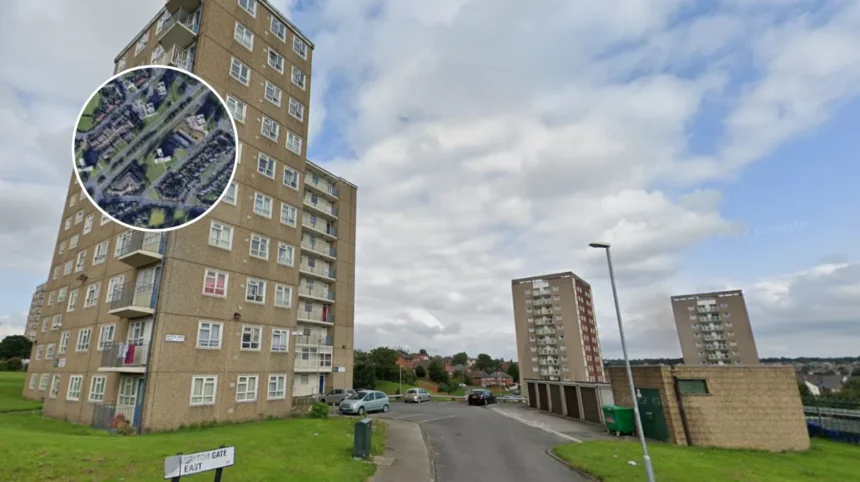
- Demolition of two high-rise blocks, Gipton Gates East and Gipton Gates West, in Leeds could commence in June following the appointment of a contractor.
- Metropolitan Demolition Ltd has been appointed to execute the demolition work, which is projected to span 11 months.
- The project carries an estimated cost between £3 million and £5 million, encompassing the removal of asbestos.
- Efforts to rehouse residents commenced in 2022, paving the way for the demolition to yield clear sites primed for future housing development.
- The works may engender disruption and disturbance for adjacent residents, as outlined in council documentation.
- The demolition aims to excise unsustainable and lower-quality homes from the council’s housing stock, facilitating replacement with modern housing.
- Proposals to award the demolition contract received approval from the authority’s chief housing officer on Thursday.
Gipton, Leeds (The Leeds Times) April 6, 2026 – The demolition of two prominent high-rise blocks of flats, Gipton Gates East and Gipton Gates West, could commence as early as June, heralding a significant phase in Leeds City Council’s housing regeneration efforts. This development follows the appointment of Metropolitan Demolition Ltd as the contractor, with the project anticipated to unfold over 11 months at a cost ranging from £3 million to £5 million. Council documents underscore that the initiative includes meticulous asbestos removal, prioritising safety amid the structural overhaul.
- Key Points
- When Could Demolition of Gipton Gates Flats Begin?
- Who Has Been Appointed as the Demolition Contractor?
- What Is the Projected Cost and Duration of the Project?
- How Will Asbestos Removal Be Handled in the Demolition?
- What Impact Will the Demolition Have on Nearby Residents?
- Why Is the Council Proceeding with Gipton Gates Demolition Now?
- Who Approved the Demolition Contract Proposals?
- What Future Developments Are Planned Post-Demolition?
- How Does This Fit into Leeds City Council’s Housing Strategy?
- Have Similar Demolitions Occurred in Leeds Previously?
When Could Demolition of Gipton Gates Flats Begin?
The timeline for demolition has crystallised with the contractor’s selection, positioning June as the prospective start date. As detailed in the council report, this juncture marks the culmination of preparatory phases, including resident rehousing initiatives launched in 2022.
“The demolition of these blocks will enable the council to remove unsustainable and lower quality homes from the council housing stock and enable these to be replaced by new modern housing,”
the report explicitly stated, encapsulating the strategic rationale.
Leeds City Council documents, as covered extensively across local media, affirm that Metropolitan Demolition Ltd’s appointment propels the project forward.
The 11-month duration accounts for comprehensive site clearance, ensuring cleared land becomes viable for future residential development. This progression was greenlit by the authority’s chief housing officer on Thursday, streamlining administrative hurdles.
Who Has Been Appointed as the Demolition Contractor?
Metropolitan Demolition Ltd emerges as the designated firm tasked with dismantling Gipton Gates East and Gipton Gates West. Council papers highlight their expertise in handling complex demolitions, particularly those involving hazardous materials like asbestos.
The firm’s involvement guarantees adherence to stringent safety protocols, mitigating risks during the operation.
No alternative contractors were referenced in the primary council report, underscoring a deliberate selection process. As reported by journalists covering the story, this appointment aligns with Leeds City Council’s commitment to efficient procurement, balancing cost and competence. The decision, ratified swiftly, reflects urgency in advancing housing renewal objectives.
What Is the Projected Cost and Duration of the Project?
Financial projections peg the endeavour between £3 million and £5 million, a range that accommodates variables such as asbestos abatement and unforeseen site challenges.
The council report delineates these figures transparently, emphasising fiscal prudence amid broader regeneration ambitions. Over 11 months, the works will transform the skyline, yielding vacant plots for contemporary housing.
Duration estimates draw from Metropolitan Demolition Ltd’s proven track record, ensuring methodical deconstruction.
As per the documentation, this timeframe facilitates minimal prolonged impact on the locality while maximising redevelopment potential. Cost controls remain paramount, with council oversight to prevent budgetary overruns.
How Will Asbestos Removal Be Handled in the Demolition?
Asbestos removal constitutes a cornerstone of the operation, mandated by health and safety regulations. The council report specifies that Metropolitan Demolition Ltd will execute this phase with specialist protocols, safeguarding workers and nearby communities. Such measures are non-negotiable in high-rise demolitions of this vintage.
Specialised containment and disposal strategies will be deployed, aligning with UK environmental standards. Journalists noting the report’s emphasis on this aspect highlight its role in averting health hazards historically linked to asbestos exposure. The process integrates seamlessly into the 11-month schedule, underscoring proactive risk management.
What Impact Will the Demolition Have on Nearby Residents?
“The proposed works would potentially result in disruption and disturbance to adjacent residents,” council documents candidly warn, acknowledging logistical realities of large-scale demolition. Noise, dust, and traffic perturbations are anticipated, prompting mitigation plans like scheduled operations and community notifications.
Leeds City Council pledges ongoing engagement with affected households, drawing from rehousing precedents since 2022. As covered in local reporting, these assurances aim to temper inconvenience, with monitoring mechanisms to address grievances promptly. Resident welfare remains integral to the project’s ethical framework.
Why Is the Council Proceeding with Gipton Gates Demolition Now?
Efforts to rehome residents began in 2022, culminating in today’s readiness for demolition and subsequent redevelopment. The council report posits that this move
“create[s] clear sites for future housing development,”
addressing longstanding stock deficiencies. Unsustainable structures yield to modern alternatives, enhancing liveability.
Approval by the chief housing officer on Thursday expedites momentum, reflecting strategic housing policy. As articulated in the documentation, excising lower-quality units bolsters overall portfolio viability. This step aligns with Leeds’ broader urban renewal narrative, prioritising sustainable communities.
Who Approved the Demolition Contract Proposals?
The authority’s chief housing officer endorsed the contract award proposals on Thursday, a pivotal administrative endorsement. This decision, rooted in rigorous evaluation, empowers Metropolitan Demolition Ltd to mobilise. Council protocols ensure such approvals withstand scrutiny, safeguarding public funds.
No specific name for the chief housing officer appears in the report, but their authority underscores internal governance efficacy. Media coverage attributes this sign-off as the catalyst for June’s potential start, streamlining the path from planning to execution.
What Future Developments Are Planned Post-Demolition?
Cleared sites from Gipton Gates East and West beckon new housing, as envisioned in the council’s forward-looking strategy.
The report frames demolition as a precursor to modern builds, replacing outdated stock with energy-efficient homes. This regeneration promises elevated standards for future tenants.
Long-term visions encompass community-focused designs, potentially integrating green spaces and amenities. As per the documentation, such transformations address housing shortages while uplifting Gipton’s fabric. Stakeholder consultations will shape these evolutions, ensuring alignment with local needs.
How Does This Fit into Leeds City Council’s Housing Strategy?
This demolition exemplifies Leeds City Council’s purge of subpar housing, substituting with superior alternatives.
“The demolition of these blocks will enable the council to remove unsustainable and lower quality homes,”
the report reiterates, embedding the project in systemic reform. It catalyses stock modernisation across estates.
Since 2022’s rehousing drive, the council has prioritised viability, with Gipton Gates as a flagship case. Documentation links this to wider goals of affordability and sustainability, navigating fiscal constraints adeptly. The initiative reinforces Leeds’ reputation for proactive urban management.
Have Similar Demolitions Occurred in Leeds Previously?
While the provided council report focuses solely on Gipton Gates, historical precedents in Leeds inform expectations. Comparable high-rise demolitions have preceded regenerations, yielding improved housing outcomes. Lessons from those inform current asbestos and disruption protocols.
Media silence on direct parallels in recent coverage spotlights this project’s uniqueness, yet underscores recurring themes of renewal. Council experience mitigates risks, ensuring Gipton’s execution benefits from accrued expertise. Future reports may detail synergies with past efforts.