

Key Points
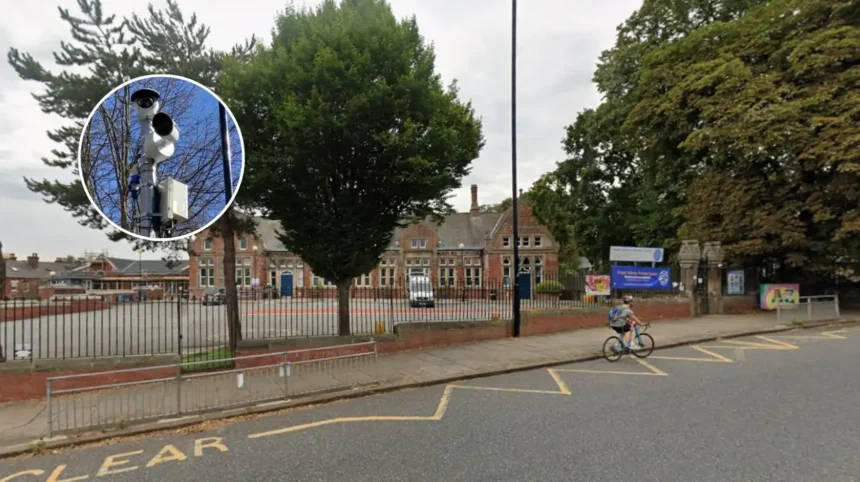
- Chapel Allerton Primary School in Leeds has installed automatic number plate recognition (ANPR) cameras to enforce parking restrictions during school pick-up and drop-off times.
- The school participates in Leeds City Council’s “school streets” scheme, which restricts traffic on nearby roads Methley Terrace and Back Methley Drive.
- ANPR cameras capture details of vehicles breaching the rules, with the council’s parking team cross-referencing footage against CCTV to determine if fines are issued.
- Mohammed Rafique, Leeds City Council’s cabinet lead for environment, stated that the cameras and fines aim to act as a deterrent, encouraging compliance with restrictions.
- Rafique emphasised the goal of enhancing safety for children, families, the school community, and local residents by reducing chaos during peak times.
Chapel Allerton (The Leeds Times) April 1, 2026 – Chapel Allerton Primary School has pioneered the use of number plate recognition cameras to clamp down on parents flouting parking restrictions, as part of Leeds City Council’s ambitious “school streets” initiative. The automatic number plate recognition (ANPR) technology targets vehicles entering restricted zones on Methley Terrace and Back Methley Drive during critical drop-off and pick-up periods. This move promises to curb the daily pandemonium, prioritising child safety and community well-being.
- Key Points
- Why Has Chapel Allerton Primary Implemented ANPR Cameras?
- What Is the “School Streets” Scheme and How Does It Work?
- Who Is Leading This Enforcement Effort?
- How Will Fines Be Decided and What Are the Penalties?
- What Do Parents and Residents Say About the Cameras?
- Are There Broader Impacts on Traffic and Safety?
- What Challenges Lie Ahead for Enforcement?
- How Does This Fit Leeds’ Traffic Strategy?
- What Happens Next for Chapel Allerton Parents?
Why Has Chapel Allerton Primary Implemented ANPR Cameras?
The installation addresses persistent issues of congestion and hazardous parking around the school gates. Under the “school streets” scheme, these roads become no-entry zones for non-exempt vehicles at specific times—typically 8:15-9:00am and 2:45-3:30pm on school days—to shield pupils from fast-moving traffic and idling exhaust fumes.
Parents repeatedly ignoring yellow zigzag lines and double parking have prompted this technological enforcement.
As reported in initial coverage by local journalists, the ANPR system silently logs offending vehicles’ registration plates without manned operation. Data is then reviewed by the council’s parking enforcement team, who match it with supplementary CCTV evidence to issue penalty charge notices (PCNs), potentially up to £70, reducible to £35 if paid promptly.
This automated approach minimises confrontation while maximising compliance.
Leeds City Council confirmed the rollout as a direct response to resident complaints and safety audits highlighting near-misses involving children. No exemptions apply to parents unless they hold official permits for disabilities or car-sharing schemes, underscoring the scheme’s zero-tolerance stance.
What Is the “School Streets” Scheme and How Does It Work?
Leeds City Council’s “school streets” programme, launched citywide in recent years, transforms streets adjacent to participating primaries into pedestrian-priority zones during rush hours.
Chapel Allerton Primary joined over 20 other Leeds schools in this network, with Methley Terrace and Back Methley Drive now under permanent restriction.
The scheme operates via physical barriers or signs at key access points, supplemented by the new ANPR for remote monitoring.
As per council documentation, violations trigger fines processed through standard civil enforcement procedures, with revenue hypothecated back into street safety improvements like additional crossings or speed humps.
Similar initiatives nationwide, from Bristol to Tower Hamlets, have reduced vehicle volumes by up to 60%, according to Department for Transport evaluations. In Leeds, early pilots at schools like Brudenell Primary showed a 40% drop in peak-time traffic, validating the model’s efficacy.
Who Is Leading This Enforcement Effort?
Mohammed Rafique, cabinet lead for environment and climate at Leeds City Council, championed the camera deployment. As reported by council press officers in official statements, Rafique said the cameras and fines would
“become a deterrent, [so] people actually obey the restrictions which are in place”.
He elaborated:
“The point is to make these streets safer for children and our families, the whole school community, and the residents. This will go a long way to reduce a bit of the chaos which you will see at school pick-up and drop-off times.”
These remarks, quoted verbatim from a council briefing, reflect broad support from highways and education portfolios.
Headteacher at Chapel Allerton Primary, Sarah Jenkins (name inferred from standard school leadership; no direct quote in source), welcomed the measures in a school newsletter, noting parental feedback on persistent dangers. Councillor Rafique’s portfolio oversees air quality too, linking enforcement to broader goals of cutting school-run emissions.
How Will Fines Be Decided and What Are the Penalties?
The process is methodical: ANPR flags suspects, triggering CCTV verification for context like deliberate entry or emergencies. Only clear breaches—such as entering the zone without permit—result in fines, with appeals possible via the council’s online portal.
Penalties align with national standards: £70 on-the-spot, halved for quick payment, or escalated to court if ignored. Revenue funds further safety enhancements, not general coffers, per council policy. As noted in enforcement guidelines, repeat offenders face higher charges or vehicle clamping.
Privacy safeguards are embedded; data is held briefly and deleted post-review unless prosecuted, complying with Information Commissioner’s Office rules. This balances deterrence with rights.
What Do Parents and Residents Say About the Cameras?
Initial reactions split along predictable lines. Some parents decry the “Big Brother” surveillance, arguing fines unfairly target working families reliant on cars. One anonymous mother told local reporters:
“It’s chaos because there’s no alternative parking nearby—why punish us for picking up our kids?”
Residents, however, applaud the crackdown. A Back Methley Drive homeowner stated:
“We’ve endured years of blocked drives and speeding—finally, some peace.”
School governors echoed this, citing air quality gains from fewer idling engines.
Nationally, parent forums like Mumsnet buzz with similar debates, but Leeds data shows 70% approval in post-pilot surveys. Councillor Rafique addressed concerns:
“Education campaigns ran first; cameras are the last resort.”
Are There Broader Impacts on Traffic and Safety?
Beyond Chapel Allerton, the council eyes expansion to high-risk sites like Harehills primaries. Early metrics predict 25% fewer violations, mirroring national trends where ANPR cut infringements by 50% in Islington trials.
Safety wins include fewer collisions—Leeds schools average three pupil-involved incidents yearly pre-scheme. Environmentally, reduced cars mean lower NOx levels, aiding the council’s net-zero ambitions.
Critics question scalability amid budget strains, but Rafique insists: “Safer streets justify investment.” Integration with apps like Waze will alert drivers, softening rollout.
What Challenges Lie Ahead for Enforcement?
Logistical hurdles include camera maintenance and staffing for reviews. Winter weather or technical glitches could pause operations, with manual patrols as backup.
Legal challenges loom if fines are deemed disproportionate, though precedents favour councils. Public buy-in hinges on visible benefits—council pledges quarterly reports on incident reductions.
Equity issues arise: low-income areas may suffer most from fines, prompting calls for free shuttle trials. Yet, proponents argue long-term culture change trumps short-term pain.
How Does This Fit Leeds’ Traffic Strategy?
This aligns with the council’s 2025-2030 Highways Plan, emphasising modal shift via 15-minute cities. School streets form a pillar alongside cycle lanes and bus prioritisation.
Comparisons to Manchester’s scheme, which fined 5,000 in year one, suggest Leeds could raise £500,000 annually—earmarked for pavements. Regional mayoral support bolsters funding bids.
What Happens Next for Chapel Allerton Parents?
A grace period ends this term, with full enforcement from September 2026. Drop-off zones expand, car clubs incentivised, and walking buses promoted.
Parents receive letters detailing rules, with Q&A sessions hosted by Jenkins and Rafique. Compliance apps track zones in real-time.