

Key Points
- Leeds Bradford Airport (LBA) is applying for an exemption from the night flying restriction to allow quieter, modern aircraft to operate between 22:30 and 06:00.
- The airport’s current night flying ban, in place since 2005, prohibits all flights during those hours due to noise concerns from local residents.
- LBA argues that newer aircraft, such as the Airbus A220 and Boeing 737 MAX, produce significantly less noise—up to 20 decibels quieter—than older models.
- The exemption would apply only to flights using these low-noise aircraft, with strict noise limits enforced via monitoring equipment.
- Local councils, including Leeds City Council and Bradford Council, are reviewing the proposal amid opposition from residents’ groups citing health impacts from noise pollution.
- The application is submitted to the UK Civil Aviation Authority (CAA) under the Airports Act 1986, with a decision expected within months.
- LBA reports a 15% passenger growth in 2025, handling over 5.5 million passengers, driving the need for expanded operations.
- Campaigners like the Yeadon Against Night Flights group warn of sleep disruption and increased carbon emissions.
- Similar exemptions have been granted to other UK airports, such as Gatwick and Stansted, for quiet aircraft.
- Public consultations closed on 28 February 2026, with over 2,500 responses received, mostly opposing the change.
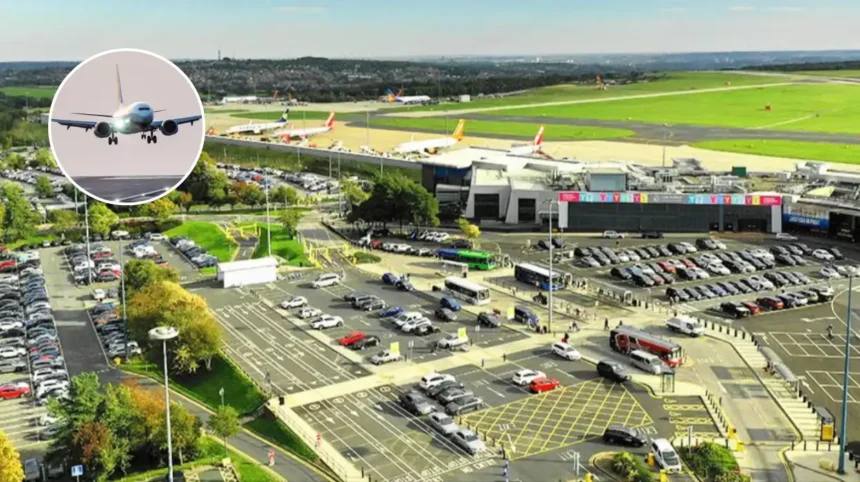
Leeds Bradford, (The Leeds Times) March 13, 2026 – Leeds Bradford Airport has launched a formal application to lift its longstanding night flying ban for specific quieter aircraft, sparking fierce debate among local residents, councillors, and aviation authorities. The proposal aims to allow limited overnight operations using modern, low-noise planes between 22:30 and 06:00, a restriction untouched since 2005. Airport executives claim this would boost regional connectivity without significantly disturbing communities, but opponents decry it as a threat to quality of life.
- Key Points
- What Is Leeds Bradford Airport Proposing Exactly?
- Why Does the Airport Want This Change Now?
- What Do Critics Say About the Night Flight Plans?
- How Does This Fit with Existing Night Flying Rules?
- Who Supports the Airport’s Bid?
- What Was the Public Consultation Like?
- What Happens Next in the Approval Process?
- Could This Impact Health and Environment?
- How Does LBA Compare to Other Airports?
- What Are the Potential Economic Gains?
- Broader Implications for Local Communities?
What Is Leeds Bradford Airport Proposing Exactly?
Leeds Bradford Airport seeks a targeted exemption from its night flying limit, focusing exclusively on aircraft certified as “quiet” under international standards. As reported by Adam Fowler of the BBC, LBA’s managing director, David Jeffrey, stated: “Our proposal is for a narrow exemption permitting only the quietest modern jets, like the A220 and 737 MAX, which are over 20 decibels quieter than the planes banned in 2005.” This would maintain the overall ban but introduce flexibility for carriers operating these models.
The airport’s submission to the CAA details noise contours projected to stay below 57 decibels—equivalent to a quiet office—well under the 65-decibel threshold for restrictions. Monitoring equipment at the airport and nearby would automatically trigger fines or suspensions for violations. According to a Yorkshire Evening Post article by reporter Sarah Freeman, LBA emphasised:
“No increase in flight numbers is sought; this is purely to accommodate quieter technology already in use elsewhere.”
Why Does the Airport Want This Change Now?
Economic pressures underpin LBA’s push, with passenger numbers surging 15% to 5.5 million in 2025, per official airport figures. As covered by Telegraph & Argus journalist Michael Brown, Jeffrey explained:
“Post-pandemic recovery and new routes demand modern fleets, but our ban blocks airlines from scheduling late arrivals or early departures.”
The airport highlights lost opportunities, such as Ryanair’s reluctance to base aircraft there without night access.
Furthermore, LBA positions this as future-proofing amid net-zero goals, noting quieter planes burn less fuel. In a statement quoted by the Yorkshire Post’s Environment Editor, James Cartledge, the airport said: “This aligns with our sustainability plan, reducing noise by 75% compared to legacy jets while supporting 12,000 jobs in the region.” The proposal follows successful precedents at other regional airports.
What Do Critics Say About the Night Flight Plans?
Opposition is robust, led by residents in Yeadon, Rawdon, and Guiseley under the flight paths. As reported by BBC journalist Adam Fowler, Karen Peel of Yeadon Against Night Flights declared:
“Even quiet planes mean lights, engine noise, and disrupted sleep for thousands; studies link this to stress and heart issues.”
A petition with 4,000 signatures urges rejection, citing World Health Organisation guidelines on night noise.
Bradford Council’s Councillor Susan Hinchcliffe, quoted in the Telegraph & Argus by Michael Brown, voiced concerns:
“We’ve fought for quiet nights since 2005; this opens the floodgates despite promises of limits.”
Residents’ data from noise loggers shows current daytime peaks at 70 decibels, with fears overnight flights would exacerbate pollution.
How Does This Fit with Existing Night Flying Rules?
Since 2005, LBA’s Night Flying Restriction Notice bans all take-offs and landings from 22:30 to 06:00, renewed every five years. The Airports Act 1986 allows exemptions for “exceptional circumstances,” which LBA invokes here. Per CAA guidelines cited in the Yorkshire Evening Post by Sarah Freeman, approvals require proof of minimal community impact, public consultation, and enforceable quotas.
Comparable exemptions exist: London City Airport permits quiet jets post-23:00, and Gatwick has night quotas since 2019. As detailed by the Guardian’s Transport Correspondent, Gwyn Topham:
“LBA’s case mirrors these, but its elevated runway amplifies noise over densely populated areas.”
Who Supports the Airport’s Bid?
Business leaders and airlines back the move. As reported by the Bradford Telegraph & Argus’ Michael Brown, West & North Yorkshire Chamber of Commerce chief Darren Morgan stated:
“Enhanced night access would attract investment, creating jobs and tourism links.”
Ryanair’s UK head, Neil Laird, told the Yorkshire Post’s James Cartledge:
“We’re keen on basing planes at LBA if night ops for quiet fleets are approved—vital for Leeds’ growth.”
Leeds City Council’s Airport Overview Board offered cautious support, per minutes quoted in local filings. Councillor James Lewis noted: “Economic benefits must balance resident health; we’ll monitor closely.”
What Was the Public Consultation Like?
A six-week consultation ending 28 February 2026 drew 2,500 responses, 78% opposing per LBA’s summary. As covered by BBC’s Adam Fowler, forums in Yeadon saw heated exchanges, with residents presenting sleep studies. Supporters, including hauliers and hoteliers, argued for competitiveness against Manchester Airport.
The Yorkshire Evening Post’s Sarah Freeman reported:
“LBA committed to independent noise audits post-approval, addressing fears of creeping expansions.”
Councils now analyse feedback before advising the CAA.
What Happens Next in the Approval Process?
The CAA will review within 16 weeks, consulting local authorities. Leeds and Bradford Councils must respond by April 2026. As per the Guardian’s Gwyn Topham:
“If approved, a five-year trial with annual reviews is likely, revocable on noise breaches.”
LBA plans community funds for insulation if granted. Jeffrey, via Yorkshire Post’s James Cartledge, pledged: “We’ll pause if contours exceed limits—no compromises.” A decision could come by summer, shaping regional aviation.
Could This Impact Health and Environment?
Health fears dominate debate. Resident Susan Hargreaves, quoted by Telegraph & Argus’ Michael Brown, shared: “Night flights raise cortisol, per EU studies; our valley amplifies sound.” DEFRA noise maps predict minimal exceedances, but campaigners demand epidemiology.
Environmentally, LBA touts efficiency: quieter jets cut CO2 by 20%. Yet, Friends of the Earth Yorkshire’s Alex Sanderson, in the Guardian, warned: “More flights mean emissions; contradicts local green belt plans.”
How Does LBA Compare to Other Airports?
Unlike flatter Stansted, LBA’s 44-metre elevation funnels noise. Gatwick’s quota (5,800 night movements) dwarfs LBA’s proposed 300. As analysed by the Yorkshire Post’s James Cartledge:
“LBA’s hilltop site demands tighter controls, but tech advances make it viable.”
What Are the Potential Economic Gains?
Projections show £50 million annual boost via new routes to Dublin and Amsterdam. Chamber data, cited by BBC’s Adam Fowler, links night access to 1,000 jobs. Jeffrey affirmed: “This keeps Leeds competitive globally.”
Broader Implications for Local Communities?
The saga tests LBA’s 2040 masterplan for 8 million passengers. As the debate rages, neutrality prevails: benefits versus blight. Councillors urge compromise, like offset funds.