Key Points
- Major Appointment: Leeds City Council has officially appointed Balfour Beatty as the sole contractor to deliver the comprehensive Leeds Inner Ring Road Strategy.
- Contract Value: The long-term maintenance and structural upgrade contract is valued at up to £120 million over a seven-year operational period.
- Procurement Framework: The project is being procured and delivered via the Leeds Contractors Major Works Framework, to which Balfour Beatty was initially appointed in 2023.
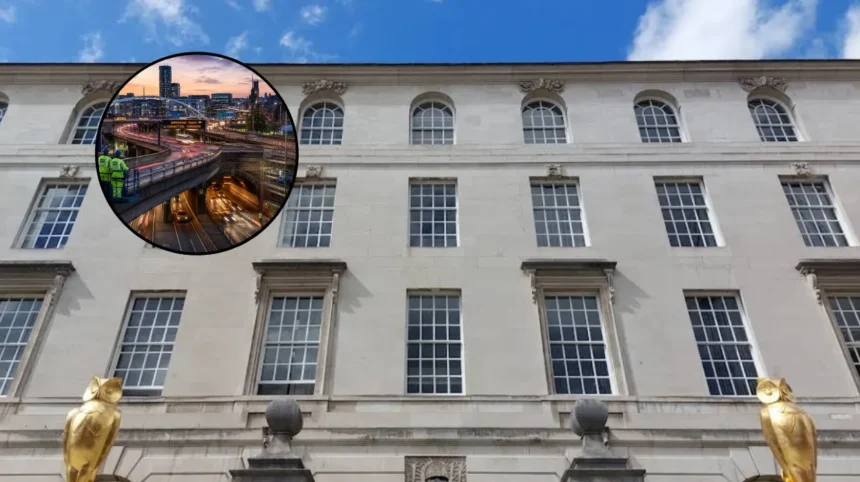
- Infrastructure Scope: The 4 km (2.5-mile) highway artery carries over 83,000 vehicles daily and incorporates more than 135 critical assets, including bridges, viaducts, road tunnels, pedestrian footbridges, and extensive retaining walls.
- Targeted Refurbishment: Design-and-build works will directly extend the lifespan of four key bridges and viaducts, three tunnels, and one footbridge.
- Project Timeline: Annual routine maintenance and early inspection activities commence immediately in 2026, with major structural interventions scheduled to start in 2027 and the full programme concluding in 2032.
- Strategic Alignment: The strategy directly underpins the council’s broader Connecting Leeds transport strategy, active travel initiatives, and future mass transit ambitions.
Leeds (The Leeds Times) July 23, 2026 – In a significant long-term infrastructure commitment designed to preserve the structural integrity of Yorkshire’s regional transport hub, Leeds City Council has formally appointed international infrastructure group Balfour Beatty to manage and deliver the £120 million Leeds Inner Ring Road Strategy.
The multi-million-pound contract covers a comprehensive seven-year programme encompassing routine annual maintenance, complex asset renewal, and major structural engineering interventions across one of the north of England’s most heavily congested urban corridors.
The contract is being procured and delivered through the established Leeds Contractors Major Works Framework, to which Balfour Beatty secured appointment in 2023.
Stretching across approximately 2.5 miles (4 kilometres), the urban highway system carries an excess of 83,000 vehicles every day. It incorporates more than 135 complex structural assets—ranging from sub-surface road tunnels and elevated highway viaducts to pedestrian overpasses and extensive concrete retaining walls.
The multi-year delivery model combines immediate maintenance actions with large-scale design-and-build packages.
According to project specification details released by Balfour Beatty, targeted design-and-build interventions will specifically strengthen and refurbish four major bridges and viaducts, three highway tunnels, and a key pedestrian footbridge to extend their operational lifespan for decades.
Routine maintenance and structural inspection activities are slated to commence immediately, while the primary, high-impact structural interventions will begin in 2027, leading to a planned final completion date in 2032.
What Have Key Industry Figures and Council Officials Said About the £120m Deal?
The execution of the strategic contract relies heavily on an Early Contractor Involvement (ECI) framework, bringing engineering, design, and municipal planning teams together to tackle complex logistics in a tightly constrained urban environment.
As reported in the official company announcement published by Balfour Beatty, Nick Crossfield, Divisional Chief Executive Officer for UK Defence, Power & Regional Infrastructure at Balfour Beatty, stated:
“We are proud to be entrusted to deliver a long-term strategy to protect a route that is fundamental to the economy of Leeds and the wider region. Our team has meticulously planned every stage alongside Leeds City Council, to ensure that we can deliver safely, efficiently and to the highest standards, working hand in hand with our valued supply chain partners.”
Highlighting the municipal perspective and necessity of proactive maintenance, Councillor Peter Carlill, Executive Member for Transport and Planning at Leeds City Council, stated:
“The Inner Ring Road plays a vital role in keeping Leeds moving, carrying more than 80,000 vehicles a day. This major investment in planned maintenance will ensure the route remains fit for the future, while supporting our wider Connecting Leeds strategy to manage traffic more effectively and create a more people-focused city centre.”
Addressing the potential impact on local traffic and commuter networks, Councillor Carlill added:
“We recognise that there will be some temporary disruption, however by taking a planned, long-term approach now, we are reducing the risk of unplanned closures and disruption in the future, protecting connectivity for residents, businesses and visitors across the city. This work is essential to support Leeds’ continued growth, improve resilience across our transport network, and enable future investment in public transport, walking and cycling.”
In an industry analysis published by civil engineering journal IN Site, detailed civil assessments indicate that the engineering scope across the 135 structures will feature extensive concrete repair, hydro-demolition, high-performance waterproofing membrane replacement, structural bearing refurbishment, expansion joint replacement, parapet upgrades, and cathodic corrosion protection systems.
The analysis notes that conducting intrusive repairs while keeping an 83,000-vehicle-a-day route operational represents a major engineering and logistical challenge.
Background of the Leeds Inner Ring Road Development
The Leeds Inner Ring Road (predominantly designated as the A64(M) and A58(M)) holds a unique place in British transport history.
Originally planned in the late 1950s and constructed in stages between 1964 and 1996, it was one of the United Kingdom’s earliest urban motorway systems, designed to divert heavy through-traffic away from the commercial core of the city centre.
Much of the route’s core infrastructure—including its iconic sunken cuttings, cut-and-cover tunnels, and concrete flyovers—was built using mid-to-late 20th-century reinforced concrete methodologies.
After over half a century of heavy commercial use, continuous exposure to road de-icing salts, and severe weather cycles, many of the 135 integrated structures have reached an age where reactive maintenance is no longer cost-effective.
Without major structural interventions, key bridges and tunnels would face load restrictions or unexpected emergency closures.
The £120 million Inner Ring Road Strategy forms an essential pillar of the council’s broader urban masterplan. Rather than operating as an isolated highway renewal, the strategy aligns directly with the “Connecting Leeds” initiative, which aims to transform the city’s transport network.
By ensuring the highway functions efficiently, local authorities can safely reallocate surface-level street space within the city centre to pedestrian zones, dedicated bus corridors, active travel routes, and future mass transit infrastructure without creating gridlock on surrounding arterial roads.
Explore More Leeds City Council
Leeds SEND Transport Cuts Spark Family Backlash in Leeds 2026
River Aire Centenary Bridge Restored For Leeds 400: Leeds City Centre 2026
Prediction: How This Development Will Affect Key Stakeholders and Audiences
The seven-year framework agreement will have distinct operational, financial, and strategic impacts across several key groups in West Yorkshire:
1. Local Commuters and Regional Logistics Operators
- Short-to-Medium Term (2026–2032): Motorists and commercial freight networks should prepare for structured disruption. With major structural interventions taking place from 2027 onward, Balfour Beatty will rely on off-peak lane closures, overnight possessions, and temporary weekend diversions to carry out heavy repairs on tunnels and viaducts.
- Long Term (Post-2032): Once works are completed, commuters and freight operators will gain a significantly more reliable, resilient network. Proactive structural refurbishment eliminates the recurring risk of catastrophic structural failures and emergency closures, ensuring smooth regional transit for decades.
2. City Centre Businesses and Economic Hubs
- Maintaining the operational readiness of the Ring Road is crucial for Leeds’ status as a regional financial and commercial powerhouse.
- Preventing severe congestion around the city’s perimeter guarantees that supply chains, corporate deliveries, and consumer traffic into retail hubs remain intact throughout the growth phase of West Yorkshire’s economy.
3. Local Supply Chains and Civil Engineering Subcontractors
- The £120 million commitment provides substantial economic certainty for local construction supply chains. Specialist subcontractors focusing on concrete repair, structural testing, waterproofing, scaffolding, and traffic management stand to gain long-term, predictable pipeline visibility through Balfour Beatty’s framework procurement model.