
Key Points
- Former Leeds City Council Leader Keith Wakefield OBE has passed away at the age of 78 following a short illness.
- He served as a local councillor for 31 years between 1988 and 2019, representing the Barwick and Kippax ward and later the Kippax and Methley ward.
- Wakefield served as Leader of Leeds City Council during two separate stints: from 2003 to 2004, and from 2010 to 2015.
- During his second term as council leader, he navigated the local authority through severe Coalition Government spending cuts under its austerity program, leading to thousands of job cuts.
- He played a central, pivotal role in bringing the Grand Départ of the 2014 Tour de France to Yorkshire.
- Tributes have poured in from civic leaders across the region, including Leeds City Council Leader James Lewis, Council Chief Executive Ed Whiting, and the Leeds United Supporters’ Trust.
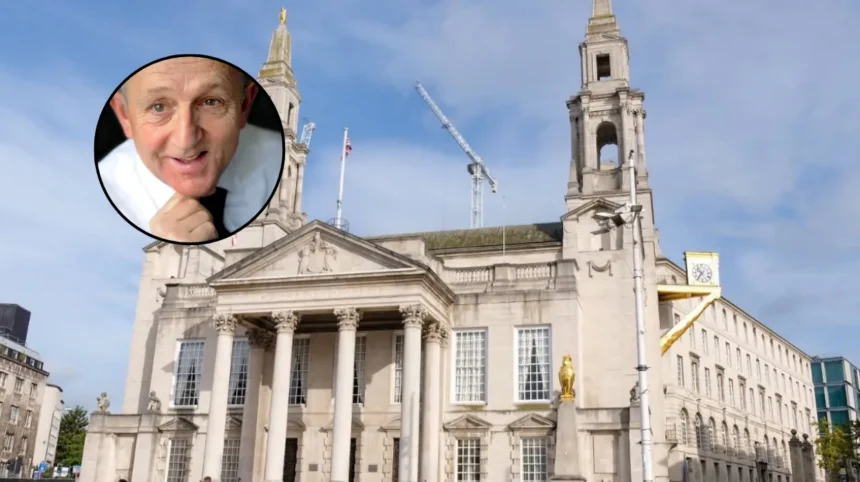
Leeds (The Leeds Times) September 26, 2026 — Former Leeds City Council leader Keith Wakefield OBE, who served as one of the region’s most prominent local politicians for more than three decades and successfully spearheaded the bid to bring the Tour de France to Yorkshire, has died at the age of 78. As reported by local media outlets including West Leeds Dispatch and Leeds Live, Wakefield passed away in the early hours of Saturday, September 19, 2026, at St Gemma’s Hospice in Leeds following a short illness.
Who Was Keith Wakefield and What Was His Public Service Legacy?
Keith Wakefield was a stalwart of Labour politics in West Yorkshire who devoted 31 years of continuous service to local government. Born in Herefordshire in July 1948, Wakefield faced an extraordinarily challenging start to life. Raised in an orphanage in Birmingham after separating from his father, he was later fostered in Leicester, where he faced severe childhood neglect. Despite these early hardships, he went on to complete higher education at the Universities of Birmingham, Warwick, and Huddersfield before moving into teaching and local politics.
First elected to Leeds City Council in 1988 under the name Keith Sturgess to represent the Barwick and Kippax ward, he formally changed his surname to Wakefield in 1992. Following boundary redistributions in 2004, he represented the newly created Kippax and Methley ward until his eventual retirement from elected politics in 2019.
During his career, Wakefield held the position of Council Leader twice. His first stint came between May 2003 and June 2004. After six years heading the Labour Group in opposition under a Liberal Democrat-Conservative administration, he returned to power as council leader from May 2010 through May 2015. Following his stepping down as leader, he went on to chair the West Yorkshire Combined Authority Transport Committee from 2015 to 2018.
In recognition of his contributions to local government and the public sector, Wakefield was appointed an Officer of the Order of the British Empire (OBE) in the 2016 New Year Honours list, awarded an honorary doctorate by Leeds Beckett University in 2019, and named an Honorary Alderman of the City of Leeds in January 2020.
How Have Political Leaders and Community Groups Paid Tribute?
As reported by West Leeds Dispatch, Councillor Adrian McCluskey (Lab, Farsley & Wortley), Chair of the Outer West Community Committee, initiated a minute’s silence during a council committee meeting to honor the late leader.
In an official joint statement released by Leeds City Council, Council Leader James Lewis and Council Chief Executive Ed Whiting expressed deep sadness on behalf of the authority. As reported by local media, Lewis and Whiting stated:
“Across decades of public service, Keith made an enormous contribution to Leeds and was a passionate advocate for the city and its communities. Many people across Leeds and beyond will remember him not only for his leadership and commitment to public service, but also for his kindness, generosity and sense of humour. We know that this news will be felt by many colleagues and partners who had the privilege of working with Keith. Our thoughts are with his family and loved ones at this sad time.”
Tributes were also paid by sports and community groups across the city. In a statement issued on September 23, 2026, the Leeds United Supporters’ Trust expressed its deep sadness over Wakefield’s passing, highlighting his private counsel and advocacy for football fans during challenging periods in the club’s ownership history.
As reported on the official Leeds United Supporters’ Trust site, former Chairman Gary Cooper stated:
“Keith was a true friend to the Trust and to me personally during some incredibly difficult times. His advice, kindness and quiet support meant more than he probably ever realised. Leeds has lost a great servant and we have lost a good friend.”
Background of the Particular Development
Keith Wakefield’s tenure as leader of Leeds City Council took place during two distinct phases in the modern political and economic history of West Yorkshire.
His second term, beginning in May 2010, coincided directly with the formation of the UK Conservative-Liberal Democrat Coalition Government and the initiation of its national austerity programme. Local authorities across England were subjected to severe, unprecedented reductions in central government block funding. Under Wakefield’s leadership, Leeds City Council had to navigate tens of millions of pounds in emergency budget cuts, forcing significant restructuring, administrative reorganisations, and the reduction of thousands of municipal jobs. Supporters praised his pragmatic approach to budget management while protecting frontline social services, whereas political critics frequently sparred over the specific implementation of cutbacks and service closures across the district.
Simultaneously, Wakefield oversaw major economic regeneration initiatives aimed at solidifying Leeds as the commercial heart of the North. His defining achievement came in 2012–2014 when, alongside regional partners and Welcome to Yorkshire, he spearheaded the successful bid to bring the Grand Départ of the 2014 Tour de France to Leeds and Yorkshire. The event attracted millions of spectators, generated hundreds of millions of pounds for the regional economy, and established Leeds on an international platform for world-class sporting events.
Following his stepping down as council leader in May 2015, he was succeeded by Judith Blake, the first female leader of Leeds City Council. Wakefield subsequently shifted his focus toward regional transport policy, heading up transport initiatives across West Yorkshire during the formation phase of the regional mayoral devolution deal.
Prediction: How This Development Can Affect the People of Leeds and Regional Policy
The passing of Keith Wakefield represents the symbolic end of an influential era in West Yorkshire municipal governance. While his death does not alter current political majorities on Leeds City Council, its wider impact will be felt in several concrete ways across the region:
- Civic and Political Heritage Recognition: The death of one of Leeds’ longest-serving modern leaders is expected to prompt formal civic commemorations from Leeds City Council. Discussions regarding permanent memorials, named infrastructure projects, or public honors in recognition of his role in securing the 2014 Tour de France and supporting urban regeneration are likely to be raised in upcoming full council meetings.
- Impact on Regional Transport and Infrastructure Advocacy: Wakefield’s legacy as a staunch advocate for regional infrastructure reform and former Chair of the West Yorkshire Combined Authority Transport Committee continues to influence current regional transport strategy. His passing reinforces political momentum among local leaders pushing central government for improved transport connectivity, mass transit funding, and regional devolution commitments across Leeds and the wider West Yorkshire footprint.
- Fan Governance and Community Engagement: Wakefield’s long-standing model of mediating between local government, civic institutions, and grassroots supporters’ groups—such as the Leeds United Supporters’ Trust—serves as an ongoing framework for public-private community collaboration in the region. Current civic leaders are expected to maintain these direct channels of communication with local supporters and community groups as the city tackles major stadium and urban development proposals.