Key Points
- Massive Ballot Support: Almost 2,500 workers took part in an indicative ballot run by the GMB Union, with 94% voting in favour of industrial action.
- Systemic Underpayment: The dispute follows Leeds City Council’s acknowledgment that female workers have been systematically underpaid for work of equal value.
- Formal Legal Ballot Ahead: The GMB Union has confirmed plans to launch a formal legal strike ballot in the coming days.
- Union Warning: The GMB Union has warned the local authority that it must put forward a serious offer or face mass disruption to municipal services across the city.
- Council Response: Leeds City Council highlighted that it settled some elements of claims last year, but cautioned that complex unresolved legal issues and severe fiscal constraints mean an unviable settlement could trigger job cuts or council tax hikes.
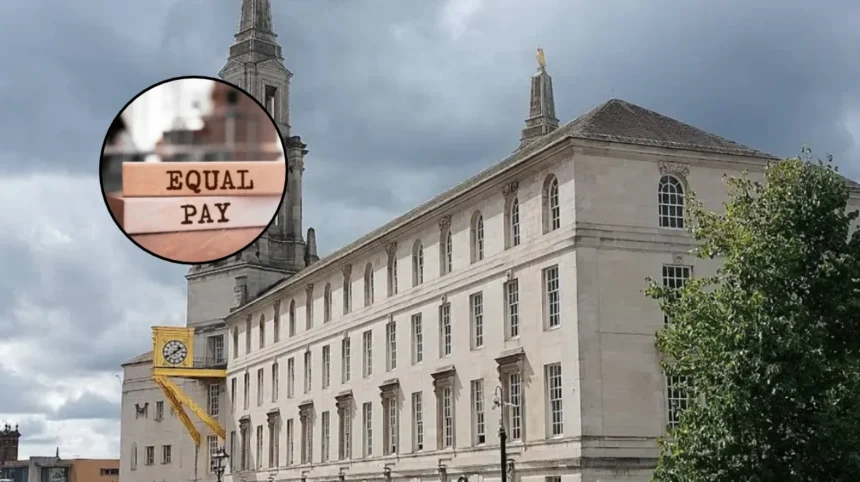
Leeds (The Leeds Times) October 16, 2026 – Thousands of Leeds City Council employees have signalled a strong readiness to take strike action following a overwhelming vote in an indicative ballot run by the GMB Union over an ongoing, long-running equal pay dispute. Almost 2,500 local authority staff members participated in the consultative vote, in which 94% voted in favour of moving forward with industrial action. The ballot was initiated after the local authority formally acknowledged the existence of an equal pay dispute, under which female employees have been systematically underpaid for work of equal value.
What Statements Have Union Representatives and Council Officials Issued Regarding the Dispute?
As reported by media staff at the GMB Union press office, Julie Wynn, GMB Senior Organiser, stated that:
“This is an overwhelming mandate for industrial action that represents the anger Leeds have created with its shamefully low offer to staff they’ve been underpaying for years. Thousands of women have had their say, and the message couldn’t be clearer. Leeds Council leadership now has no choice but to put a serious offer on the table or expect mass disruption to services across the city.”
In response to the union’s announcement, as reported by editorial staff at LocalGov, an official spokesperson for Leeds City Council stated that:
“It is incumbent on us, as a responsible local authority, to do our utmost to avoid a situation where – by accepting any terms that would place an undue burden on our finances – we are forced to consider job cuts and drastic rises in council tax. We will therefore continue to seek a settlement that is fair and realistic, and would once again stress that we are open to further discussions with the GMB to try to find common ground on this important matter.”
As further reported by LocalGov, the council spokesperson added that the local authority had taken a constructive approach and previously settled certain elements of the equal pay claims last year, but maintained that “complex legal issues” remain unresolved at this stage.
Background of the Leeds City Council Equal Pay Dispute
The equal pay dispute between Leeds City Council and its workforce forms part of a broader, nation-wide challenge facing local authorities across the United Kingdom regarding historic pay disparities between male- and female-dominated job roles. Equal pay legislation mandates that men and women in the same employment performing equal work, or work rated as equivalent, must receive equal pay and benefits.
Over recent years, trade unions representing municipal workers—including the GMB Union—have audited job evaluation schemes and pay structures across several major UK metropolitan councils. These reviews revealed that female-dominated job roles, such as care workers, cleaners, and catering staff, were consistently graded and compensated at lower rates than male-dominated roles of comparable skill levels, such as refuse collection or grounds maintenance staff.
Following formal grievances and claims lodged on behalf of female employees, Leeds City Council acknowledged the fundamental merits of the equal pay dispute. While the local authority engaged in negotiations and settled initial tranches of claims in the prior calendar year, core disputes regarding the valuation of historical back-pay and full pay-scale parity remained unaligned. The failure to reach a comprehensive settlement led the GMB Union to move forward with the indicative ballot as a precursor to formal legal action.
Prediction: How Will This Development Affect Local Residents and Council Services?
The transition from an indicative vote to a formal legal strike ballot by the GMB Union indicates a significant escalation in industrial tension that could soon impact several key stakeholder groups in Leeds.
- Impact on Local Residents and Service Users: Should the upcoming formal ballot result in a legal mandate for strike action, residents across Leeds face the prospect of widespread interruptions to day-to-day public services. Functions including refuse collection, street cleaning, school support, social care operations, and municipal administrative services could experience severe delays or temporary suspensions during period of strike activity.
- Impact on Council Taxpayers: The financial resolution of the equal pay liabilities presents a direct fiscal risk to local households. As outlined in the statement by the council’s spokesperson, meeting major financial liabilities without additional central government funding could compel the local authority to consider council tax increases or public service budget cuts to cover settlement costs and ensure long-term solvency.
- Impact on Council Staff: For affected council staff, a settlement would deliver financial compensation and long-term pay equality. However, prolonged industrial action could result in loss of pay for striking workers, while any eventual financial settlement negotiated without central support could heighten the risk of workforce restructuring or staff reductions within the authority.