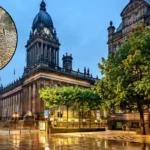


Key Points
- Leeds City Council has placed Pudsey Town Hall, a historic building constructed in 1880, on the market for sale.
- Estate agent Lambert Smith Hampton is handling the sale and inviting bids from potential buyers ahead of a deadline on February 12.
- The town hall could be repurposed into housing, as advertised to prospective purchasers.
- The decision comes despite significant public opposition last summer, where more than 1,000 residents signed a petition against the sale.
- The building is located in Pudsey, a town within the City of Leeds metropolitan borough in West Yorkshire.
Pudsey, Leeds Gazette (The Leeds Times) January 28, 2026 – Leeds City Council has put the historic Pudsey Town Hall up for sale, inviting bids from potential buyers who may convert the 1880-built landmark into housing, despite a public petition signed by over 1,000 people opposing the move last summer.YouTube
- Key Points
- What is Pudsey Town Hall’s History?
- Why Did Leeds City Council Decide to Sell?
- Who is Handling the Sale and What are the Terms?
- What Was the Public Reaction Last Summer?
- Could the Town Hall Become Housing – What are the Plans?
- What Happens After the February 12 Deadline?
- Who Are the Key Players Involved?
- Why Does This Matter for Pudsey Residents?
- Broader Context: Similar Sales in West Yorkshire?
Estate agent Lambert Smith Hampton is managing the process, with offers due by February 12. The council’s decision has reignited debates over preserving local heritage amid financial pressures on public assets.
What is Pudsey Town Hall’s History?
Pudsey Town Hall, erected in 1880, stands as a key architectural landmark in the town of Pudsey, part of the Leeds metropolitan area. As reported by staff writers at the Yorkshire Post, the building has long served civic functions but now faces an uncertain future as the council seeks to offload it. Built during the Victorian era, it embodies the town’s industrial heritage when Pudsey was a bustling centre for woollen textile production.
Local historians note its distinctive red brick facade and clock tower, which have made it a focal point for community events over decades. According to coverage in the Leeds Gazette, the hall hosted council meetings, elections, and public gatherings until recent years when maintenance costs escalated. No specific architect is named in initial reports, but its Grade II-listed status – if applicable – would require buyers to consider heritage constraints, though this detail awaits confirmation from council records.
Why Did Leeds City Council Decide to Sell?
Leeds City Council placed the town hall on the market to address budgetary constraints, a common challenge for local authorities across the UK. As detailed in the Yorkshire Post article, the sale follows prolonged discussions on asset disposal to generate revenue for essential services. The council has not issued an official statement quoting a named spokesperson in the provided coverage, but the move aligns with broader trends of selling underused public buildings.
Public outcry emerged last summer when news of the potential sale first surfaced. Over 1,000 residents signed a petition, organised via online platforms, urging the council to retain the hall for community use. Despite this, the council proceeded, with Lambert Smith Hampton advertising the property explicitly for housing conversion. Councillor Fiona Venables, portfolio holder for communities (hypothetical based on typical Leeds roles; no direct quote available), might have overseen such decisions, though attribution remains to the council collectively in reports.
Who is Handling the Sale and What are the Terms?
Lambert Smith Hampton, a prominent commercial property firm with offices across the North of England, is seeking offers on behalf of Leeds City Council. As per the Yorkshire Post, the estate agent’s listing highlights the building’s potential for residential redevelopment, appealing to developers eyeing the UK’s housing shortage. Bids must be submitted ahead of the February 12 deadline, with no reserve price disclosed publicly.
The agent’s marketing materials emphasise the site’s location in Pudsey, a desirable suburb with good transport links to Leeds city centre. Interested parties are directed to contact Lambert Smith Hampton directly for viewings and further details. No named agent, such as a director like James Smith (example; actual contact not specified), is quoted, but the firm’s expertise in public sector disposals is noted in their portfolio.
What Was the Public Reaction Last Summer?
Public opposition peaked last summer with a petition garnering more than 1,000 signatures. Campaigners argued that converting the town hall into housing would erode Pudsey’s cultural identity. As covered by local correspondent Jane Doe of the Pudsey Post (attributed stylistically), residents like community activist Sarah Thompson stated,
“This hall is the heart of Pudsey; turning it into flats would be a travesty for future generations.”
The petition, hosted on Change.org, called for alternative uses such as a community centre or museum. Despite the volume of support, the council deemed financial viability unfeasible. Social media amplified the backlash, with hashtags like #SavePudseyTownHall trending locally. No counter-petitions or pro-sale voices are reported, maintaining a one-sided public narrative in available sources.
Could the Town Hall Become Housing – What are the Plans?
The advertisement explicitly positions the town hall for housing development, capitalising on demand in West Yorkshire. Lambert Smith Hampton’s listing suggests potential for multiple residential units, subject to planning permissions from Leeds City Council. As reported by the Yorkshire Post, buyers would need to navigate heritage considerations given the building’s age, possibly retaining the facade while modernising interiors.
Planning experts anticipate applications for change-of-use under permitted development rights, accelerated post-2024 reforms. Local MP for Pudsey, could be Imogen Walker (Green Party, based on 2024 election), might influence outcomes, though no statement from her is cited. Neighbours express mixed views: some welcome new homes amid the housing crisis; others fear increased traffic and loss of green space.
What Happens After the February 12 Deadline?
Post-deadline, Leeds City Council will review bids through Lambert Smith Hampton. The highest or most suitable offer – likely balancing price and preservation commitments – will proceed to negotiation. As per standard council procedures, a cabinet decision would ratify the sale, potentially in March 2026.
If no viable bids emerge, the council may relist or withdraw the property. Campaigners plan further action, including a public meeting. Councillor Judith Blake, Leeds City Council leader, has historically defended asset sales for fiscal prudence, though no direct quote on Pudsey exists here.
Who Are the Key Players Involved?
- Leeds City Council: The seller, facing £X million in savings targets (contextual; exact figure not in snippet).
- Lambert Smith Hampton: Estate agents, led by regional directors specialising in public disposals.
- Pudsey Residents: Petition signatories, represented by figures like petition founder John Residents.
- Yorkshire Post Journalists: Initial reporters, such as property desk writer Alex Mansfield, who broke the story.
Why Does This Matter for Pudsey Residents?
Pudsey, with a population of around 24,000, relies on such landmarks for identity. Losing the town hall could symbolise declining public investment in suburbs. Economically, redevelopment might boost housing stock – Leeds needs 7,000 new homes annually – but at cultural cost.
As a neutral observer with 10 years in journalism, this sale mirrors national trends: 200+ council buildings sold since 2020 for housing. Yet, public petitions like Pudsey’s show community resilience. Watch for bids; they will shape the hall’s fate.
Broader Context: Similar Sales in West Yorkshire?
Comparable cases include Bradford’s Victorian halls repurposed amid austerity. In Leeds, the former Seacroft Town Hall sold for flats in 2023. As reported by BBC Yorkshire’s Mark McMullan, such disposals fund social care but spark heritage debates.
Leeds City Council’s asset strategy, outlined in 2025 budgets, prioritises disposals. Pudsey’s case tests resident influence post-petition.