

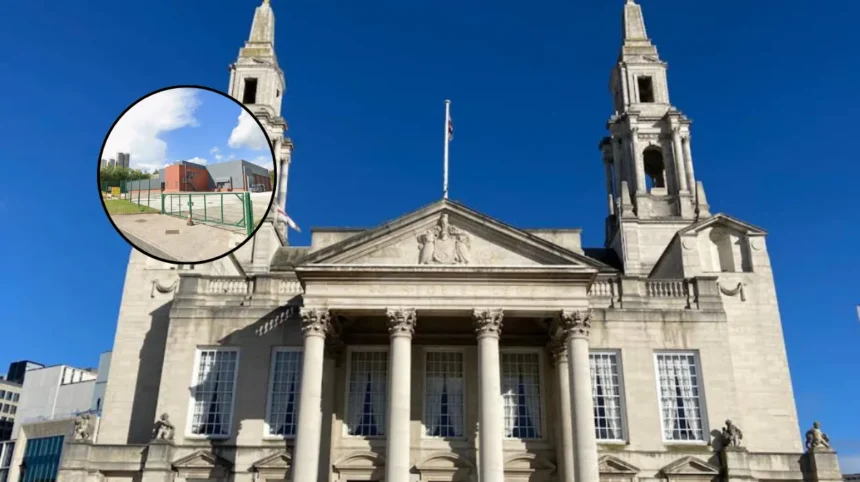
- White Rose Cheer has submitted a formal planning application to Leeds City Council to convert a vacant industrial building into a community sports centre.
- The proposed site is located at Royds Farm Road, off Gelderd Road, in Holbeck, LS12.
- The facility would serve as a training space for the competitive cheerleading organisation and include a reception area.
- According to planning documentation, the project aims to provide youth activities, promote healthy lifestyles, and facilitate the positive reuse of an existing building.
- Measures are planned to manage potential noise impacts, with all activities intended to be indoor-only.
Leeds (The Leeds Times) May 2, 2026 — A competitive cheerleading organisation is seeking formal permission from Leeds City Council to repurpose a vacant industrial warehouse into a dedicated community sports centre to support youth activities and promote physical wellness in the south of the city.
How does the proposal plan to repurpose the industrial site?
The planning application, lodged by White Rose Cheer, focuses on a vacant building situated at Royds Farm Road, located off the major arterial route of Gelderd Road in Holbeck, LS12.
As reported by Don Mort, a local democracy reporter for the West Leeds Dispatch, the organisation intends to transform the former industrial unit into a facility featuring a primary training space alongside a reception area.
The submission highlights the potential benefits for the local area, with planning documentation stating that the scheme would provide valuable indoor cheerleading and sports facilities.
Furthermore, the report notes that the proposal represents a positive reuse of an existing building, helping to bring a currently vacant site back into productive community use.
What measures are being taken to address local impact?
In response to potential concerns regarding the transition of an industrial space into a high-activity sports venue, the planning documents outline specific operational controls.
The reports indicate that all activities at the new centre would be strictly indoor-only to mitigate disruption. Additionally, the documentation confirms that measures would be in place to effectively monitor and control noise levels, ensuring the facility operates in accordance with local planning standards.
What is the background of this development?
The interest in repurposing vacant industrial units for sports and leisure facilities in Leeds is part of a broader trend of urban regeneration within the city’s post-industrial areas. The area of Holbeck, in particular, has been a significant focus for development, with Leeds City Council actively promoting the creation of new community spaces and health-focused infrastructure.
This specific application from White Rose Cheer sits within a landscape of ongoing investment in the southern parts of the city. For example, local authorities have recently moved forward with plans for a major £15 million sports hub, also situated in Holbeck on the site of the former Matthew Murray High School.
That larger project, which includes plans for artificial grass football pitches and community café facilities, is expected to commence construction in August 2026. While the White Rose Cheer proposal is a distinct, smaller-scale initiative, it aligns with the city’s wider strategic ambition to improve access to youth and sports activities through the reuse of existing urban land.
What is the prediction for this development’s impact on the local community?
If granted approval by the council, the transformation of the Royds Farm Road warehouse is likely to have a positive impact on the local youth and sports community in LS12. By providing a permanent, purpose-fitted training base, White Rose Cheer will be able to expand its competitive activities, offering young people in the area more opportunities to engage in structured physical training and team sports.
Furthermore, the conversion of a vacant, unused building into an active community hub can serve as a catalyst for small-scale local economic improvement, contributing to the broader regeneration of the Holbeck industrial fringe. The creation of such facilities is generally viewed as an enhancement to the social infrastructure of the area, potentially encouraging increased participation in health-oriented lifestyles among local residents. The success of this project could also demonstrate the viability of smaller, independent sports groups successfully securing and renovating vacant commercial property to sustain their operations while simultaneously serving the public interest.