
Key Points:
- Major Maintenance Works Commencing: Structural maintenance has officially started on the Leeds Inner Ring Road, focusing on essential repairs to retaining walls.
- 15-Week Project Duration: The maintenance scheme is scheduled to last approximately 15 weeks, taking the works through to mid-November 2026.
- Overnight Closures and Restrictions: Traffic management, including full overnight road closures and selective lane restrictions, will operate nightly between 7:00 PM and 5:00 AM.
- Specific Location: The affected section stretches between the Woodhouse Tunnel and Woodhouse Lane.
- Ageing Infrastructure: Supporting structures along the highway were constructed over 50 years ago and are reaching or exceeding their intended design life.
- High Traffic Volume: The Inner Ring Road acts as a critical artery for West Yorkshire, carrying more than 90,000 vehicles every single day.
- Preventative Strategy: Leeds City Council confirmed that proactive maintenance now will mitigate the risk of catastrophic structural failures and unplanned emergency closures.
- Future Phases Planned: This project marks Phase 1 of a broader structural maintenance programme, with Phase 2 tentatively expected to begin in early 2027, subject to funding.
Leeds (The Leeds Times) September 1, 2026 – Motorists and commercial drivers across Leeds are facing four months of evening travel adjustments as major structural maintenance work officially begins tonight along one of the city’s most critical transport corridors. Leeds City Council confirmed that temporary traffic restrictions and overnight road closures will be enforced across the Inner Ring Road starting Tuesday evening. The vital infrastructure project is set to run for approximately 15 weeks, with completion projected for mid-November 2026.
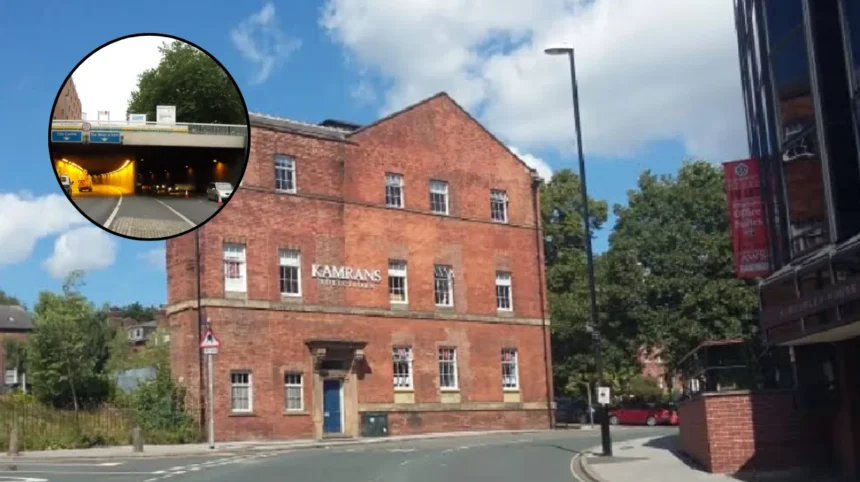
The extensive project focuses on the repair and structural reinforcement of retaining walls that support key stretches of the dual carriageway. The initial phase of work is strictly concentrated on the section spanning between Woodhouse Tunnel and Woodhouse Lane.
To minimise gridlock across the urban core during peak operational hours, local highways engineers have structured the scheme so that the vast majority of disruptive activity takes place overnight between 7:00 PM and 5:00 AM. During these night-time windows, drivers will encounter lane restrictions, temporary speed controls, and full carriageway diversions.
Carrying more than 90,000 vehicles every day, the Inner Ring Road functions as the central vascular system for West Yorkshire’s regional transport network. Highway managers noted that many of the concrete retaining walls supporting the road were built during the major urban motorway expansions of the 1960s and 1970s.
Having served for over five decades, these engineered structures are now approaching or exceeding their original design life expectancy, making immediate structural intervention essential.
As reported by West Leeds Dispatch, Councillor Peter Carlill, Leeds City Council’s executive member for transport and planning, stated that:
“The Inner Ring Road is one of Leeds’ most important transport routes, carrying thousands of journeys every day and helping traffic avoid some of our busiest city centre streets. Many of the structures supporting the route were built decades ago and now require investment to ensure they remain safe and reliable for the future.”
Councillor Peter Carlill further highlighted the council’s preventative management policy, explaining that:
“These works are about taking a planned approach to maintaining our infrastructure, reducing the risk of more substantial problems developing in the future. It will help avoid emergency repairs and unplanned closures, which can cause much greater disruption for road users. We appreciate there will be some temporary disruption while the repairs are carried out and would like to thank people for their patience and understanding.”
Highway authorities have confirmed that clearly signed diversion routes will be established throughout the 15-week duration. Motorists attempting to traverse the city center late at night are being strongly advised to check real-time traffic updates via the Connecting Leeds portal and to allocate additional travel time to navigate the residential and secondary street bypasses.
Why Are The 15-Week Maintenance Works Essential For Leeds?
The decision to initiate a 15-week repair window stems from comprehensive structural inspections conducted along the A58(M) and A64(M) corridors, which together form the urban expressway surrounding central Leeds. Civil engineers identified signs of fatigue, concrete spalling, and weathering across the retaining walls between Woodhouse Tunnel and Woodhouse Lane.
Because these walls physically support the high-speed carriageways and surrounding elevated land, delaying repairs would heighten the risk of severe structural degradation.
The local authority underscored that executing planned preventative maintenance overnight prevents catastrophic structural faults that would otherwise demand emergency daytime closures. While overnight closures between 7:00 PM and 5:00 AM will create localized evening delays, they protect daytime freight, public transit, and commuter traffic from catastrophic gridlock.
Furthermore, council officials confirmed that this 15-week undertaking represents only the introductory phase of a broader multi-year infrastructure refurbishment project.
Provided that external funding approvals are successfully secured from regional transport pots, the second major phase of structural repairs across adjacent sections of the Inner Ring Road is scheduled to commence in early 2027.
How Will Traffic Diversions And Public Transport Be Managed?
To accommodate the nightly closures between Woodhouse Tunnel and Woodhouse Lane, highways teams have mapped out signed diversionary routes designed to redirect heavy goods vehicles (HGVs) and private motor cars along suitable arterial roads. Daytime running lanes will remain fully open, ensuring that peak morning and afternoon commuter rushes operate without physical roadworks encroaching on active travel lanes.
Night-time bus services, emergency services, and commercial hauliers operating across the West Yorkshire corridor will face altered routes during the 10-hour work windows.
Public transport operators are coordinating with Connecting Leeds to adjust scheduling for late-evening express services, ensuring passengers are given adequate notice of altered bus stop drop-offs and potential journey time extensions.
Contractors working on the site will utilize specialized equipment to execute concrete repairs, anchor reinforcements, and drainage overhauls within the tight overnight window. Work sites will be cleared and safety checked prior to 5:00 AM each morning to allow normal commuter access to resume without delay.
Explore More Local Leeds News
Man Hospitalised After Violent Assault at Leeds Bus Station, Leeds 2026
Leeds Festival 2026: Storms, Stage Closures, and Standout Shows in Bramham Park 2026
Background Of The Inner Ring Road Infrastructure Development
The Leeds Inner Ring Road—primarily designated as the A58(M) and A64(M)—holds a significant place in British urban civil engineering history.
Conceived in the post-war era as part of the ambitious “Leeds Highway Plan,” the road was designed to bypass central commercial streets, allowing heavy transit to cross the city without clogging civic shopping districts.
Construction of the first segment began in the mid-1960s, making Leeds one of the very first British cities to construct an urban motorway directly slicing beneath and around its central core. A defining feature of this construction was the heavy use of sunken cutting techniques, retaining walls, and cut-and-cover tunnels such as the Woodhouse Tunnel.
While this mid-century engineering successfully siphoned off tens of thousands of vehicles daily from pedestrian zones, much of the structural concrete and retaining architecture was built with a projected operational lifespan of roughly 50 years.
Decades of heavy vehicle loading, freeze-thaw weather cycles, and exposure to de-icing road salts have naturally degraded the underlying concrete and reinforcement bars. Consequently, the local authority has entered a mandatory cycle of major structural overhauls to ensure that 20th-century infrastructure remains safe for 21st-century traffic demands.
Predictions: How Will This Development Affect Local Residents, Businesses, And Drivers?
The commencement of 15 weeks of overnight closures will trigger distinct economic and operational knock-on effects across several key groups in the Leeds metropolitan area:
- Night-Shift Commuters and Gig Economy Drivers: Taxi operators, delivery drivers, healthcare professionals, and hospitality workers operating between 7:00 PM and 5:00 AM will experience the most direct immediate impact. Navigating around signed diversions will increase journey times and fuel costs, particularly for trips between the northern suburbs and the city core.
- Local Residents Along Diversion Routes: Household residents living along secondary arterial streets chosen for night-time diversions will likely notice increased traffic volumes, vehicle headlights, and ambient noise during night hours.
- Logistics and Commercial Freight: Heavy transport companies operating freight routes across West Yorkshire will need to re-route late-night haulage. The restriction of key urban arteries could lead to minor supply chain adjustments for inner-city retail restocks scheduled during night shifts.
- Long-Term Economic and City Centre Benefits: For the broader Leeds population, the temporary inconvenience promises significant long-term safety and economic stability. By proactively reinforcing aging structures, the council safeguards the city against sudden structural failures that would cause months of daytime gridlock, securing the reliability of a transport artery carrying 90,000 daily journeys well into the next decade.