
Key Points
- The UK government has committed £16 million in funding to regenerate brownfield land in Leeds into a new mixed-use neighbourhood known as Leeds South Village.
- The development will deliver approximately 1,925 new homes on former industrial land, with a portion designated as affordable housing.
- Homes England is providing the infrastructure grant to the Caddick Group, which serves as the project lead and director for the South Village.
- Essential infrastructure works—including roads, footpaths, cycleways, and utilities—are now beginning to lay the foundations for rapid onward development.
- The project is part of a wider Mayoral Development Zone led by West Yorkshire Mayor Tracy Brabin and Leeds City Council leader James Lewis, aiming to deliver up to 20,000 new homes across Leeds city centre.
- Housing Secretary Steve Reed stated the funding will help local families achieve homeownership while creating jobs, community facilities, and green spaces.
- Amy Rees CB, chief executive of Homes England, emphasised the agency’s commitment to accelerating housing delivery and boosting economic growth across England.
- The surrounding South Bank area has previously undergone regeneration efforts following the decline of its industrial past.
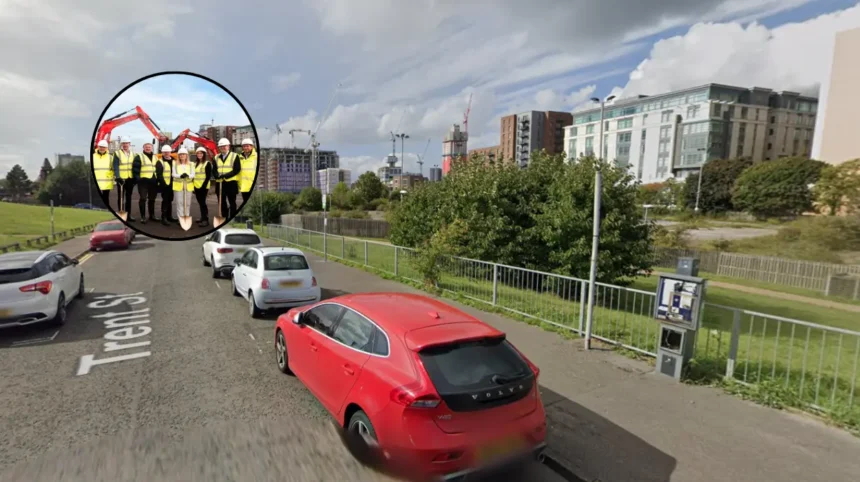
Leeds (The Leeds Times) May 20, 2026 – The government has committed £16m to turn brownfield land in Leeds into a new mixed-use neighbourhood, marking a major milestone for the city’s South Bank regeneration. The urban village regeneration is being funded by the government via Homes England, with an infrastructure grant being given to the Caddick Group to deliver the Leeds South Village development on former industrial land.
- Key Points
- What Are the Key Details of the Leeds South Village Development?
- How Does This Project Fit Into Wider Regeneration Plans for Leeds?
- What Did Government Officials Say About the Funding Injection?
- Why Is Brownfield Regeneration Critical for Leeds Housing Supply?
- Background of the Particular Development
- Prediction: How This Development Can Affect Leeds Residents and the Local Community
What Are the Key Details of the Leeds South Village Development?
As reported by the official government announcement, the development, the Leeds South Village, will be built on former industrial brownfield land with an outline for 1,925 homes. Of the planned 1,925 homes, a number will be affordable, and commercial and green spaces are also planned for the area.
The funding from Homes England will aid the Caddick Group to create infrastructure for the regeneration, including roads, utilities, and green spaces.
Lee Savage, director at Caddick and project lead for South Village, Leeds, said:
“The funding from Homes England marks a major milestone for South Village and Caddick’s aspirations for the Leeds’ South Bank, enabling us to move decisively into delivery”.
He further explained that
“The infrastructure works now getting underway are significant in both scale and complexity and will lay the foundations for the new neighbourhood, delivering essential roads, footpaths and cycleways, and unlocking the site for rapid onward development”.
Savage added:
“We’re proud to be working in close partnership with the Government, Homes England, Leeds City Council and the West Yorkshire Combined Authority to transform this long-derelict site into a vibrant, sustainable mixed-use neighbourhood for the city”.
How Does This Project Fit Into Wider Regeneration Plans for Leeds?
The village will be on the city’s South Bank, an area that has seen several regeneration efforts after the decline of its industrial past.
The surrounding area has seen several regeneration efforts after the decline of its industrial past, and the Homes England Strategic Place Partnership with the West Yorkshire Combined Authority is playing a key role in this.
The Leeds urban village is also set to be part of a planned Mayoral Development Zone, with West Yorkshire mayor Tracy Brabin and the leader of Leeds City Council, James Lewis, at its head.
This zone will cover a large part of Leeds city centre and act as a delivery vehicle for up to 20,000 new homes, as well as local jobs, public spaces, cultural destinations, and commercial developments.
What Did Government Officials Say About the Funding Injection?
Housing secretary Steve Reed said:
“The government is building the homes we need and transforming neglected brownfield into thriving places where people want to live”.
Reed continued:
“Our cash injection in Leeds will not only see local families achieve the homeownership dream but it will also open the door to job opportunities, community facilities, and more green spaces”.
He concluded:
“By working together, we can make a real difference in this special part of the city”.
Amy Rees CB, Homes England chief executive, said:
“The agency is proud to support meaningful collaboration, powered by new funds, blended interventions and even deeper regional relationships, that mean once redundant spaces can become thriving places to live, work and grow for generations to come”.
Rees added:
“We are working at pace with partners across Leeds and West Yorkshire, and in places across England, to accelerate housing and regeneration delivery for people the length and breadth of the country and to help boost economic growth”.
Why Is Brownfield Regeneration Critical for Leeds Housing Supply?
The development represents a significant approach to addressing housing needs by repurposing neglected land rather than building on greenfield sites.
As noted in the announcement, the government is
“transforming neglected brownfield into thriving places where people want to live”.
The South Bank area specifically has a history of industrial use that declined over time, leaving derelict land that now offers potential for sustainable mixed-use development.
The infrastructure grant being given to the Caddick Group will enable the creation of essential roads, utilities, and green spaces that form the backbone of the new neighbourhood. Lee Savage described these infrastructure works as “significant in both scale and complexity”.
Background of the Particular Development
The Leeds South Village regeneration project emerges from years of planning and partnership between multiple stakeholders.
The Homes England Strategic Place Partnership with the West Yorkshire Combined Authority has been playing a key role in regional development efforts.
The South Bank area of Leeds has undergone several regeneration efforts following the decline of its industrial past, which left significant brownfield land unused.
The Mayoral Development Zone, which will encompass the Leeds South Village, was established to act as a delivery vehicle for large-scale urban regeneration.
Led by West Yorkshire Mayor Tracy Brabin and Leeds City Council leader James Lewis, this zone will cover a large part of Leeds city centre.
The broader zone aims to deliver up to 20,000 new homes alongside local jobs, public spaces, cultural destinations, and commercial developments.
Homes England, the government’s housing agency, has been actively supporting regeneration projects across England through infrastructure grants and blended interventions. The £16m commitment to Leeds represents part of a wider strategy to accelerate housing delivery and boost economic growth in regional cities.
Prediction: How This Development Can Affect Leeds Residents and the Local Community
The Leeds South Village regeneration is expected to have significant effects on various groups within the Leeds community. For local families seeking homeownership, the development of 1,925 homes with a portion designated as affordable housing could provide new opportunities to purchase property in the city. Housing Secretary Steve Reed explicitly stated that the funding “will not only see local families achieve the homeownership dream”.
Job seekers in West Yorkshire may benefit from the construction phase and subsequent commercial developments within the mixed-use neighbourhood. The Mayoral Development Zone aims to create local jobs alongside the new homes, with the broader zone targeting up to 20,000 new homes with associated employment opportunities. Lee Savage noted that the infrastructure works would unlock the site for rapid onward development, which typically generates construction employment.
Residents of the South Bank area and wider Leeds city centre could see improved community facilities and more green spaces as part of the development. The plan includes commercial spaces, green spaces, footpaths, and cycleways, which may enhance local amenities and encourage active travel. Amy Rees CB emphasised that the project would create “thriving places to live, work and grow for generations to come”.
The local economy of Leeds may experience growth from the regeneration, as Homes England aims “to help boost economic growth” across England through such projects. The transformation of long-derelict brownfield land into a vibrant, sustainable mixed-use neighbourhood could increase property values in the surrounding area and attract further investment.
Environmental sustainability advocates may view the brownfield regeneration positively, as it repurposes previously industrial land rather than developing greenfield sites. The development is described as a “vibrant, sustainable mixed-use neighbourhood,” suggesting environmental considerations have been incorporated into the planning.