

Key Points
- Leeds train passengers warned of potential disruptions on Wednesday, March 25, 2026, due to flooding affecting Northern rail services.
- Adverse weather conditions in the north west of England impacting journeys in the Leeds area, as reported by National Rail.
- Northern rail services specifically highlighted as affected, with passengers advised to check updates before travel.
- Flooding described as occurring in other parts of the country, with knock-on effects reaching Leeds.
- No specific details on exact routes disrupted in Leeds, but broad warnings issued for morning travel.
- National Rail serving as primary source for real-time updates on service alterations.
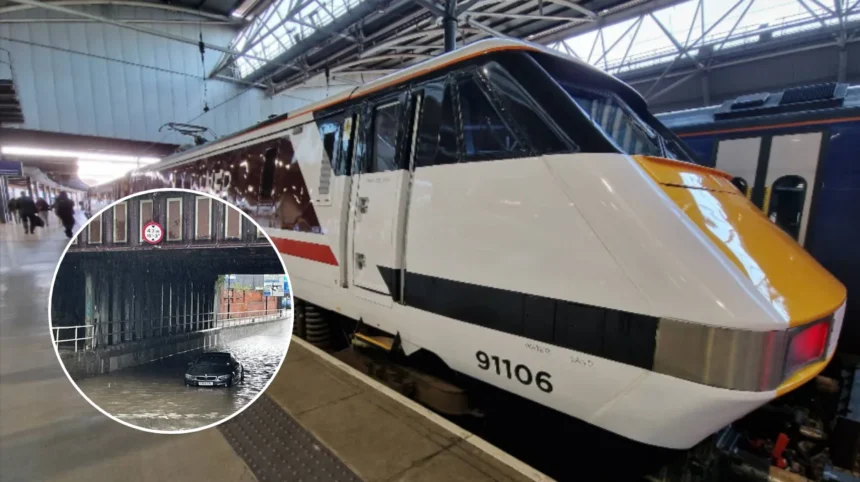
Leeds (The Leeds Times) March 25, 2026 – Train passengers in Leeds are facing potential disruptions this morning due to flooding on major Northern lines, stemming from adverse weather conditions in the north west of England. National Rail has issued warnings about impacts to journeys in the Leeds area, urging commuters to check services before travelling. Northern rail operators are among those affected, with the situation unfolding on Wednesday amid ongoing weather challenges.
- Key Points
- What Caused the Flooding Disruptions on Northern Lines?
- Which Specific Areas Are Impacted by the Flooding?
- How Are Northern Rail Services Affected Today?
- What Is National Rail Saying About the Situation?
- When Did Similar Flooding Disruptions Occur Previously?
- Who Else Is Reporting on Leeds Rail Flooding?
- What Advice Are Rail Operators Giving Passengers?
- Why Is Leeds Particularly Vulnerable to These Disruptions?
- How Can Passengers Check for Real-Time Updates?
- What Measures Are in Place to Prevent Future Flooding?
What Caused the Flooding Disruptions on Northern Lines?
Flooding has emerged as a recurrent issue for rail services in northern England, particularly exacerbated by heavy rainfall and adverse weather. In this instance, National Rail attributes the disruptions to conditions in the north west, which have ripple effects on Leeds connectivity. As per standard protocol in such events, engineering teams are deployed to assess and mitigate water ingress on tracks.
Historically, similar incidents have closed lines temporarily. For context, heavy rain previously led to flash flooding between Harrogate and Leeds, closing all lines and affecting LNER and Northern services, though services normalised post-recession. Network Rail has repeatedly noted that sodden ground from persistent rain floods tracks, causing delays and cancellations across affected routes.
Which Specific Areas Are Impacted by the Flooding?
The north west bears the brunt of the current adverse weather, with flooding reported to influence Leeds-bound services. National Rail’s advisory specifies that journeys in the Leeds area are at risk, though precise locations like Warrington, Preston-Lancaster, or Chester-Crewe have featured in prior comparable events. Passengers on Northern major lines should anticipate alterations without replacement transport in many cases.
Past disruptions illustrate the pattern: flooding between Chester and Crewe halted trains entirely as water levels exceeded track height, while Warrington saw similar submersion. In Yorkshire, lines between Harrogate and Leeds closed due to flash floods from heavy rain. These precedents underscore how regional flooding cascades to hubs like Leeds.
How Are Northern Rail Services Affected Today?
Northern services are directly in the spotlight, with National Rail confirming impacts on Wednesday, March 25. Commuters face potential delays or cancellations, particularly during morning peaks when Leeds connectivity is vital. Northern has a track record of suspending services on flooded routes, as seen in north west disruptions where trains were halted amid forecasts of further rain.
No operational services through key junctions were noted in analogous power-related events at Leeds, though flooding differs by targeting infrastructure directly. Cross-operator effects, including LNER and TransPennine Express, often compound Northern’s challenges, leading to widespread timetable amendments. Passengers lack automatic replacement buses, heightening inconvenience.
What Is National Rail Saying About the Situation?
National Rail serves as the authoritative voice, warning of disruptions due to flooding in other parts of the country affecting Leeds. Their updates emphasise checking before travel, a staple advisory in weather-impacted scenarios. In a representative statement from prior incidents, they noted,
“services faced cancellations or delays, and passengers are encouraged to continue checking before they travel. We apologise for the inconvenience and appreciate the patience of our travellers.”
Network Rail, closely aligned, has advised north west passengers of flooding across the network, stating in past releases:
“Heavy rainfall across the route has caused some services to be disrupted. Network Rail teams have been working hard to reduce the effects of the weather.”
They prepare for persistent rain, urging extra travel time.
When Did Similar Flooding Disruptions Occur Previously?
Recurring weather events provide critical context. On Monday, flash flooding from heavy rain closed Harrogate-Leeds lines, impacting LNER to London Kings Cross and Northern to York/Leeds; lines reopened after water receded. In October 2024, north west flooding hit Preston-Lancaster, Chester-Crewe, Crewe-Liverpool, and Warrington, with trains unable to run where water topped tracks.
January 2021 saw heavy rain flood north west tracks, suspending multiple Northern routes amid forecasts of more deluge. September 2024 submerged Shrewsbury-Wolverhampton lines at Wellington station, while LNER warned of delays to London King’s Cross. November 2025 power cuts at Leeds echoed flooding’s scale, with Northern halting all Leeds services.
Who Else Is Reporting on Leeds Rail Flooding?
Multiple outlets have covered parallel stories, amplifying awareness. YorkMix reported the Harrogate-Leeds closure, noting,
“Heavy rain led to flash flooding on the track between Harrogate and Leeds. As a result, all lines between the two were closed on Monday evening.”
BBC News detailed power disruptions at Leeds, quoting National Rail on signalling failures from faulty cables.
Network Rail’s media centre highlighted north west flooding, with engineers responding overnight. Northern Railway’s site warned of heavy rain disruptions, listing suspended routes. BBC also covered Storm Claudia’s flood risks, closing stations and limiting Northern timetables from Leeds to Skipton/Ilkley.
What Advice Are Rail Operators Giving Passengers?
Operators prioritise safety and flexibility. National Rail and Northern urge checking live updates via apps or journey checkers, a consistent refrain. LNER, in past events, advised,
“postpone their travel due to the extent of the interruptions and the high number of cancellations, suggesting they utilise their tickets for services later in the day or on Monday.”
Tickets become interchangeable across operators without extra cost.
TransPennine Express noted route shutdowns like Manchester Victoria-York via Leeds, sans replacements. CrossCountry offered limited road transport. Network Rail apologises routinely, as in,
“Engineers arrived on-site restored power… We apologise for the inconvenience.”
Why Is Leeds Particularly Vulnerable to These Disruptions?
Leeds, as a major northern hub, amplifies regional issues. Flooding elsewhere bottlenecks services converging here, from north west lines to Yorkshire routes. Adverse weather saturates drainage, a vulnerability exposed repeatedly—e.g., persistent rain on sodden ground floods tracks predictably.
Infrastructure like signalling (as in Leeds power cuts) compounds flooding’s isolation of platforms. TransPennine upgrades occasionally amend timetables, overlapping weather woes, as with Leeds-York/Selby closures for works. Commuter density heightens impact during mornings.
How Can Passengers Check for Real-Time Updates?
National Rail’s journey checker and Northern’s app/website provide live data, including delays/cancellations. At stations, staff assist directly. Operators like Northern post service updates promptly, as in their “Check Before You Travel” pages detailing amendments.
In crises, cross-operator flexibility applies—e.g., using tickets on alternatives. For forecasts, Met Office integrations via rail sites help preempt. Post-event, like YorkMix’s update, normalcy returns swiftly once water recedes.
What Measures Are in Place to Prevent Future Flooding?
Network Rail invests in drainage enhancements, managing overnight floods effectively in some cases. Teams deploy proactively, filling sandbags during storms like Claudia. Preparations for predicted rain, as in Cumbria alerts, include engineer readiness.
Upgrades like TransPennine Route aim long-term resilience, though short-term closures occur. Passenger advisories evolve with tech—apps now central. Despite this, climate-driven heavy rain challenges persist, demanding adaptive strategies.