Key Points
- West Yorkshire Police will deploy Live Facial Recognition (LFR) technology around the outer perimeter of Leeds Festival at Bramham Park for the first time.
- The deployment aims to support public safety, prevent criminal activity, and identify wanted individuals or persons posing a risk to attendees.
- Real-time camera feeds compare faces to an authorized police watchlist; human officers must double-check any system alerts before taking action.
- Chief Inspector Dan Tillett confirmed the technology will be used in a “targeted and proportionate” manner alongside festival organizers.
- LFR has previously been deployed across urban centers in West Yorkshire, including Leeds, Bradford, and Wakefield.
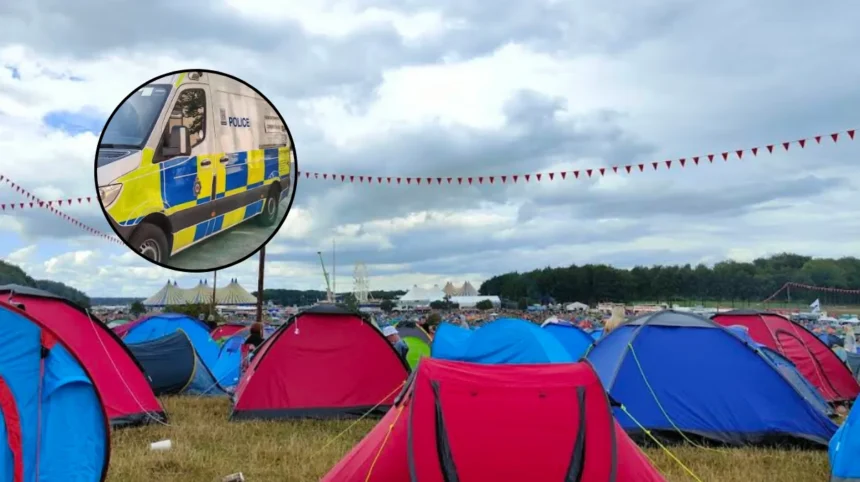
Leeds (The Leeds Times) August 20, 2026 – West Yorkshire Police have officially announced that Live Facial Recognition (LFR) technology will be deployed around the external perimeter of Leeds Festival for the first time this year. As reported by Matt Soanes of Greatest Hits Radio, the police force confirmed that the surveillance vans will monitor key external perimeter areas at the Bramham Park site as part of a wider security effort to deter crime and protect festivalgoers.
Why Is Live Facial Recognition Being Introduced at Leeds Festival?
As reported by Harry Williams of the Bradford Telegraph and Argus, West Yorkshire Police are deploying LFR technology in partnership with festival organizers to detect wanted offenders and prevent serious crime during the music event.
The LFR system functions by scanning live video streams of individuals passing by the police vans and converting facial features into biometric data. This data is instantly cross-referenced against a specific, pre-selected police watchlist comprising individuals who are wanted by the courts, subject to arrest warrants, or deemed a potential risk to the public.
When a potential match occurs, the software generates an alert. However, the technology does not act autonomously; specially trained officers on site must manually review the visual match to verify the subject’s identity before making approach decisions or taking enforcement action.
Biometric data from members of the public who do not trigger an alert is deleted automatically and immediately from the system.
As reported by Ed Cage of Reader Magazine, Chief Inspector Dan Tillett, who oversees the Live Facial Recognition project at West Yorkshire Police, outlined the force’s objectives for the festival deployment:
“Our priority is for everyone attending Leeds Festival to experience a safe and enjoyable event. Live Facial Recognition will form part of the wider safety operation at Bramham Park and will be used to help us prevent crime, safeguard the public and identify people who are wanted by police or who may present a risk to others.”
Chief Inspector Tillett emphasized that while the majority of attendees behave responsibly, the surveillance tool allows law enforcement to manage target risks efficiently:
“Whilst most people attending Leeds Festival are there to enjoy the event responsibly, we want to work in partnership to identify those who might seek to use the event as an opportunity to commit crime or cause harm. LFR provides us with an additional capability to identify those individuals quickly and effectively.”
He further noted that the technology is intended to be used with full public transparency:
“Live Facial Recognition has already been used a number of times across West Yorkshire, including in Leeds, Bradford and Wakefield city centres, as well as at major events. We are committed to using the technology responsibly, lawfully and transparently as a targeted policing tool to help make Leeds Festival as safe as possible for everyone attending.”
Explore More Local Leeds News
West Yorkshire Police Search For Missing Woman Antonia Leeds 2026
A6120 Footbridge Plans Delayed Over Rising Costs in West Leeds 2026
Background of the Particular Development
As reported by Catherine Levin of Emergency Services Times, West Yorkshire Police first introduced mobile LFR surveillance units in November 2025 following a Home Office expansion grant that supplied specialized vehicles to seven UK police forces.
The initial regional rollouts utilized customized vans equipped with NEC facial identification software and high-definition cameras deployed in busy commercial hubs across Leeds, Bradford, and Wakefield city centers, as well as near major sports stadiums.
During previous urban deployments, law enforcement officials maintained that LFR acts strictly as a digital tool to assist human decision-making rather than as a tool for mass surveillance. Speaking at the initial launch of the technology in late 2025, West Yorkshire’s Deputy Mayor for Policing and Crime, Alison Lowe OBE, stated:
“This live facial recognition technology offers an innovative opportunity to help prevent and solve crimes, doing the work in minutes that could take officers many hours. We understand the risks and will continue to scrutinise the way police deploy this resource.”
Despite police assurances regarding data protection, the expansion of biometric surveillance has drawn sustained debate from civil liberties organizations.
As reported by Jasleen Chaggar, legal and policy officer at human rights group Big Brother Watch, in coverage published by the BBC, public rights advocates have raised ongoing concerns regarding privacy rights and potential overreach:
“We all want serious crimes to be caught, but that doesn’t mean that you need to introduce disproportionate and rights-infringing technology. If the police said, ‘we’re going to take a cheek swab of everyone on the high street just to check that they’re not who we’re looking for’, the public would rightly be outraged.”
Despite these concerns, law enforcement agencies across England and Wales have incrementally increased LFR usage at high-profile gatherings, high streets, and entertainment venues following trials originally initiated at major sporting fixtures.
Prediction: How This Development May Affect Festivalgoers and Public Events
The deployment of Live Facial Recognition at Leeds Festival marks a notable milestone in the integration of real-time biometric monitoring into large-scale recreational events.
For ticket holders and attendees, this development means entering a venue perimeter where public biometric scanning is active.
While police have pledged clear signage around deployment zones, festivalgoers can expect an increased presence of specialized surveillance vans and marked officers at major entry corridors. The technology is designed to operate passively in the background, meaning the vast majority of law-abiding attendees will experience no direct interaction or delay when entering the site.
However, the technology could alter the general policing dynamic at major UK music festivals and public gatherings.
If the deployment at Bramham Park achieves its stated goals of intercepting wanted individuals and reducing opportunistic crime such as theft or assault, similar LFR deployments are likely to become standard operational practice at major outdoor events, sports fixtures, and public festivals nationwide.
Conversely, the operational presence of biometric surveillance may continue to prompt ongoing debate among privacy advocates regarding public consent, rights monitoring, and police transparency at large entertainment venues.