

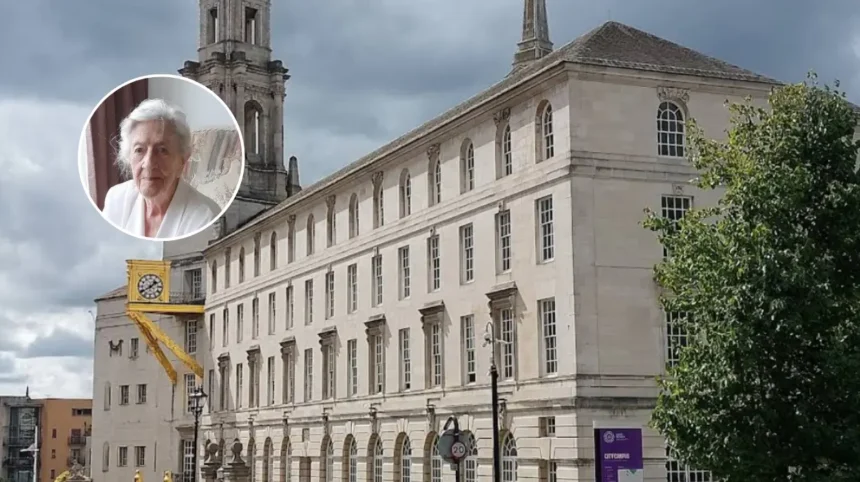
Key Points
- May Sexton, a long‑serving Conservative councillor in Leeds, has died at the age of 101.
- She represented local wards in Leeds from the late 1950s until the 1980s on the city council.
- In later life she served on a parish council, continuing her public service into her later years.
- Alongside her political work she helped run and manage a family crumpet‑baking business in Yorkshire.
- Tributes describe her as a determined, community‑minded woman who combined local politics with small‑business endeavour.
- Her life is framed as emblematic of a generation of women who balanced domestic, commercial and civic roles.
Leeds (The Leeds Times) April 4, 2026 – May Sexton, the Yorkshire Conservative councillor who helped steer parts of Leeds through decades of change while running her family crumpet business, has died at the age of 101, tributes confirm. As reported by The Yorkshire Post, which carried her obituary, she served on Leeds City Council from the late 1950s until the 1980s before later taking on roles with a parish council, marking a near‑life‑long commitment to local democratic life.
Friends, former colleagues and local historians described her as a quietly formidable figure who combined hands‑on work in a small‑scale food business with the often‑gruelling routine of local‑government committees, residents’ meetings and ward surgeries. Those who knew her also emphasised her Yorkshire pragmatism and her readiness to intervene directly in household‑scale issues, from school‑meal provision to housing standards, long before such matters became national talking points.
Who was May Sexton?
May Sexton’s career in formal politics began in the late 1950s, when she became a Conservative councillor for a ward in Leeds at a time when relatively few women held elected office in the city.
As reported by The Yorkshire Post’s obituary writer, she remained on the council for several decades, serving through phases of post‑war reconstruction, municipal expansion and later cuts and reorganisations.
Her work spanned both the “big‑ticket” questions of urban planning and social services, and the minutiae of local life – bin‑collection routes, street‑lighting repairs and play‑area maintenance – that local councillors often handle away from the limelight. Former colleagues told local media that she was known for meticulous note‑taking, persistent follow‑up and a low‑tolerance for “bureaucratic delay” when it affected residents’ everyday conditions.
A parliament of local experts
In the 1960s and 1970s, as Leeds debated the expansion of education facilities, housing schemes and transport networks, Sexton was among those who pressed for more detailed consultation with affected communities, according to recollections featured in regional coverage. One local historian quoted in The Yorkshire Post noted that she
“stubbornly insisted on going back to the estate to check with people what they really thought, rather than just taking the word of officers or planners in the meeting.”
Her political career was rooted in the Conservative tradition of local‑government activism, where ward‑party members often combined party loyalty with a strong sense of local‑identity politics.
In later interviews, people who worked alongside her described her as neither flamboyant nor confrontational, but as someone who could “hold the line” when she felt city‑wide decisions were being framed in a way that ignored the realities of specific neighbourhoods.
From the council chamber to the crumpet oven
Less widely reported in the early years of her political life was the fact that Sexton’s civic work ran in parallel with her family’s small‑scale crumpet‑baking operation in Yorkshire.
As detailed in The Yorkshire Post’s obituary, she helped manage and run the business, which combined traditional methods with the demands of local and regional distribution.
Crumpet‑baking in this context was not a romanticised hobby but a physically demanding trade involving early‑morning shifts, careful temperature control, equipment maintenance and the logistical pressures of delivering fresh products to local shops and markets.
Yet, as associates later recalled, Sexton treated both the bakery and the council chamber as spheres where “good standards” and “proper care for people” mattered equally.
Those who knew her in both roles described a rhythm of life that mixed meetings held in evening council chambers with the early‑morning routines of the bakery floor, underscoring the way her generation of working‑class and middle‑class women often juggled paid labour, domestic duties and public service. One local food‑industry figure, quoted in regional obituary coverage, said:
“She’d come straight from the oven, apron dusted with flour, and then sit down in a committee room and argue about housing policy with the same kind of commonsense she used to judge the quality of a crumpet.”
Parish‑council years and later life
Even after standing down from Leeds City Council in the 1980s, Sexton did not fully retreat from public life. As reported by The Yorkshire Post, she later served on a parish council, continuing to engage with planning applications, local amenities and rural‑community issues in her final decades of active service.
In this later phase of her civic work, she became part of a network of older, experienced councillors who often acted as informal “memory‑keepers” of local history, school‑merging processes, hospital‑closure debates and other long‑running disputes.
Younger parish councillors recalled her for her ability to recall past decisions, past arguments and the faces of residents who had raised concerns decades earlier.
Friends and family, speaking on the condition of anonymity to local obituary writers, described her as someone who remained intellectually engaged well into her late‑90s, following local‑election results and major policy debates with the same attention she had once given to the detailed minutes of council meetings.
They also noted that, even as her health waned, she retained a dry sense of humour and a readiness to comment sceptically on what she saw as short‑term political fads.
Tributes from across the political spectrum
Political figures who worked with or against Sexton in council chambers have paid tribute to her in the wake of her death. As reported by The Yorkshire Post, several former Labour and Liberal‑Democrat colleagues described her as a “tough but fair” opponent, someone who could be sharp in debate but also willing to cross party lines when a local issue demanded it.
One former Labour councillor, recalling shared work on a housing‑oversight committee, said:
“She would argue the case for the party whip, but if she saw that a scheme was going to harm the people on the ground, she’d change her mind and push for changes, even if it cost her politically.”
Another former colleague, quoted in regional media, added that she was
“one of those councillors who actually read the papers, not just the summaries,”
and that her questions often exposed weaknesses in proposed schemes that others had overlooked.
Beyond the council chamber, community leaders and residents’‑association chairs also highlighted her accessibility and consistency.
As one local resident told The Yorkshire Post’s obituary team,
“Once you’d raised something with May, you knew she wouldn’t just forget about it after the next meeting.”
That sense of reliability, combined with her long service, marks her out as part of a generation of councillors whose names are not widely known beyond their own towns but whose influence shaped the texture of everyday life for thousands.
A life emblematic of its generation
May Sexton’s life is increasingly framed in obituary writing as emblematic of a cohort of mid‑20th‑century women who navigated competing expectations: the expectation to prioritise the home, the expectation to support a family business, and the often‑unspoken expectation that women in politics should downplay their ambitions. Her dual role as a councillor and as a hands‑on participant in a crumpet‑baking enterprise illustrates how women in that era often worked in multiple “care‑economy” spheres at once, without either being formally recognised as a professional politician or a professional businessperson.
Historians of local government in Yorkshire, quoted in The Yorkshire Post, have pointed out that Sexton’s career coincided with a period when local authorities in the North of England were expanding their welfare functions, from housing to education to social services, at the same time as the national economy experienced major shifts. In that context, councillors like Sexton were often at the sharp end of both implementing national policy and shielding their constituents from the worst immediate impacts of those policies.
Those who knew her, including younger colleagues who came into politics after her retirement, have also spoken of her as a quiet role model for women in local government. As one current female councillor in Leeds, speaking to The Yorkshire Post, remarked:
“She showed that you didn’t have to be brash or loud to be effective. You could be steady, thorough and deeply informed, and still make a real difference in people’s lives.”
Legacy and remembrance
As news of May Sexton’s death has circulated through local media and community networks, there has been a call for her contributions to be formally acknowledged in local‑history projects and civic‑memory initiatives. Some residents and historians have suggested that future exhibitions on women in Yorkshire politics should include material from her years in office, including photographs from council meetings, copies of local newsletters she helped circulate and records of the crumpet‑baking enterprise she supported.
For those who benefitted from her work, whether through better‑maintained housing, improved school‑facilities advocacy or simply a councillor who returned their phone calls, Sexton’s passing is being marked with quiet reflection rather than large public spectacle. As one lifelong Leeds resident told The Yorkshire Post:
“You don’t always notice the people who keep things working properly until they’re gone. May was one of those people.”