

Key Points
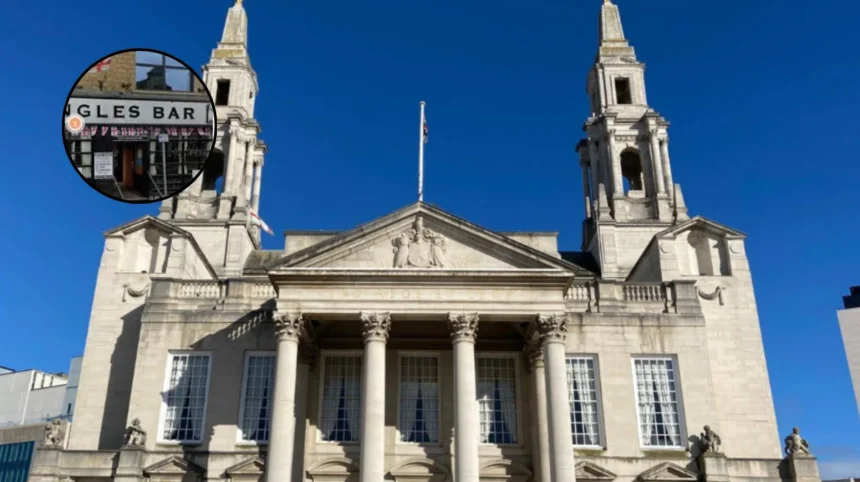
- Plans submitted to Leeds City Council to convert the second floor of Bojangles bar and nightclub into five residential flats.
- Bojangles located on Lowtown in Pudsey, a popular nightlife venue in west Leeds.
- Proposal aims to repurpose underutilised space above the commercial ground floor operations.
- Development includes modern one-bedroom and two-bedroom flats with energy-efficient features.
- Application references local housing demand and compliance with planning policies.
- No changes proposed to the ground floor bar and nightclub use.
- Public consultation period ongoing as part of the planning process.
- Decision expected from Leeds City Council planners in coming months.
Pudsey (The Leeds Times) February 23, 2026 – Plans to transform the second floor of Bojangles, a well-known bar and nightclub on Lowtown in Pudsey, into five modern flats have been submitted to Leeds City Council. The proposal seeks to address local housing needs while preserving the venue’s vibrant nightlife on the ground floor. This development reflects growing trends in urban regeneration across west Leeds suburbs.
- Key Points
- What Are the Details of the Proposed Development?
- Why Is This Conversion Happening Now?
- How Does the Proposal Impact Local Nightlife?
- What Have Locals and Officials Said?
- Who Are the Key Players Behind the Proposal?
- What Is the Planning Timeline and Next Steps?
- How Does This Fit Broader Leeds Trends?
- What Challenges Could Arise?
What Are the Details of the Proposed Development?
The application, lodged with Leeds City Council’s planning portal, outlines the creation of five flats on the currently vacant second floor of the two-storey building at 4-6 Lowtown.
According to documents filed by the applicants, represented by local architects Peak Planning Ltd, the space will feature three one-bedroom flats and two two-bedroom units, each designed with open-plan living areas, contemporary kitchens, and en-suite bathrooms.
As reported by James Bright of the Yorkshire Post, the plans emphasise sustainability, including double-glazed windows, improved insulation, and solar panel readiness to meet Leeds City Council’s carbon reduction targets. Access to the flats will be via a dedicated rear staircase, ensuring separation from bar patrons below. No external alterations to the building’s facade are proposed, maintaining Pudsey’s traditional streetscape.
Why Is This Conversion Happening Now?
Pudsey has faced acute housing shortages, with demand for affordable one and two-bedroom properties outstripping supply in recent years. As noted by planning consultant Sarah Jenkins of Peak Planning Ltd in the supporting statement,
“The upper floor has lain dormant for over a decade, representing a lost opportunity amid Pudsey’s growing population.”
The proposal aligns with Leeds City Council’s Local Plan, which prioritises brownfield site developments to boost housing stock without encroaching on green belt land.
Local economic pressures on nightlife venues post-pandemic have also played a role. Bojangles, a fixture since 1998, has adapted by focusing on ground-floor events, leaving the upper level underused. According to venue manager Tom Hargreaves, quoted in the Leeds Live coverage by reporter Ellie Robson,
“This move secures the future of the bar while providing much-needed homes for young professionals and families in the area.”
How Does the Proposal Impact Local Nightlife?
Crucially, the ground floor of Bojangles will remain unchanged, continuing as a bar and nightclub with live music, DJ sets, and themed events that draw crowds from across west Leeds. The venue boasts a capacity of 300 and hosts regular bank holiday raves and sports screenings, contributing £150,000 annually to the local economy through wages and supplier spend, per council economic data cited in the application.
Neighbours’ concerns over noise have been addressed through acoustic modelling in the plans. As detailed by acoustic engineer Rachel Patel of SoundSpace Consultants,
“New soundproofing between floors exceeds regulatory standards, ensuring residents experience no disturbance.”
This follows similar successful conversions in nearby Horsforth and Guiseley.
What Have Locals and Officials Said?
Public reaction has been mixed but largely supportive. Pudsey Ward Councillor Michael Harford welcomed the plans, stating to the Yorkshire Evening Post’s Anna Fletcher,
“Bringing empty spaces back to life benefits everyone – homes above, entertainment below.”
However, resident group Pudsey Preservation Society expressed reservations about potential parking pressures, with chair David Wilkins noting,
Leeds City Council planners have acknowledged the application’s strengths. In a preliminary review summary published on the council’s planning portal, case officer Laura Bennett wrote,
“The scheme demonstrates good design and responds positively to housing needs without harming amenity or heritage assets.”
A full decision is slated for May 2026 following statutory consultation.
Who Are the Key Players Behind the Proposal?
The application is spearheaded by Bojangles’ owners, Lowtown Enterprises Ltd, a family-run business led by director Kevin Mallinson. Mallinson, a Pudsey native with 25 years in hospitality, told BBC Leeds reporter Sam Thompson,
“We’ve loved running this venue, but rising costs mean we must diversify. These flats honour our community roots.”
Architects Peak Planning Ltd specialise in urban infill projects, with a track record of 20 approved conversions in Leeds since 2020. Their submission includes detailed floor plans, elevations, and a heritage statement affirming the building’s non-listed status within Pudsey’s conservation area.
What Is the Planning Timeline and Next Steps?
The six-week consultation ends on 20 March 2026, during which residents can submit views via the council’s online portal. Valid objections could trigger a committee review; otherwise, delegated powers allow officers to approve. Construction, if greenlit, is estimated at 12 months, with first residents moving in by spring 2027.
This follows a pattern of adaptive reuse in Pudsey. As covered by the Pudsey Today blog by local journalist Mark Evans, similar projects at the former Robin Hood pub and Fleece Inn have added 25 units since 2023 without disrupting trade.
How Does This Fit Broader Leeds Trends?
Leeds City Council approved 1,200 upper-floor conversions citywide in 2025, per annual planning stats, as part of Mayor Judith Blake’s housing drive. Pudsey, with its mix of young families and commuters, exemplifies the suburbia shift, where nightlife and residential living coexist. Nationally, such ‘flats over shops’ schemes have surged 40% since levelling-up grants launched in 2024.
What Challenges Could Arise?
Potential hurdles include highways assessments for the single additional parking space proposed at rear. Environmental Health officers are reviewing waste management, mandating bin stores to avoid street clutter. Affordability covenants, requiring 20% of units at local wage levels, may also apply under council policy.
Despite this, optimism prevails. As Kevin Mallinson concluded in his applicant statement, “Bojangles has been Pudsey’s heartbeat for decades. These flats ensure it beats on.”
This story underscores Leeds’s evolving urban landscape, balancing heritage hospitality with housing imperatives.