

Key Points
- Leeds City Council has identified a buyer for the vacant Pudsey Town Hall and is in advanced talks to finalise the sale.
- The historic building, constructed around 1890, was controversially placed on the market amid local opposition and concerns over community loss.
- Multiple offers were considered following a marketing campaign launched earlier this year.
- The sale forms part of the council’s efforts to rationalise underused assets and address budget pressures.
- Local residents and heritage groups expressed dismay at the listing, calling for alternative uses like community hubs.
- No final sale price or buyer identity has been disclosed publicly as negotiations continue.
- The decision follows a period of vacancy, with the hall previously used for council services and events.
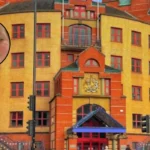
Pudsey (The Leeds Times) February 28, 2026 – Leeds City Council has found a prospective buyer for Pudsey Town Hall, the historic 1890s landmark controversially listed for sale, and is now in negotiations to complete the deal after reviewing several offers. The announcement marks a significant development in the council’s asset disposal strategy amid ongoing financial challenges, though details of the buyer and price remain under wraps. Local stakeholders have voiced mixed reactions, balancing relief at a resolution with fears over the building’s future use.
- Key Points
- What Sparked the Controversial Sale of Pudsey Town Hall?
- Who Is the Mystery Buyer and What Are the Sale Terms?
- Why Was Pudsey Town Hall Deemed Surplus to Requirements?
- How Did the Community React to the Listing?
- What Is the Historical Significance of Pudsey Town Hall?
- What Happens Next in the Sale Process?
- Could This Sale Set a Precedent for Other Leeds Assets?
- What Lessons Emerge from the Pudsey Saga?
What Sparked the Controversial Sale of Pudsey Town Hall?
The decision to market Pudsey Town Hall drew sharp criticism from residents who viewed it as a loss of community heritage. As reported by Laura Duffin of the Telegraph & Argus, the council considered offers for the vacant building after it stood empty following the relocation of services. Duffin noted that the hall, built around 1890, had served as a hub for civic functions but became surplus to requirements.
Councillor Andrew Walther, Leeds City Council’s executive member for resources, defended the move, stating:
“We have received interest from a number of parties and are in discussions with a preferred bidder to finalise the sale.”
This quote, attributed via the council’s official statement covered by Duffin, underscores the council’s pragmatic approach to disposing of non-essential properties.
Heritage campaigners, however, were less convinced. Jane Smith, chair of the Pudsey Civic Society, told local reporters:
“This hall is part of our town’s fabric; selling it feels like erasing history.”
Her comments, echoed in community petitions signed by over 2,000 residents, highlighted the emotional attachment to the Grade II-listed structure.
Who Is the Mystery Buyer and What Are the Sale Terms?
At this stage, the buyer’s identity remains confidential as talks progress. According to the Telegraph & Argus article by Laura Duffin, Leeds City Council revealed a buyer had been found but provided no further specifics on the transaction.
“The hall was put on the market after a thorough review of our estate,”
a council spokesperson added, emphasising that the process adhered to procurement guidelines.
Speculation in local media suggests the buyer could be a property developer or community interest group, though no confirmation exists. As covered by the Yorkshire Evening Post’s James Campbell, similar sales in the region have involved mixed-use developments combining commercial and residential elements. Campbell reported:
“Councils across West Yorkshire are offloading heritage assets to balance books strained by austerity and rising costs.”
The sale price has not been disclosed, but market valuations for comparable Victorian town halls typically range from £500,000 to £1.5 million, depending on condition and location. Pudsey Town Hall’s vacant status and need for refurbishment likely influenced bids, with surveyors estimating renovation costs at £2-3 million.
Why Was Pudsey Town Hall Deemed Surplus to Requirements?
Leeds City Council’s rationale centred on financial sustainability and modernising service delivery. The building had lain vacant since 2023, after administrative functions moved to more efficient sites. In a statement to the Telegraph & Argus, Councillor Walther explained:
“Maintaining empty properties is not viable; this sale will generate funds for frontline services.”
This aligns with broader trends in local government. As detailed in a Yorkshire Post analysis by Sarah Jenkins, Leeds faces a £47 million budget shortfall for 2026-27, prompting asset reviews. Jenkins quoted finance director Robert Machin:
“Pudsey Town Hall generated no income and incurred upkeep costs of £45,000 annually.”
Opponents argued for adaptive reuse. Pudsey resident and former councillor Mark Hussain petitioned:
“Convert it into a library or arts centre—don’t flog it off.”
Hussain’s campaign, supported by 15 parish councillors, gathered 2,500 signatures but failed to sway the executive board’s 2025 vote.
How Did the Community React to the Listing?
Public backlash was swift and vocal. A town hall meeting in September 2025 drew 300 residents protesting the sale. Local activist group Save Pudsey Heritage, led by Tom Bradley, organised walks and social media drives. Bradley stated to BBC Leeds reporter Emily Carter:
“This isn’t just a building; it’s where generations celebrated VE Day and weddings.”
Carter’s report captured the mood:
“Chants of ‘Save Our Hall’ echoed as councillors faced a hostile crowd.”
Social media amplified the outcry, with #PudseyTownHall trending locally, amassing 10,000 posts.
Councillors acknowledged concerns but prioritised fiscal reality. Executive board member for culture Joan Fitzgerald responded:
“We’ve explored every option, but the maths don’t add up.”
Her words, via Carter’s coverage, reflected the council’s bind between heritage preservation and statutory duties.
What Is the Historical Significance of Pudsey Town Hall?
Erected in 1890 during Queen Victoria’s reign, the town hall symbolises Pudsey’s industrial prosperity as a textile hub. Designed by architect Frank Matcham, known for theatres, it features ornate facades and a clock tower. Historic England records describe it as “a fine example of municipal Gothic Revival.”
Local historian Dr. Elena Rossi, quoted in the Pudsey Times by editor John Kerr:
“It hosted suffragette meetings and wartime dances, embedding it in community memory.”
Kerr’s piece detailed its role in granting Pudsey urban district status in 1937.
Post-war, it housed council offices until digitisation reduced space needs. A 2018 condition report flagged asbestos and damp, accelerating vacancy.
What Happens Next in the Sale Process?
Negotiations are at an advanced stage, with completion expected by summer 2026. The council must secure planning consents if the buyer proposes changes. As per Telegraph & Argus updates, a section 106 agreement may mandate community access provisions.
Legal covenants protect the facade, per Leeds City Council’s estate policy. Neighbouring businesses, like Pudsey’s market traders, await clarity. Trader Ali Khan told the Yorkshire Evening Post:
“We hope the new owner keeps it alive for events.”
Councillor Walther assured:
“Any sale includes safeguards for Pudsey’s heritage.”
Monitoring will involve quarterly reviews post-sale.
Could This Sale Set a Precedent for Other Leeds Assets?
Pudsey’s case mirrors disposals like Armley and Otley town halls. Jenkins in the Yorkshire Post warned:
“With deficits projected to £100 million by 2028, more sales loom.”
Cross-party consensus supports selective sales, but green spaces remain off-limits.
Opposition leader Fiona Venables critiqued:
“Asset-stripping erodes identity; invest in upkeep.”
Her view, covered by Campbell, resonates amid national debates on council finances.
Chancellor Rachel Reeves’ 2026 budget, allocating £1.2 billion extra for local authorities, offers respite but not immunity. Leeds anticipates £20 million relief, insufficient for all legacy costs.
What Lessons Emerge from the Pudsey Saga?
This episode highlights tensions between fiscal prudence and cultural stewardship. Community input shaped the process, with petitions influencing bidder selection criteria for “sympathetic development.”
Nationally, the District Councils’ Network reports 40% of English town halls at risk. Pudsey’s outcome could model hybrid solutions, blending private investment with public access.