Key Points
- Financial Unviability: Leeds City Council has stated that Pudsey Market is no longer financially viable in its current form due to a combination of low stall rent revenue and rising operational costs.
- Declining Footfall and Trader Presence: The outdoor market has seen a significant decline in both customers and traders over recent years, leaving many of its stalls empty.
- Upcoming Public Consultation: A public consultation is scheduled for July to gather feedback from shoppers and traders to help secure the market’s future and boost trade.
- Political Call to Action: Pudsey Conservative councillor Simon Seary has urged the local community to participate actively in the consultation to protect the local asset.
- Trader Perspective: Existing stallholders have noted that while there is outside interest from prospective traders, a lack of consistent customer footfall deters them from setting up long-term.
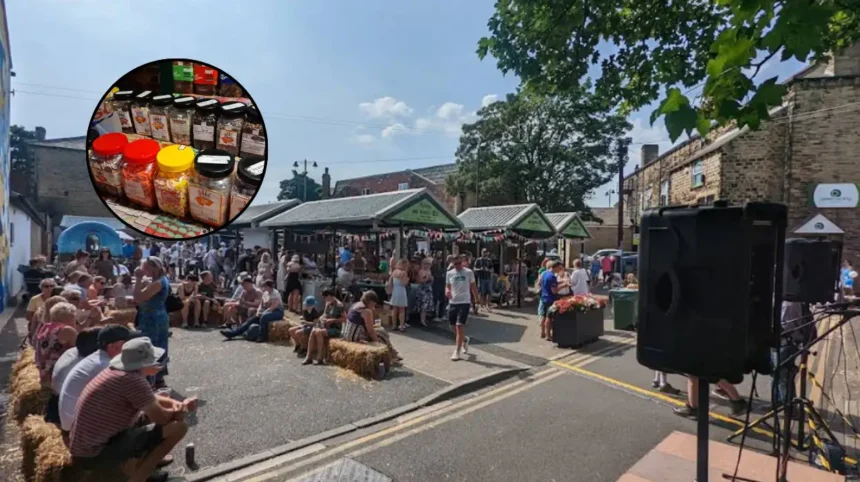
Pudsey (The Leeds Times) June 27, 2026 – Shoppers and traders in Pudsey are being urged by local authorities and political representatives to participate in an upcoming public consultation aimed at determining the long-term future of Pudsey Market. The move follows official acknowledgements that the local market, located in the market town of Pudsey within the City of Leeds metropolitan borough, is experiencing severe economic distress.
- Key Points
- What Factors Are Driving the Financial Decline of Pudsey Market?
- How Have Local Politicians and Traders Reacted to the Crisis?
- What Is the Background of Pudsey Market’s Operational Structure?
- How Will the Market’s Future Affect Local Residents and Small Businesses?
- Impact on Small Businesses and Traders
According to data and reports compiled by the Local Democracy Reporting Service, the outdoor market is currently operating with a significant number of empty stalls, reflecting a steep decline in both customer footfall and active commercial traders over the last few years.
Leeds City Council, the governing local authority responsible for the site’s management and upkeep, has formally stated that the market is no longer financially viable as it currently stands. Council officials have pointed to a structural deficit driven by a combination of low stall rental income and rapidly rising operational costs.
In response to the fiscal shortfall and the dwindling physical presence of the market, the council is launching a public engagement exercise in July. The consultation is designed to gather community feedback, explore potential structural or operational changes, and identify strategies to regenerate local commerce. While the local authority has confirmed the timeline for July, specific logistical details regarding how residents and stakeholders can access and submit their views have yet to be officially released.
What Factors Are Driving the Financial Decline of Pudsey Market?
The operational challenges facing Pudsey Market are rooted in an imbalance between its revenue generation and its ongoing maintenance costs.
As reported by the Local Democracy Reporting Service, Leeds City Council has explicitly identified that the current model of the market cannot sustain itself financially.
For several years, the council has maintained relatively low rental rates for the market’s stalls in an effort to support small businesses and attract local entrepreneurs. However, this low rent ceiling has failed to generate sufficient revenue to offset the broader inflationary pressures and rising municipal costs associated with running an outdoor public market.
The situation has been compounded by a steady exodus of regular stallholders, which has further diminished the council’s primary revenue stream from the site.
Without a stable baseline of occupied stalls, the fixed costs of waste management, site security, licensing administration, and physical maintenance have outpaced the financial intake, leading to the council’s declaration of non-viability.
How Have Local Politicians and Traders Reacted to the Crisis?
The dwindling activity at the market has drawn direct commentary from local political figures and the remaining business owners who rely on the site for their livelihood.
As reported by the Local Democracy Reporting Service, Pudsey Conservative councillor Simon Seary expressed his concern regarding the visible decline of the market during its standard operating days. Pointing to the stark visual evidence of the market’s decline, Councillor Seary stated:
“It’s disappointing to see – this is a Tuesday market and we’ve probably got five or six stalls. Back in the heyday it was full, but over time we have lost a number of stallholders.”
Councillor Seary has used his platform to strongly encourage residents, regular shoppers, and business owners to engage fully with the upcoming July consultation, viewing it as a critical juncture for preserving a piece of Pudsey’s local culture.
The sentiment regarding a lack of momentum is shared by the individuals currently trading on the ground. As reported by the Local Democracy Reporting Service, Shan Ajaib, the business owner who runs the Simply Delish food stall at Pudsey Market, highlighted the cyclical problem of low footfall preventing recruitment of new businesses. Commenting on the hesitance of external vendors to commit to the space, Ajaib stated:
“There are stallholders interested but when they see that no customers are coming they don’t think it’s worthwhile.”
This observation underscores a core logistical hurdle for the market: prospective traders are willing to occupy the empty stalls in theory, but the lack of an established, high-volume customer base makes the financial risk of setting up stock unfeasible.
What Is the Background of Pudsey Market’s Operational Structure?
Pudsey Market has historically served as a central commercial and social hub for the township of Pudsey, operating as a traditional open-air retail space where independent vendors sell fresh produce, household goods, clothing, and artisanal food products.
Historically managed under the broader portfolio of Leeds City Council’s markets division—which also oversees major regional trading hubs such as Kirkgate Market in Leeds city centre—the Pudsey site was designed to foster hyper-local economic resilience.
Over the past decade, British high streets and traditional open-air markets have faced severe systemic pressures.
The growth of online retail platforms, the expansion of large budget supermarket chains, and changing consumer habits have progressively diverted footfall away from smaller township markets. For Pudsey, these macro-economic shifts manifested as a slow but steady decline in weekly visitors.
As footfall dropped, long-standing traders retired or relocated their businesses to high-traffic areas or digital platforms, leaving gaps that the council struggled to fill.
The operational framework, which relies on a symbiotic relationship between high trader density and high consumer volume, began to fracture, leading directly to the current situation where the council must subsidise operational losses from its general municipal budget.
Explore More Pudsey News
Pudsey Firm Wins £7.8m Yorkshire School Contracts Pudsey 2026
Fulneck School Building Goes on Sale in Pudsey 2026
How Will the Market’s Future Affect Local Residents and Small Businesses?
The outcome of the upcoming public consultation and any subsequent restructuring by Leeds City Council will directly impact two primary audiences: the local residents of Pudsey and the independent trading community within West Yorkshire.
For the local community, particularly elderly residents and those without easy access to private transport, the potential downsizing or closure of Pudsey Market could significantly reduce access to affordable, fresh, and locally sourced goods.
Public markets frequently serve as essential community touchpoints that counter social isolation; a further decline or total loss of the market would diminish the social cohesion of Pudsey’s town centre.
Conversely, if the consultation results in a successful modernisation scheme—such as introducing evening operating hours, specialty artisan markets, or integrated community events—residents could see a revitalised town centre that boosts local pride and property appeal.
Impact on Small Businesses and Traders
For independent traders and small business owners, the council’s decisions will dictate economic survival or growth opportunities. If fees are raised sharply to make the market “financially viable,” the remaining micro-businesses, like Simply Delish, may find their profit margins completely erased, forcing them to cease operations or relocate outside of Pudsey.
However, if Leeds City Council utilizes the consultation feedback to implement targeted business support, modernised infrastructure, or digital marketing campaigns to draw shoppers back, it could create a sustainable, low-risk incubator space for new entrepreneurs across Leeds, revitalising the local independent commercial ecosystem.