
Key Points
- Russell & Bromley, a historic footwear retailer founded in 1879, entered administration in January 2026.
- Next acquired the brand, intellectual property, and three prime stores (Chelsea, Mayfair, Bluewater) for £2.5 million, plus £1.3 million for stock, in a pre-pack deal approved by the High Court on 21 January 2026.
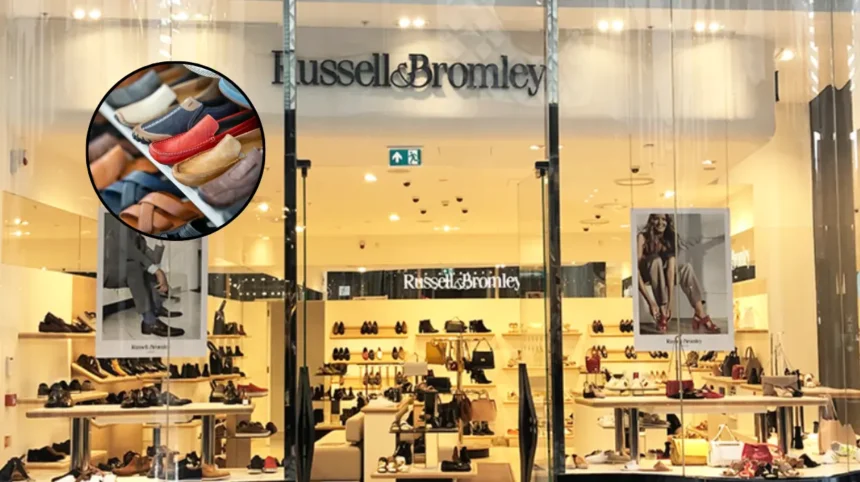
- The acquisition left 33 stores and nine concessions at risk of closure, including the Russell & Bromley branch at Victoria Gate in Leeds city centre.
- All remaining stores and concessions not acquired by Next have now closed as of late April 2026, completing the shutdown process.
- The closures have resulted in an unconfirmed number of redundancies among approximately 320-440 staff previously employed.
- Administrators from Interpath continued trading the stores while seeking buyers but ultimately shut them down.
Leeds city centre (The Leeds Times) May 2, 2026 – A prominent footwear retailer has closed its store at Victoria Gate in Leeds city centre, marking the end of operations for one of 33 branches not saved in Next’s acquisition deal earlier this year.
What Led to Russell & Bromley’s Administration?
Russell & Bromley entered administration in January 2026 after reporting an EBITDA loss of £12.1 million in the 11 months to November 2025, driven by falling sales, rising costs, and challenging retail conditions, including inflation and reduced consumer demand.
As reported by Henry Saker-Clark of Greatest Hits Radio West Yorkshire (published 22 January 2026), administrators confirmed Next bought the brand and certain assets in a pre-pack insolvency deal. The company, founded in 1879 in Sussex, operated 36 stores and nine concessions across the UK and Ireland, employing around 440 people at the time.
Next’s involvement secured only three prime locations: Chelsea, Mayfair, and Bluewater Shopping Centre. Henry Saker-Clark noted that the Leeds shop at Victoria Gate was among 33 at risk of closure unless another buyer emerged. Administrators at Interpath stated they were exploring options for the remaining sites, which continued trading initially.
Which Stores Were Retained by Next?
In a statement quoted by Henry Saker-Clark, Next said:
“This acquisition secures the future of a much-loved British footwear brand. Next intends to build on this legacy and provide the operational stability and expertise to support Russell & Bromley’s next chapter, allowing it to return to its core mission: the design and curation of world-class, premium footwear and accessories for many years to come.”
The retained stores are in Chelsea, Mayfair, and Bluewater. Andrew Bromley, chief executive of Russell & Bromley, said:
“Following a strategic review with external advisers, we have taken the difficult decision to sell the Russell & Bromley brand. This is the best route to secure the future for the brand, and we would like to thank our staff, suppliers, partners and customers for their support throughout our history.”
Will Wright, Interpath’s UK chief executive, added:
“Across its 147-year history, Russell & Bromley has been at the forefront of contemporary style. We’re pleased therefore to have concluded this transaction, which will preserve the brand and the commitment to quality craftmanship that it has become so well known for. Our intention is to continue to trade the remaining portfolio of stores for as long as we can, while we explore the options available.”
What Happened During the Closure Process?
The closure process unfolded in waves after the January deal. As reported by Camilla Rydzek of The Industry. fashion (22 April 2026), Russell & Bromley shut 11 stores initially, including Covent Garden, Exeter, Hampstead, Winchester, Stratford, Birmingham, Jermyn Street, Canary Wharf, Swindon outlet, Ashford outlet, and Cheshire Oaks outlet. Further closures followed, with stores in Bath and Harrogate mentioned in GB News coverage.
By 28 April 2026, Camilla Rydzek reported that all remaining 22 stores and nine concessions at risk had shut down. Interpath confirmed:
“The administrators and their teams are engaging closely with all affected staff and will be providing support throughout the process, including assisting individuals in submitting claims to the Redundancy Payments Service.”
Prior to closures, the retailer employed 320 people, with the majority in non-transferring stores made redundant; exact numbers remain unconfirmed.
The Mirror reported on 28 April 2026 that the final location ceased operations on 23 April, following the initial announcement. Clearance sales with up to 90% discounts were held at closing stores, prompting customer rushes, as noted by the Express.
Why Did the Leeds Victoria Gate Store Close?
The Russell & Bromley branch at Victoria Gate in Leeds was explicitly listed among the 33 at-risk stores post-acquisition. Henry Saker-Clark of Greatest Hits Radio highlighted:
“That leaves the Leeds shop as one of 33 at risk of closure, barring another firm taking them on.”
No buyer emerged for the site, and it closed as part of the final wave by late April 2026. Leeds Live had previously covered Victoria Gate in related retail contexts, underscoring its role in city centre shopping.[ from initial]
This shutdown contributes to ongoing high street challenges in Leeds, where other fashion outlets like Jack Wills and Moda in Pelle have also closed recently.
How Does This Fit Next’s Strategy?
Next’s acquisition aligns with its pattern of buying distressed brands for their intellectual property rather than full store estates. K2 Partners noted the total deal value at £3.8 million, adding to purchases like Joules (£34 million in 2022), Cath Kidston (£8.5 million in 2023), FatFace (£115.2 million in 2023), and Seraphine (£600,000 in July 2025). The strategy leverages Next’s Total Platform for e-commerce and logistics.
BBC coverage on 21 January 2026 confirmed Next owns the brand, three stores, and some stock. This preserves the Russell & Bromley name online and in select physical locations, while physical high street presence diminishes.
Background of the Development
Russell & Bromley traces its origins to 1879 (or 1880 per some reports) in Sussex, establishing itself as a specialist in premium footwear and handbags. Over 147 years, it has built a reputation for quality craftsmanship amid evolving retail landscapes.
The firm faced pressures from declining sales and high fixed costs in recent years, culminating in administration amid broader UK retail woes like inflation and shifting consumer habits. The pre-pack sale to Next in January 2026 preserved the brand essence, but the store rationalisation reflects a pivot to fewer, high-value sites and digital channels.
Prediction: How This Development Can Affect Leeds Shoppers
This closure removes a luxury footwear option from Victoria Gate, potentially reducing choice for Leeds city centre shoppers seeking premium brands in physical stores. Shoppers may shift to online purchasing via Next’s platform or nearby alternatives, altering footfall patterns at Victoria Gate.
Local staff face job displacement, with support via redundancy claims, which could impact household spending in the community. High street vitality in Leeds may see further strain if similar closures continue, prompting retailers to focus on experiential or mixed-use spaces. Consumers holding gift cards or outstanding purchases encounter voided options for closed stores.