
Key Points
- Official Opening: A new 24-hour BP pulse electric vehicle (EV) charging hub and adjacent Starbucks café were officially opened on 31 July 2026 by Councillor Noel Bullock, Mayor of Morley, alongside local community stakeholders.
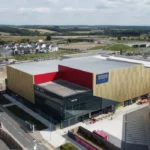
- Strategic Location: Situated on Dewsbury Road (WF3 1JY) next to the Tingley Interchange, five miles south of Leeds city centre, providing direct access to drivers travelling along the M62 and M1 motorways as well as Bradford Road.
- Charging Capacity: Features 19 ultra-fast charging bays, including nine 300kW high-power chargers, capable of delivering rapid charges in under 30 minutes.
- Innovative Design: Introduces BP pulse’s first dedicated “pull-through” charging bay tailored for larger vehicles, including cars towing caravans or trailers, alongside designated accessible bays for disabled drivers.
- Site Facilities: Comprises a drive-thru and sit-in Starbucks café, 13 standard car parking spaces, two accessible parking spaces, cycle storage, customer toilets, air, vacuum, water stations, and screen wash facilities.
- Brownfield Regeneration: Transformed a vacant brownfield site—formerly a public house that had lain abandoned since 2018—utilising 2 x 1.5MVA transformers for high-capacity grid connectivity installed by engineering firm NG Bailey.
- Economic Impact: Created dozens of construction jobs during the development phase and generated 21 permanent full-time roles in retail and customer service.
- Strong Community Support: Public consultation conducted prior to development revealed 76% support for the plans, with 93% agreeing the site benefited from redevelopment and 71% highlighting a shortage of local EV chargers.
Leeds (The Leeds Times) August 12, 2026 – A major new ultra-fast electric vehicle charging hub accompanied by a drive-thru Starbucks café has officially opened near the Tingley Interchange in West Yorkshire, delivering critical infrastructure to one of the region’s busiest motorway junctions. The 24-hour facility, situated on Dewsbury Road between the M62 and M1 motorways five miles south of Leeds, was formally inaugurated on 31 July 2026 during a ribbon-cutting ceremony led by Councillor Noel Bullock, Mayor of Morley, in the presence of local council representatives and project stakeholders. Developed by BP pulse, the flagship site is equipped with 19 ultra-fast charging bays—including nine 300kW units—and hosts BP pulse’s first “pull-through” bay specifically engineered to accommodate longer vehicles, such as cars pulling trailers or caravans. The project represents a comprehensive brownfield regeneration of a site that sat derelict for six years following the closure of a local public house in 2018, bringing 21 permanent retail and service jobs to the local economy.
- Key Points
- Where Is the New BP Pulse EV Charging Hub Located and What Facilities Are Available?
- What Unique Features Does the Tingley Charging Station Offer for Electric Vehicle Drivers?
- How Was the Brownfield Site Transformed and What Infrastructure Was Required?
- How Did the Local Community and Public Consultation React to the Project Proposal?
- What Is the Background Behind the Tingley Interchange EV Charging Hub Development?
- How Will the New Charging Hub Impact EV Drivers and the Local Economy?
Where Is the New BP Pulse EV Charging Hub Located and What Facilities Are Available?
As reported by Forecourt Trader, the newly constructed development is strategically situated at Dewsbury Road, Tingley (postcode WF3 1JY), positioned directly adjacent to the Tingley Roundabout interchange.
This location places the facility five miles south of Leeds city centre at the vital convergence of the M62 and M1 motorways, serving heavy commuter flows across West Yorkshire as well as long-distance cross-country transit between Greater Manchester, South Yorkshire, and the Humber region.
The site operates on a continuous 24-hour basis to ensure round-the-clock access for commercial fleets, local commuters, and long-distance motorists. In addition to the charging infrastructure, the destination incorporates a 323-square-metre retail building housing a sit-in and drive-thru Starbucks café.
The overall layout provides 13 standard car parking spaces, two accessible parking spaces, dedicated cycle parking, and customer lavatories. Driver amenities on-site also feature valeting facilities, including high-powered vacuums, compressed air units, screen wash replenishment points, and water stations.
What Unique Features Does the Tingley Charging Station Offer for Electric Vehicle Drivers?
As detailed by reporting from Forecourt Trader and BP pulse, the Tingley hub features 19 ultra-fast charging bays powered by dynamic energy architecture. Among these, nine bays are outfitted with ultra-rapid 300kW chargers capable of supplying up to 100 miles of driving range in approximately 10 to 15 minutes, depending on the vehicle’s battery management system and state of charge.
A key innovation introduced at the Tingley location is BP pulse’s first pull-through charging bay. Traditional electric vehicle charging bays require drivers to reverse into tight stalls, which creates logistical challenges for light commercial vans, estate cars towing caravans, or vehicles with rear-mounted bike racks and utility trailers.
The pull-through configuration allows longer vehicle combinations to drive directly into and out of the charging lane without unhitching or executing complex maneuvers.
Furthermore, the hub incorporates wide-format accessible charging bays designed in alignment with physical accessibility guidelines, ensuring step-free access and ample clearance for wheel-chair users and drivers with mobility requirements.
How Was the Brownfield Site Transformed and What Infrastructure Was Required?
As reported by engineering contractor NG Bailey, the delivery of the high-capacity EV hub required complex civil engineering and grid integration on a constrained brownfield footprint. Construction involved transforming a former public house property on Dewsbury Road that had remained vacant and disused since its closure in 2018.
To establish the site’s electrical capacity, engineering teams installed ten Alpitronic HYC500 ultra-rapid charging units connected to two high-capacity 1.5MVA electrical transformers, establishing a robust connection to the local distribution grid. During the civil engineering phase, contractors excavated 2,160 tonnes of material.
To minimise environmental impact and reduce haulage emissions, 860 tonnes of the excavated material were processed and re-used directly on-site for sub-base levelling and structural ground preparation.
The site design also incorporated a comprehensive landscaping scheme, retaining existing mature trees while introducing extensive new tree planting and native flora along the perimeter on Dewsbury Road and Bradford Road.
How Did the Local Community and Public Consultation React to the Project Proposal?
As reported by Local Authority Plant & Vehicles (LAPV News), the planning application for the Tingley Interchange facility was preceded by an extensive public consultation process managed by James Cox, associate director at the Leeds office of planning and development consultancy Lichfields.
The consultation surveyed 157 local residents, businesses, and regional stakeholders:
As reported by LAPV News, James Cox of Lichfields stated that
“the public consultation reveals that there is overwhelming support from local people and stakeholders for the development. It has got to be seen as a positive step in the right direction, bringing a disused site back into productive economic use while addressing critical green infrastructure gaps.”
Explore More Local Leeds News
Thorpe Park Rail Station Plans Open For Public Consultation Leeds 2026
West Yorkshire Police Officer Charged With Assault Following IOPC Probe Leeds 2026
What Is the Background Behind the Tingley Interchange EV Charging Hub Development?
The opening of the Tingley Interchange charging hub comes against the backdrop of rapidly expanding electric vehicle adoption across the United Kingdom and concerted efforts by local authorities and private charge point operators to upgrade rapid charging infrastructure along major road networks.
For several years, West Yorkshire local authorities, including Leeds City Council, have sought to address charging deficits along key urban and inter-city corridors.
Prior to the construction of the Tingley hub, the surrounding stretch of the M62 and M1 junction relied primarily on standard rapid chargers or smaller forecourt installations, which frequently experienced queuing during peak travel periods.
Additionally, the brownfield plot at Dewsbury Road had been viewed as a priority regeneration site by Morley local councillors following the closure of the former pub building in 2018.
The site’s conversion represents part of BP pulse’s broader multi-billion-pound investment strategy to roll out thousands of ultra-fast charge points across the UK by 2030, focussing on high-density mobility hubs that pair rapid charging technology with premium food-to-go retail offerings.
How Will the New Charging Hub Impact EV Drivers and the Local Economy?
The operational launch of the Tingley Interchange hub is expected to deliver tangible benefits across several groups, including local residents, regional commuters, fleet operators, and the West Yorkshire economy.
For electric vehicle owners travelling along the M62 and M1 corridors, the addition of 19 ultra-fast bays significantly lowers the risk of charge-point queuing near Leeds. The inclusion of 300kW chargers allows modern EV batteries to recharge during a brief 15-to-20-minute coffee stop at the Starbucks café, seamlessly integrating vehicle charging into routine travel breaks.
Furthermore, the novel pull-through bay resolves a long-standing obstacle for electric commercial vans and light goods vehicles towing trailers, making long-distance electrified transport far more practical.
The transition from a derelict brownfield plot into an active commercial node delivers permanent economic activity to the Tingley area.
Beyond the initial construction jobs generated during civil works, the facility provides 21 permanent full-time positions across retail, barista, maintenance, and customer service roles. The presence of a 24-hour illuminated, well-staffed facility also enhances public safety and visual amenity along the Dewsbury Road corridor.
By strengthening ultra-fast charging provision five miles south of Leeds, the hub directly aligns with Leeds City Council’s climate strategy and regional transport decarbonisation objectives.
The availability of reliable, accessible ultra-fast charging is widely recognised as a crucial factor in encouraging hesitant motorists to transition from petrol and diesel vehicles to electric mobility, reinforcing local and national net-zero road transport ambitions.