

Key Points
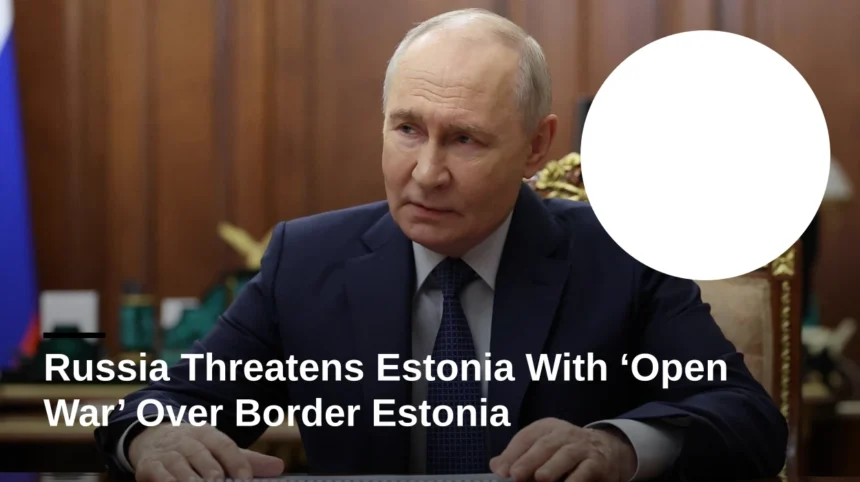
- Russia accused Estonia of actions nearing “open war” after Tallinn announced a six-month border closure.
- Poland reported that a Russian drone briefly entered its airspace during an attack on Ukraine.
- Tajikistan began withdrawing from the International Criminal Court after Russian President Vladimir Putin visited Dushanbe.
- The developments have increased concern about the war’s spillover into NATO territory and pressure on international accountability.
Inverted pyramid:
Tallinn (The Leeds Times) November 24, 2026 – Russia has threatened Estonia with “open war” after accusing the NATO and European Union member of hostile actions, including allegedly allowing Ukrainian drones to use its airspace against Russian targets. The warning followed Estonia’s decision to close its land crossings with Russia for at least six months from December 1. Moscow’s escalation came as Poland reported a brief Russian drone incursion and Tajikistan formally began withdrawing from the International Criminal Court.
Why has Russia threatened Estonia with “open war”?
Russia’s Foreign Ministry accused Estonia of actions “on the verge of triggering open war”, according to reporting by Reuters and other media outlets. Moscow alleged that Estonia had quietly allowed Ukraine to use its airspace to attack targets inside Russia.
Russian officials also summoned an Estonian envoy after Tallinn announced the border restrictions. Estonia has accused Russian security services of attempting to set fire to an Estonian defence company, while Moscow has rejected the wider allegations and described Tallinn’s conduct as hostile.
The dispute marks a sharp escalation in rhetoric between Russia and Estonia, which supports Ukraine and belongs to both NATO and the European Union.
What happened in Polish airspace?
Poland’s armed forces said a Russian unmanned aerial vehicle briefly entered Polish airspace during a Russian attack on western Ukraine. Polish air-defence systems were activated, and authorities reportedly authorised the object to be shot down.
The military decided not to use weapons after the drone changed course and moved eastwards, citing the potential danger to civilians and the consequences of destroying it over populated areas. Polish officials described the incident as a consequence of Russia’s continuing war against Ukraine.
The reported incursion followed claims that Russian missiles had landed in Poland, intensifying concern that fighting could spread into NATO territory.
Why is Tajikistan leaving the International Criminal Court?
Tajikistan notified the United Nations on November 20 that it was withdrawing from the Rome Statute, the treaty underpinning the International Criminal Court. The withdrawal is due to take effect on November 20, 2027, under the treaty’s withdrawal procedure.
The notification date coincided with Russian President Vladimir Putin’s visit to Tajikistan. The International Criminal Court issued an arrest warrant for Putin in March 2023 over alleged responsibility for the unlawful deportation and transfer of Ukrainian children to Russia.
The court said withdrawal would not remove obligations arising while Tajikistan remained a state party. International reporting said Tajikistan had criticised the court as politicised, while the Kremlin has called the warrant against Putin illegal.
What does this mean for the Ukraine war?
The latest incidents show how Russia’s war against Ukraine is creating risks beyond the battlefield. Moscow’s warning to Estonia could increase pressure on a NATO member, while the Polish airspace incident may prompt stronger regional surveillance and air-defence measures.
Tajikistan’s withdrawal could also weaken international efforts to pursue accountability for alleged crimes linked to the war, although it does not erase obligations dating from the country’s membership. Together, the developments are likely to keep NATO governments focused on deterrence, airspace protection and preventing accidental escalation.
Background to the development
Estonia has backed Ukraine since Russia launched its full-scale invasion and has maintained heightened security measures along its border with Russia. NATO states bordering Ukraine and Russia have repeatedly reported airspace incidents, debris and missile or drone activity connected to the conflict. The International Criminal Court’s 2023 warrant for Vladimir Putin remains central to disputes over accountability and travel by countries that recognise the court’s jurisdiction. Tajikistan’s planned withdrawal will take effect after a one-year notice period, but the court has said prior obligations remain in force.
How could the tensions affect the Ukraine war?
The confrontation may lead NATO members to strengthen early-warning systems and coordinate responses to incursions more closely. Russia’s language towards Estonia could also raise the political cost of further border, maritime or airspace disputes in the Baltic region. However, the reported incidents do not by themselves establish that NATO or Russia is entering direct conflict. Their principal effect is to widen the war’s security and diplomatic consequences beyond Ukraine.