

Key Points
- Leeds Rhinos’ latest generation of homegrown academy talent are establishing themselves within the Women’s Super League.
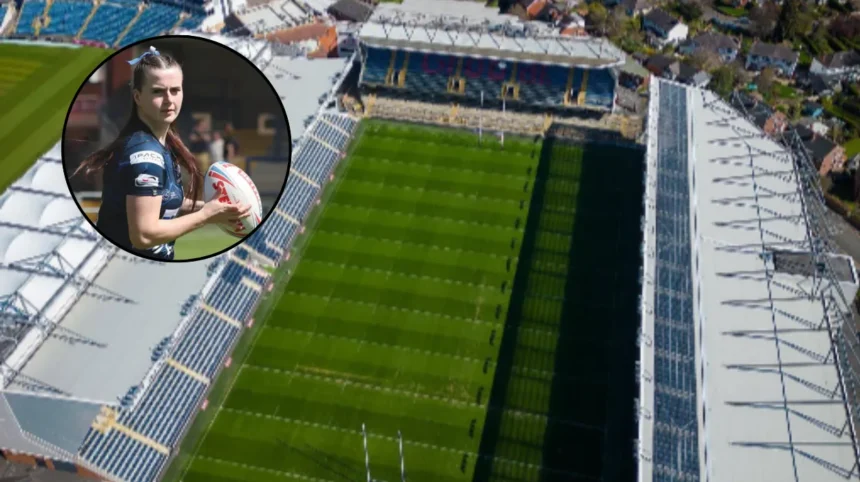
- Outside back Evie Cousins spoke directly regarding her progression through the ranks, her team’s search for major silverware, and her personal breakthrough into international rugby league.
- The emerging group of players in the women’s squad is drawing natural contextual comparisons to the iconic male “Golden Generation” produced by Headingley in the 2000s and 2010s.
- The current squad structure demonstrates how long-term investment in youth development pathways yields elite-level athletes for both club and country.
Leeds (The Leeds Times) September 9, 2026 –As reported by Lorraine Marsden of Rugby League World, Leeds Rhinos’ latest generation of homegrown talent are beginning to make their mark in the Women’s Super League. The emerging squad boasts a strong contingency of players developed internally through local pathways, with young back Evie Cousins featuring prominently among the breakthrough contingent.
As detailed by Lorraine Marsden of Rugby League World, Evie Cousins provided direct insights regarding the squad growing up together through the ranks, their collective ambition of chasing domestic silverware, and her own rapid breakthrough onto the international stage representing her country.
How does this emerging group compare to Headingley’s historic Golden Generation?
As noted by Lorraine Marsden of Rugby League World, historical precedence at the club includes legendary academy products such as Sir Kevin Sinfield, Rob Burrow, Danny McGuire, Jamie Jones-Buchanan, and Carl Ablett. That celebrated group comprised the highly regarded “Golden Generation” of Leeds Rhinos Academy graduates who propelled the Headingley outfit to numerous domestic titles and absolute Super League domination throughout the late 2000s and early 2010s.
As outlined by Lorraine Marsden of Rugby League World, while commentators note it remains unlikely the sport will witness another men’s homegrown unit achieve such comprehensive sustained dominance, the current development pipeline in the women’s system demonstrates similar structural success in fostering elite local talent capable of competing at the highest tier.
Explore More Leeds Rhinos News
Hull FC Facing Severe Player Shortage Against Leeds Rhinos Headingley 2026
Ryan Hall Set For New Leeds Rhinos Contract Deal West Yorkshire 2026
Background of the particular development
The establishment of clear development pathways within women’s rugby league has accelerated rapidly over recent seasons. The Leeds Rhinos development framework was designed to replicate the successful youth structures that historically produced elite male talent at Headingley.
By integrating regional talent hubs and academy systems, the club has systematically transitioned young local players from grassroots environments directly into top-flight Women’s Super League competition. This structural emphasis ensures long-term squad sustainability while maintaining a strong local identity within the playing staff.
Predictions for the future impact on supporters and domestic competition
The steady integration of elite homegrown players like Evie Cousins is predicted to strengthen the competitive standard across the Women’s Super League while building deeper connections with the club’s fan base. For local supporters, seeing academy graduates transition smoothly into first-team starters and international representatives reinforces community pride and validates ongoing investment in youth structures.
Furthermore, as these young athletes gain valuable big-match experience, Leeds Rhinos are expected to remain consistent contenders for major honours, ensuring high-stakes drama and sustained engagement for rugby league audiences nationwide.