
Key Points
- Leeds Rhinos and AMT Headingley Stadium have unveiled plans for a state-of-the-art cancer treatment centre, named Icon Cancer Centre Leeds, to enhance community health beyond rugby.
- The facility aims to address high cancer rates in Leeds, where around 27,000 people live with or beyond cancer, and over 4,000-4,100 new diagnoses occur annually, the highest incidence in Yorkshire.
- It will provide advanced radiotherapy and oncology imaging like PET-CT scans, using cutting-edge technology first in northern England and second in the UK after London.
- The centre integrates with existing Leeds Rhinos Foundation health, wellbeing, and sporting programmes at the stadium.
- Key partners include Icon Group (operator), Caddick Group (stadium owner), Leeds Rhinos, and supporters like Leeds City Council.
- Statements from leaders: Icon CEO Mark Middleton on community-embedded care; Paul Caddick on extending community commitment; Jamie Jones-Buchanan (Leeds Rhinos CEO) on supportive environment; Dame Linda Pollard (advisor) on local impact; James Lewis (Council leader) on Leeds as HealthTech hub.
- Challenges addressed: Long travel for radiotherapy (over 45 minutes for 1 in 5 UK patients), aiming for better access in Yorkshire where a diagnosis every 17 minutes.
- Announcement around late March 2026, with signed agreement during Icon Group visit; further planning ongoing.
- Economic benefits: Job creation, expertise attraction, boosting Leeds as health innovation hub.
Headingley (The Leeds Times) April 6, 2026 – Leeds Rhinos and AMT Headingley Stadium have unveiled ambitious plans for a transformational cancer treatment centre at the iconic venue, marking a significant step in leveraging sports infrastructure for community healthcare. This proposed Icon Cancer Centre Leeds promises state-of-the-art radiotherapy and imaging services, directly tackling the pressing need for accessible cancer care in Leeds and wider Yorkshire, where thousands face diagnosis and treatment challenges annually. The initiative underscores the club’s enduring commitment to public wellbeing, evolving the stadium into a multifaceted hub for health and sport.
- Key Points
- What is the proposed Icon Cancer Centre at AMT Headingley?
- Why is cancer care demand so high in Leeds?
- How does this fit Leeds Rhinos’ community role?
- What do Icon Group leaders say about the project?
- Who else supports the Headingley cancer centre plans?
- What economic and broader impacts are expected?
- When was the announcement made and what’s next?
What is the proposed Icon Cancer Centre at AMT Headingley?
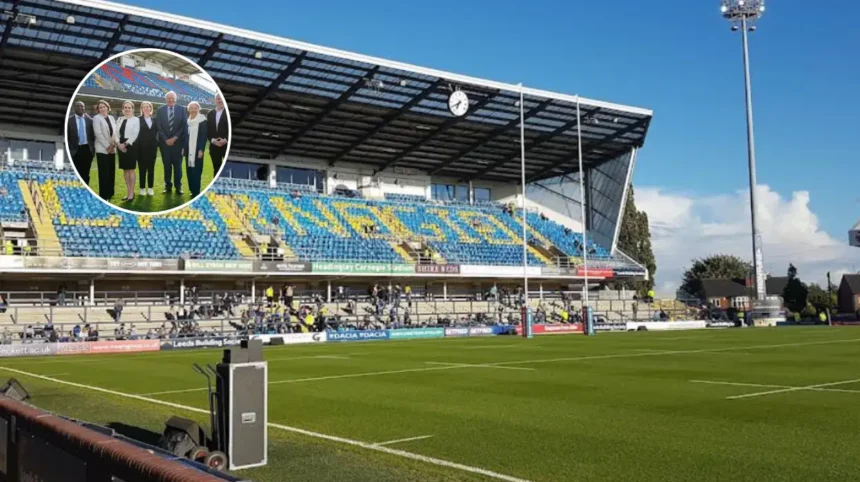
The Icon Cancer Centre Leeds would introduce advanced cancer treatments within the historic confines of AMT Headingley Stadium, integrating seamlessly with ongoing community programmes run by the Leeds Rhinos Foundation.
As detailed in the official Leeds Rhinos announcement, the facility represents more than a standalone clinic; it forms part of a broader health ecosystem that combines elite sport with essential medical services.
Icon Group, the prospective operator, plans to equip the centre with the most advanced radiotherapy technology available, marking the first such installation in northern England and only the second in the UK following their London site.
This includes sophisticated oncology imaging such as PET-CT scans, aimed at improving diagnostic and treatment outcomes for patients. The development responds to national statistics where one in two people face cancer diagnosis, and half require radiotherapy, yet access barriers persist.
Why is cancer care demand so high in Leeds?
Leeds grapples with substantial cancer burdens, with approximately 27,000 residents currently living with or beyond the disease, and more than 4,100 new cases diagnosed each year.
According to the Leeds Cancer Programme, involving Macmillan, the NHS, and City Council, this reflects the city’s position as having Yorkshire’s highest incidence rate, driven by population size, ageing demographics, and regional healthcare demands. Yorkshire sees a cancer diagnosis every 17 minutes, amplifying the urgency for local solutions.
Travel distances exacerbate the issue, as national data indicates over one in five people live more than 45 minutes’ drive from a radiotherapy centre, a figure steeper for public transport users.
As reported by Healthcare DM, survival rates are improving nationally with 60% of cancers diagnosed early, but timely access remains critical amid rising demand. The Leeds Rhinos press release highlights how the stadium’s location could bridge these gaps, bringing vital care closer to home.
How does this fit Leeds Rhinos’ community role?
Leeds Rhinos has long positioned AMT Headingley as a community cornerstone, extending beyond rugby through the Foundation’s initiatives in physical health, mental wellbeing, social inclusion, and resilience. Paul Caddick, chairman of Caddick Group and owner of Leeds Rhinos and AMT Headingley Stadium, stated to Healthcare DM:
“AMT Headingley has always been about more than sport. Through the Leeds Rhinos Foundation and our wider work, we already support physical and mental health, inclusion and community resilience across Leeds.”
He added:
“Creating a space for health initiatives that includes cancer care is a natural extension of that commitment and reflects what this site means to the community.”
Jamie Jones-Buchanan, chief executive of Leeds Rhinos, told the BBC:
“Headingley has united people for generations, and I want those battling cancer to experience that same sense of support as they enter the facility.”
He emphasised:
“When facing a challenge as daunting as cancer, being in a familiar environment can significantly impact one’s experience. This project is designed to aid individuals during their toughest times. I hope visitors feel embraced when they arrive at Headingley.”
This aligns with the club’s vision of the stadium as a health and wellbeing hub.
What do Icon Group leaders say about the project?
Mark Middleton, CEO of Icon Group, explained the strategic fit in Healthcare DM:
“At Icon, our purpose is to improve access to lifesaving cancer care and to do so in a way that genuinely supports people and communities.”
He continued:
“Being part of a health consideration at AMT Headingley allows us to embed cancer care within a broader ecosystem of health, wellbeing and community support – not as a standalone service, but as part of the fabric of Leeds. This also complements Icon’s strong track-record of being an integral part of communities and forming long-term regional partnerships to enable greater access to world-class care.”
Middleton also addressed wait times to the BBC:
“Many individuals often endure lengthy waits to receive radiotherapy. We aspire to be part of the solution.”
Icon has enlisted Dame Linda Pollard, former chair of Leeds Teaching Hospitals NHS Trust, as strategic advisor. She told Healthcare DM:
“Having been a healthcare decision-maker in Leeds for many years, I know how strong and proud this community is and how important access to timely cancer care is for local people.”
Pollard added:
“I’m personally very excited to be part of this announcement. Developments like this, when they are grounded in partnership and shaped by local understanding, can make a real difference for patients and families. I’m pleased to be supporting Icon and Leeds Rhinos who both show a genuine commitment to improving healthcare for the people of Leeds.”
Who else supports the Headingley cancer centre plans?
James Lewis, leader of Leeds City Council, welcomed the proposals in Healthcare DM:
“As a global top three HealthTech hub leading the Government’s flagship health mission, Leeds offers one of the UK’s most interconnected ecosystems. We really welcome the proposals from Icon Group and know their expertise and innovation will strengthen the sector in the city.”
Paul Caddick further noted to the BBC that the stadium’s community significance makes it ideal:
“Headingley holds great meaning for the people of Leeds, and that sense of familiarity can provide comfort when confronting a serious illness like cancer.”
The Leeds Rhinos site describes this as a “defining moment” for AMT Headingley, evolving it into a venue for health support amid 27,000 local cancer cases. Insider Media and other outlets echoed the proposed integration of cancer care with stadium initiatives.
What economic and broader impacts are expected?
Hosting the centre promises job creation, expertise influx, and reinforcement of Leeds’ status as a medical advancement leader in the North, per the Rhinos announcement. It supports economic growth by tying into the city’s HealthTech ecosystem, as Lewis highlighted. The project, signed during an Icon Group visit, positions AMT Headingley where “sport, health and community intersect,” delivering matchday-transcending benefits.
Cancer rehab programmes already at the stadium via the Foundation received praise, hinting at synergies. As plans advance, further engagement will detail timelines and shapes.
When was the announcement made and what’s next?
Plans surfaced around 25 March 2026 via Leeds Rhinos’ therhinos.co.uk, with BBC coverage on 27 March. A formal agreement was signed during Icon’s senior visit to Leeds. Updates will follow planning and consultations, with the Rhinos promising regional impact details.