

Key Points
- Leeds Rhinos beat Wakefield Trinity 40–22 at AMT Headingley to extend their winning run to five Betfred Super League matches.
- Fiji‑born winger Maika Sivo scored a hat‑trick, taking his tally to 19 tries this season and his fourth treble of the campaign.
- Sivo was shown a yellow card in the 38th minute for a high hit on Wakefield full‑back Josh Rourke, leaving Leeds temporarily down to 12 men.
- Leeds captain Ash Handley was also sin‑binned in the second half for a professional foul, testing the Rhinos’ defensive discipline.
- Leeds scrum‑half Jake Connor kicked eight goals from nine attempts and added two penalty goals either side of half‑time to keep the Rhinos ahead.
- Wakefield Trinity scored four tries through Oli Pratt, Tray Lolesio, and Jayden Myers, keeping the contest tight for long spells.
- Leeds Rhinos head into their Challenge Cup semi‑final break as league leaders, having built a five‑match winning streak.
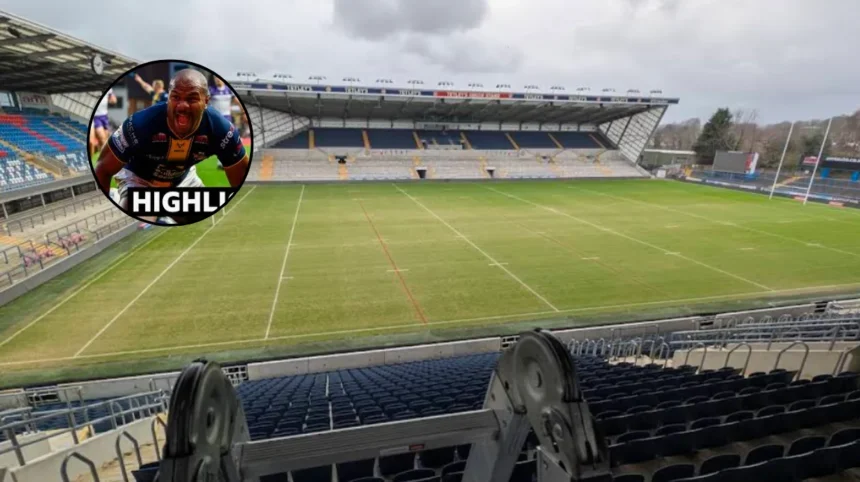
Leeds Rhinos (The Leeds Times) May 4, 2026 Leeds Rhinos fans have defended Maika Sivo after his yellow card in the Rhinos’ 40–22 win over Wakefield Trinity at AMT Headingley on 1 May 2026, hailing his hat‑trick and robust finish while also praising captain Ash Handley’s performance despite his own sin‑bin offence. The result extends Leeds’ unbeaten run in the Betfred Super League to five games as Brad Arthur’s side remain top of the table going into their Challenge Cup semi‑final break.
How did Leeds build their winning start?
As reported by the Leeds Rhinos’ official site, the home side opened the scoring inside five minutes after an early error from Wakefield gifted them a penalty, which Jake Connor chose to take. His successful two‑point goal gave Leeds a 2–0 lead and set the tone for a first‑half display built on pressure and quick transitions.
Maika Sivo underlined his status as the Rhinos’ chief attacking weapon when he pounced on a Wakefield mistake, combining with Keenan Palasia and then Ash Handley to slice through and score in the corner. Minutes later, Leeds were two tries up as Brodie Croft, having briefly left the field for a Head Injury
Assessment was replaced by Cameron Smith, who broke the line before a slick short pass from Connor allowed Kallum Watkins to go over under the posts.
Jake Connor’s control of the game at half‑back was widely highlighted; the Leeds Rhinos match report noted his pivotal role in setting up Sivo’s second try with a long, switch‑play pass that cut Trinity’s defence wide open. Connor’s creativity and accurate passing helped Leeds reach 14–0 before Wakefield began to claw their way back into the contest.
What happened just before half‑time?
Wakefield Trinity’s reply came through a well‑constructed move started by Jake Trueman, whose high kick was gathered by Will Tate and then fed back inside to Oli Pratt, who crossed for his 11th Super League try of the season. The Leeds Rhinos’ official report described the score as a “blip” in an otherwise dominant first half.
Before the break, however, the game’s disciplinary narrative shifted. As outlined by the club’s coverage, a high contact call against Sivo’s challenge on Josh Rourke saw referee Chris Kendall brandish a yellow card, sending the Rhinos winger to the sin bin.
Wakefield immediately capitalised as Tray Lolesio fought through Holroyd and Smith to score, narrowing the deficit to 16–8 at the interval.
BBC Sport’s match report noted that the sin‑binning intensified scrutiny on Sivo’s hit, with images and clips of the incident circulating on social media. The yellow card sparked debate among fans and pundits, some of whom questioned whether the contact warranted a red, while others argued the punishment was proportionate.
How did Leeds respond in the second half?
As detailed in the Leeds Rhinos’ match recap, Connor opened the second half with another penalty goal, restoring Leeds’ advantage to 18–8. Wakefield then pressed hard, with Ash Handley’s professional foul on Rourke for delaying a tackle drawing a yellow card that left Leeds temporarily down to 11 players.
BBC Sport’s coverage described a tense period where Wakefield came within metres of a further score, only for Jayden Myers to ground the ball after a slick move, cutting the margin to 22–18. Leeds’ nerves were tested again when Myers scored a second try just after the hour mark, making the score 28–22 after a missed conversion.
However, Leeds steadied through a combination of composure and opportunism. The Rhinos’ official report highlighted a moment where Trueman’s fifth‑tackle kick fell short, allowing Connor to pounce on the loose ball and find Croft, who ran over for a crucial try to restore a 34–22 cushion.
Why are Leeds fans defending Maika Sivo?
Leeds Rhinos’ supporters have been vocal in defending Sivo, pointing to his attacking impact and the context of his yellow‑card incident rather than treating it in isolation.
As reported by Super League coverage platforms, some fans argue that the hit, while high, was not reckless enough to justify a red card, while others acknowledge the need for referees to protect full‑backs but still credit Sivo’s overall contribution.
The Rhinos’ own coverage of the match underscores Sivo’s value, noting that his hat‑trick took him to 19 tries for the season and marked his fourth treble of the campaign. Supporters on social media and fan‑forum discussions have contrasted the yellow card with Sivo’s defensive effort and work rate, saying his overall impact on the game outweighs the single indiscretion.
Leeds Rhinos coach Brad Arthur has also been quoted in club and media coverage as emphasising discipline while refusing to downplay Sivo’s attacking importance. His comments have fed into the fan narrative that Sivo’s presence on the field is indispensable, even if his aggression occasionally draws cards.
Why is Ash Handley receiving praise despite his yellow card?
Ash Handley’s role as captain has been widely praised, even as the Leeds Rhinos’ own report records his sin‑bin punishment for a professional foul. BBC Sport’s match report described his decision to halt a promising Trinity attack near Leeds’ line as a “risky but necessary” intervention that reflected his leadership under pressure.
Fan forums and social‑media commentary, as covered by rugby league-focused outlets, have highlighted that Handley’s penalty was driven by a desire to protect his team’s lead rather than ill discipline for its own sake. Users have noted that his yellow card came at a time when Wakefield were threatening to level, and that his sin‑bin did not lead to a try, underscoring his timing and understanding of the game.
The Leeds Rhinos match‑day piece also stressed Handley’s influence in attack, describing his “flick pass” that set up Sivo’s opening try and his overall work rate in the back‑three. This combination of attacking spark and defensive intervention has helped cultivate a narrative among Leeds supporters that Handley’s leadership is both vocal and visible, even when it comes at the cost of a yellow card.
How did the closing stages shape the result?
As outlined in the club’s match report, Leeds regained control in the final quarter with a trademark Sivo finish. Good work from Chris Hankinson created space out wide, allowing Sivo to complete his hat‑trick and stretch the advantage to 34–22.
Connor added a third penalty goal following a turnover involving Oledzki, giving Leeds breathing room at 38–22. Even after Jack Bird was sin‑binned for delaying a 20‑metre restart, the Rhinos did not buckle. BBC Sport’s report notes that Leeds closed the game with a final try, as Jarrod O’Connor chipped ahead for Croft to round off a 40–22 victory.
Background of the development
The victory continues Leeds’ re‑emergence as a consistent title‑contending side under Brad Arthur, who has overseen a five‑match winning streak without the use of a major squad overhaul. The Rhinos previously lost to Wakefield in the Betfred Challenge Cup earlier in the season, meaning the league win at AMT Headingley also represented a measure of revenge in the West Yorkshire rivalry.
Maika Sivo’s ascent to the league’s top try‑scorer slot has been a key feature of Leeds’ season, with his power and finishing ability transforming close‑range opportunities into converted scores. At the same time, referee decisions around Sivo’s physical style have drawn attention, with his yellow card against Wakefield adding to a broader conversation about how such contact is policed in the men’s Super League.