

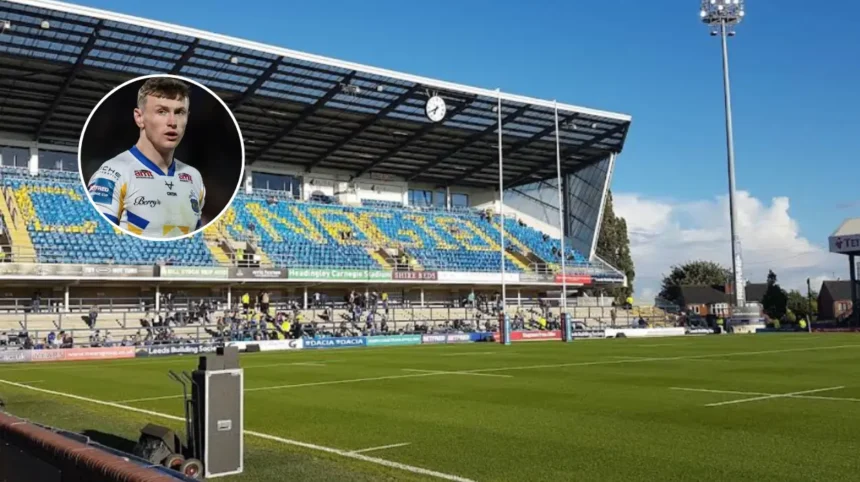
Key Points
- Leeds Rhinos coach Brad Arthur has explained that England international Harry Newman must remain patient and “play the waiting game” for a return to the first‑team matchday squad at Headingley.
- Arthur has publicly backed Newman, insisting the 23‑year‑old winger full‑back has the talent and attitude to succeed but must accept that opportunities are limited in a squad with strong competition for places.
- Newman has dropped behind other options in the pecking order, including experienced internationals and emerging young backs, leaving him on the fringe of the match‑day 17.
- The head coach has urged Newman to focus on training, remain professional, and “do the right thing” off the field while continuing to press for selection.
- Arthur’s comments come amid wider squad‑rotation discussions as Leeds Rhinos look to stay competitive across the Super League and cup competitions.
- Media outlets including the Pocklington Post and other rugby‑league outlets have reported that Newman’s situation reflects the reality of modern Super League squads, where even high‑quality players can find themselves waiting for a chance.
Leeds (The Leeds Times) April 2, 2026 – Leeds Rhinos head coach Brad Arthur has opened up on why England star Harry Newman must continue to play the waiting game at Headingley, saying the 23‑year‑old has to accept “it is a tough position for him” as he battles to regain a place in the first‑team matchday squad.
- Key Points
- Why is Harry Newman ‘playing the waiting game’?
- How is Brad Arthur managing Newman’s role?
- Who is pushing Newman out of the matchday squad?
- What does this mean for Newman’s future at Leeds?
- How are fans and media reacting?
- What has Brad Arthur said about competition in the squad?
- How is Newman responding off the field?
- What does this situation reveal about Leeds’ selection strategy?
- Could Newman force his way back into contention?
- How does this fit into Leeds Rhinos’ wider season picture?
Arthur’s remarks, reported by rugby‑league outlets including the Pocklington Post, underline the squeeze in Leeds’ back‑line resources, where international‑calibre options and form‑based selection have left Newman on the fringe despite his obvious attacking threat. Speaking to the media ahead of the Rhinos’ upcoming fixtures, Arthur sought to balance public honesty with support for a player he openly describes as a talent with a strong character.
Why is Harry Newman ‘playing the waiting game’?
As reported by Paul Smith of the Pocklington Post, Arthur said Newman “has to play the waiting game” at Headingley, explaining that the competition for spots in the Leeds Rhinos back three and wider outside‑back mix has made regular selection difficult.
The head coach noted that while Newman remains a key long‑term figure for the club, he cannot guarantee immediate game time because current form and opponent‑match‑up considerations are influencing selection.
Arthur added that the situation is “a tough position for him” because Newman is an established England international and has shown he can deliver at the highest level when given minutes.
However, the Leeds chief stressed that elite squads now routinely have depth, so even good players often find themselves rotating in and out of the 17‑man matchday squad.
How is Brad Arthur managing Newman’s role?
In the same report, Arthur emphasised that he is backing Newman to “do the right thing” off the field while waiting for his opportunity.
As quoted by the Pocklington Post, the Leeds boss said that discipline, attitude in training, and professionalism are crucial for players in Newman’s position, especially when they are not consistently starting matches.
Arthur explained that he regularly speaks with Newman to make sure he understands the club’s thinking and that the door is not closed; instead, Newman must continue improving and remain ready to jump in when selected. The head coach also highlighted that limited game time does not mean a loss of faith in the player’s ability, but rather a reflection of the strength of the wider squad.
Who is pushing Newman out of the matchday squad?
Although the Pocklington Post article does not list every individual by name, it notes that Leeds have several high‑calibre options across the back‑line, including internationals and younger players who have impressed Arthur in recent weeks.
These players have earned greater priority in the match‑day squad, which has directly affected Newman’s availability on the team sheet.
The report also suggests that tactical setups and opposition‑specific plans have influenced how Arthur uses the wings and full‑back, with some rivals prompting him to favour different combinations than in previous seasons. As a result, even an experienced attacker such as Newman has had to adapt to being rotated or left out altogether for certain fixtures.
What does this mean for Newman’s future at Leeds?
Commenting on Newman’s long‑term future, Arthur told the Pocklington Post that he still sees the player as part of the Rhinos’ plans, provided he responds well to the current situation.
The head coach said that younger players and fringe stars often need periods of patience and trust in the system, and that how Newman handles this spell could be a defining chapter in his career at Headingley.
Arthur also suggested that strong performances in training and, if given the chance, in cameo appearances could quickly change Newman’s standing, since injuries and form shifts are common in the Super League season. The Leeds boss reiterated that Newman’s England pedigree and attacking instincts mean he is far from “finished” with the club, even if he is not currently a guaranteed starter.
How are fans and media reacting?
Local rugby‑league coverage, including the Pocklington Post piece by Paul Smith, has framed Newman’s predicament as a classic example of how depth and competition shape modern Super League squads. The article notes that some fans have expressed surprise that an England‑cap‑winning winger is not an automatic starter, but the report also quotes coaching sources explaining that squad rotation and tactical flexibility are now standard practice.
The Pocklington Post coverage further underlines that Arthur’s comments are intended to manage expectations while backing Newman publicly, a balancing act that many high‑level coaches face when dealing with high‑profile players in competitive squads.
The piece also points out that such situations are rarely permanent, with selection often shifting as the season progresses and injuries or form changes open up spaces.
What has Brad Arthur said about competition in the squad?
In remarks reported by the Pocklington Post, Arthur said that Leeds Rhinos’ squad depth is
“the reality of modern Super League football”
and that he uses that depth to keep intensity in training and to rotate players. He added that competition is healthy and that it forces players like Newman to keep pushing, even when they are not starting.
Arthur also noted that the back‑line mix includes players capable of playing multiple positions, which allows the coaching staff to be more flexible when planning for different opponents. This flexibility, the article explains, has partly contributed to Newman’s current reduced role in the matchday squad.
How is Newman responding off the field?
According to the Pocklington Post, Arthur believes that Newman has so far responded positively off the field, maintaining a professional attitude in training and around the club.
The report quotes the head coach saying that Newman has “the right temperament” for this kind of challenge, even though it is clearly frustrating for a player of his level.
The article adds that Leeds’ staff are monitoring Newman’s mindset closely, as a dip in attitude or effort could quickly change how he is viewed, whereas a strong professional response can strengthen his case for when an opening arises.
Arthur’s comments to the Pocklington Post convey that he expects Newman to continue “doing the right thing” and to trust that consistent hard work will eventually bring minutes.
What does this situation reveal about Leeds’ selection strategy?
The broader context in the Pocklington Post coverage suggests that Leeds Rhinos are deploying a long‑term squad‑management strategy, where rotation and form‑based selection are prioritised over fixed starting line‑ups.
The article notes that such an approach is common in the Super League, where clubs must juggle league and cup commitments across a demanding schedule.
By explaining Newman’s position so openly, Arthur is also trying to set a precedent for other players in the squad, making it clear that even internationals must accept they are not immune to rotation or short‑term exclusions. The Pocklington Post piece frames this as part of a wider effort by Leeds to maintain standards and prevent complacency, even within a group that includes several England‑representative players.
Could Newman force his way back into contention?
In the Pocklington Post report, Arthur hints that Newman can still force his way back into the matchday squad through outstanding training performances and, if given a chance, decisive match‑time contributions.
The head coach said that short‑term in‑form runs often open doors for players who have been on the fringes, and that the club is always open to revisiting selection decisions when warranted.
The article also notes that injuries, suspensions, or tactical shifts can create sudden opportunities, and that players such as Newman are expected to be ready to step in immediately. As quoted by the Pocklington Post, Arthur told the media that he hopes Newman treats this waiting period as a “test of character” and uses it to grow as a player and a professional.
How does this fit into Leeds Rhinos’ wider season picture?
The Pocklington Post coverage situates Newman’s situation within Leeds’ broader aim of remaining competitive in multiple competitions while managing squad fatigue and injury risks. The article explains that Arthur is juggling form, freshness, and opponent‑specific plans, which means that even experienced backs like Newman may be rotated out of the matchday squad on certain weekends.