Key Points
- Leeds Rhinos retained their Grade A licence after finishing second in the 2026 RL Commercial Grading process with a score of 17.03 out of 20.
- Wakefield Trinity secured the top grading with 17.85 out of 20 following their historic Super League Grand Final victory, marking the highest score achieved in 2026 alongside Hull KR’s 2025 record.
- Eight clubs achieved Grade A status for 2027, guaranteeing their places in the top tier: Wakefield Trinity, Leeds Rhinos, Warrington Wolves, Wigan Warriors, Hull KR, Leigh Leopards, St Helens, and Castleford Tigers.
- Catalans Dragons and Hull FC dropped from Grade A to Grade B, moving to ninth and tenth places respectively.
- The catchment pillar was removed for this year’s grading, with points reallocated to the Performance and Finance pillars.
- RFL Chief Executive Ian Nolan highlighted Wakefield’s rise and overall encouraging movement across the sport in digital audiences, attendance, facilities, and community delivery.
Leeds (The Leeds Times) October 8, 2026 –Leeds Rhinos have successfully retained their Grade A licence after being ranked second in the latest RL Commercial Grading process with a final score of 17.03 out of 20. The club’s performance across the five core pillars of fandom, finance, stadium, community, and on-field performance reflected both robust commercial growth and specific infrastructural challenges unique to AMT Headingley Stadium.
The first pillar of fandom saw a slight decrease for the club. While social engagement surged with a 40 percent growth over the year—far surpassing the ten percent threshold for full marks—website visits of nearly 1.4 million narrowly fell short of the 1.5 million threshold required for top marks. Both website visits and general social following grew by over five percent, though they also missed the ten percent threshold for maximum points, alongside a minor loss of 0.25 points for viewership metrics.
How did stadium limitations and on-field results affect the final score?
On the performance front, the Rhinos lost 1.7353 points. Although they initially held a higher standing during indicative gradings after finishing second at the end of the regular season, a semi-final defeat to Warrington Wolves, combined with Wakefield Trinity’s subsequent victories, pushed Leeds down to fourth ranking in the final table.
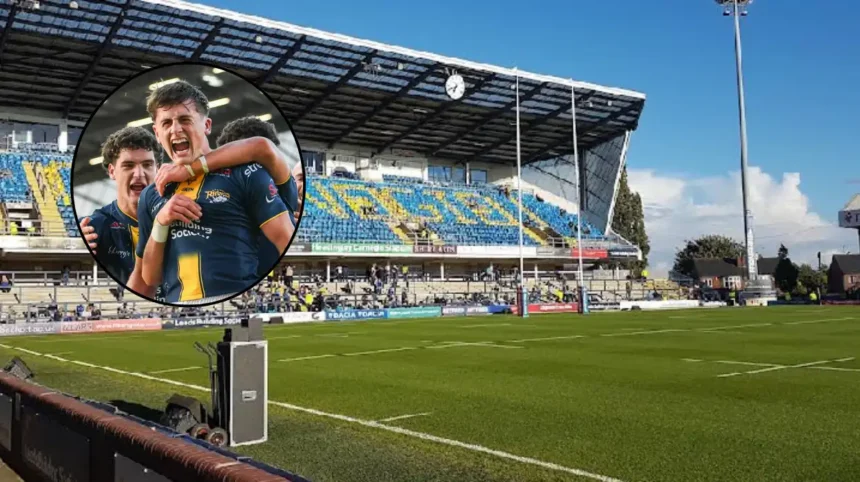
Stadium evaluations revealed ongoing challenges regarding tenancy and utilisation. The Rhinos missed out on 0.25 points due to not having primacy of tenancy, as AMT Headingley operates in cooperation with Yorkshire Cricket Club, Sunrisers Leeds, and international cricket fixtures. Furthermore, stadium utilisation scoring is calculated based on the percentage of capacity used on average across the season rather than raw attendance numbers, penalising larger grounds that do not sell out every week.
Additionally, Leeds received only half the available points for their LED screens because they are 100mm shorter than the modern specification required, despite AMT Headingley being a pioneer in installing stadium-wide LEDs years before current specifications were established.
Who else secured Grade A status for the 2027 Super League season?
Wakefield Trinity captured the top grading with a score of 17.85 out of 20, ending a 58-year wait for title glory by winning the Super League Grand Final. Their score represents the highest achieved by any club in 2026, matching Hull KR’s joint-highest record from 2025. Wakefield recorded the largest year-on-year increase across the competition, gaining 2.38 points, which included 0.75 bonus points awarded for their Grand Final triumph under the performance pillar.
All 14 clubs that featured in the top tier last year retained their positions and are automatically guaranteed a spot in the Super League for 2027. Wakefield became the fourth different club in as many years to claim the top spot since the grading system began, following the Leeds Rhinos in 2023, St Helens in 2024, and Hull KR in 2025.
Behind Wakefield and second-placed Leeds, beaten Grand Finalists Warrington Wolves finished third with 16.72 points, and League Leaders Shield winners Wigan Warriors took fourth with 16.46 points. Last year’s treble winners Hull KR placed fifth on 16.45, followed by Leigh Leopards (16.31), St Helens (15.59), and Castleford Tigers (15.03). Castleford successfully regained Grade A status after rising from 11th place in 2025 to eighth. Conversely, Catalans Dragons (14.83) and Hull FC (14.72) slipped from seventh and ninth to ninth and tenth, dropping from Grade A down to Grade B.
The remaining clubs making up the top 14 are Bradford Bulls (13.93), Huddersfield Giants (13.50), Toulouse Olympique (13.44), and York Knights (13.24), all categorised as Grade B. With completion of the grading process no longer mandatory from 2026 onward, the final standings reflect participating clubs rather than every side across the Super League and Championship.
A dozen Championship clubs took part, with Barrow Raiders ranking highest among them in 15th, Grand Final winners London Broncos moving to 16th, Doncaster RLFC climbing from 23rd to 17th after a strong year-on-year gain of 1.36 points, and Widnes Vikings securing Grade B status.
Explore More Leeds Rhinos News
Leeds Rhinos Target Prop Replacements After Departures in Leeds 2026
Leeds Rhinos Foundation Crowned Rugby League Foundation of the Year in Leeds 2026
What is the background of the club grading development?
The RL Commercial Grading process was introduced to professional rugby league as a framework to measure and drive standards across five core pillars: Fandom, Finance, Stadium, Community, and On-Field Performance. Designed to replace traditional promotion and relegation models with a merit-based licensing system, the framework aims to ensure long-term financial stability, stadium quality, and operational growth for participating clubs.
In previous years, a catchment pillar was included to ensure a geographic spread of teams across the competition, but this category was removed for the 2026 gradings. Consequently, the available points were redistributed, increasing the maximum weight of the performance pillar from five to six points, alongside an additional 0.5 points allocated to the finance pillar, which high-performing clubs like Leeds and Wakefield successfully secured.
The system evaluates clubs annually to determine automatic participation tiers, encouraging continuous investment in infrastructure, fan engagement, and community outreach.
How will this development affect Leeds Rhinos and the wider rugby league audience?
For the Leeds Rhinos and their supporters, retaining a Grade A licence guarantees top-flight Super League rugby at AMT Headingley for the 2027 season without the anxiety of league restructuring.
However, the breakdown of their 17.03 score highlights clear operational targets for the club’s administration moving forward. Addressing stadium utilisation metrics, meeting higher digital audience thresholds to capture full fandom points, and maintaining consistency on the pitch will be vital if Leeds wish to reclaim the top spot from Wakefield Trinity in future grading cycles.
For the broader rugby league audience and participating clubs, the 2026 gradings demonstrate that sustained upward momentum—both on the field through championship success and off the field through facility and digital improvements—is directly rewarded by the RFL framework. As noted by RFL Chief Executive Ian Nolan, the system continues to foster encouraging movement across the professional game, supporting long-term resilience, growing attendances, and enhanced community delivery for fans nationwide.