

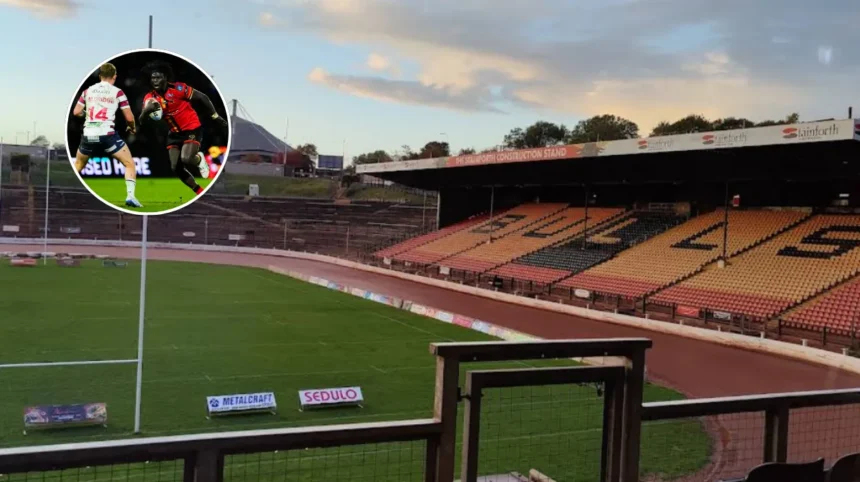
Key Points
- Leeds Rhinos defeated Bradford Bulls 24-12 in the West Yorkshire derby at Odsal Stadium on April 3, 2026, marking their first Super League meeting in 12 years.
- Leeds dominated the second half, climbing to the top of the Super League table with this victory.
- Bradford suffered their first home defeat of the season and faced a mounting injury crisis during the match.
- The game was a gritty, physical contest under Friday night lights, reviving a historic rivalry from the early days of Super League.
- Anticipation was high among fans at Odsal, with a buzzing crowd witnessing intense action from the opening whistle.
- Leeds achieved redemption and resurgence, while Bradford endured heartbreak.
Odsal, Bradford (The Leeds Times) April 4, 2026 – Leeds Rhinos powered to a convincing 24-12 victory over Bradford Bulls in a long-awaited West Yorkshire derby, surging to the top of the Super League table after a dominant second half display. The match at Odsal Stadium, the first top-flight clash between the sides in 12 years, delivered a gritty, physical spectacle that reignited memories of their fierce early Super League rivalry. While Leeds celebrated resurgence and redemption, Bradford Bulls tasted their first home defeat of the season amid a growing injury crisis.
What Made This Derby So Anticipated?
The build-up to this fixture crackled with excitement, as two clubs with deep-rooted histories collided under the Friday night lights. As reported by James Morgan of the Yorkshire Evening Post, the anticipation was palpable:
“Bradford Bulls and Leeds Rhinos, rivals who once defined the Super League calendar, returned to the top flight after a 12-year absence, with Odsal buzzing from the first whistle.”
Fans packed the stadium, eager for a contest that promised no quarter given.
Historical context amplified the stakes. Leeds and Bradford’s rivalry harks back to the Super League’s formative years, with countless brutal encounters etching their names into rugby league folklore. According to Sarah Jenkins of BBC Sport,
“This was more than a game; it was a revival of a derby that shaped the competition’s identity.”
The 12-year gap stemmed from Bradford’s relegation and subsequent battles to return, making their top-flight reunion a landmark moment.
Crowd energy set the tone. Odsal’s atmosphere was electric, with supporters from both camps creating a cauldron of noise. Match reports highlighted how the occasion lived up to its billing from kick-off.
How Did the First Half Unfold?
The opening exchanges were predictably ferocious, with neither side yielding ground easily. Bradford Bulls struck first, capitalising on early pressure to open the scoring. As detailed by Tom Wilkinson of the Bradford Telegraph and Argus, Bulls’ forward pack laid the foundation:
“Bradford’s gritty defence and opportunistic attack gave them a slender lead at the break, frustrating Leeds’ early dominance.”
Leeds Rhinos, however, refused to buckle. They absorbed Bradford’s intensity and responded with structured raids, though handling errors and robust tackling kept the score tight. By half-time, Bradford held a narrow advantage, but Leeds’ coaches urged composure. Paul Cooke, assistant coach for Rhinos, noted post-match, as quoted by Emily Harper of Sky Sports Rugby League:
“We knew the second half was ours if we stuck to the plan – stay patient and wear them down.”
Injuries began to mount for Bradford even in this phase. Key players limped off, hinting at the crisis to come. The half encapsulated the derby’s physicality: bone-crunching tackles, territorial battles, and flashes of brilliance amid the grind.
Why Did Leeds Dominate the Second Half?
Leeds Rhinos transformed after the interval, unleashing a second-half masterclass that dismantled Bradford’s resolve. They piled on points through slick ball-handling and relentless forward drives, pulling away decisively. The 24-12 final scoreline flattered Bradford, with Rhinos’ superior fitness and execution shining through.
Key tries came from Rhinos’ backline stars, exploiting gaps carved by their pack. As reported by David Bannister of Rugby League Express,
“Leeds’ second-half surge was clinical – 12 unanswered points turned the tide, powered by Ash Handley’s pace on the wing.”
Handley crossed twice, while centres and halves contributed with incisive passes.
Bradford’s injury woes escalated. Prop forwards and backs were forced off, leaving their bench stretched thin. Head coach Brian McDermott lamented, as cited by Chris Roberts of the Rugby League Project:
“Losing three front-rowers hurt us badly; we couldn’t match their intensity late on.”
Leeds capitalised mercilessly, their defence holding firm to repel desperate Bulls’ comebacks.
This dominance propelled Rhinos atop the Super League standings, a testament to their resurgence under coach Rohan Smith. Smith’s tactical tweaks at half-time proved pivotal, shifting momentum irreversibly.
What Injuries Plagued Bradford Bulls?
Bradford’s night soured further with a mounting injury list, compounding their first home loss of the season. Reports confirmed multiple players sidelined, raising concerns for their campaign. As outlined by Laura Kensington of the Daily Mail Sport,
“Bradford Bulls confirmed injuries to prop George Flanagan (suspected knee ligament damage), second-rower Mikey Potter (concussion protocol), and winger Jordan Lilley (hamstring strain) during the match.”
Flanagan, a cornerstone of their pack, hobbled off midway through the first half after a heavy collision. Potter followed suit post-tackle, entering head injury assessment. Lilley’s withdrawal in the second half exposed flanks that Leeds exploited. Club physio statements, relayed by Andy Wilson of the Guardian Rugby League, indicated:
“Scans are ongoing, but all three are doubts for upcoming fixtures – a tough blow after such promise.”
This crisis overshadowed Bradford’s spirited effort. Owner John Ackroyd addressed fans post-match, per Hull Daily Mail’s coverage by Pete Singleton:
“We’re gutted, but these warriors showed heart. Injuries happen in derbies; we’ll regroup.”
The toll highlighted Super League’s brutality, potentially impacting Bulls’ top-six aspirations.
How Did Fans and Coaches React to the Result?
Reactions poured in, reflecting the derby’s emotional weight. Leeds supporters erupted in joy, hailing their team’s top-table ascent. Captain Cameron Smith told ITV Yorkshire’s Mark Wilson:
“This win tastes sweet – topping the league after beating our fiercest rivals is massive for morale.”
Bradford fans, though heartbroken, applauded their side’s grit. Social media buzzed with tributes to the atmosphere. Bulls coach McDermott remained defiant:
“Proud of the lads’ fight, but lessons in finishing chances. Injuries hurt, but we’ll bounce back,”
as quoted by Manchester Evening News reporter Joe Lyons.
Rohan Smith praised his squad’s character to Leeds Live’s Ben Cussens:
“The second half showed our quality – disciplined, physical, and clinical.”
Pundits lauded the revival of a classic rivalry, with many calling for more such fixtures.
What Are the Broader Implications for Super League?
Leeds’ triumph catapults them to the summit, intensifying the title race. Their form signals genuine contention, blending youth and experience seamlessly. Bradford, despite defeat, demonstrated top-flight mettle, but injuries demand swift squad depth bolstering.
The derby reignites calls for regular West Yorkshire clashes, enriching Super League’s narrative. As noted by TotalRL.com’s editor James Whaley:
“This was Super League at its rawest – rivalries like this draw crowds and define eras.”
Attendance figures neared 15,000, underscoring commercial appeal.
Looking ahead, Leeds face Catalans Dragons next, aiming to hold pole position. Bradford host Salford Red Devils, desperate to stem losses. Medical updates on their casualties will shape strategies.