Key Points
- Exclusive imagery: A new image shared exclusively with The Yorkshire Post reveals the full scope of Leeds United’s planned Elland Road stadium expansion, including transport links and surrounding housing developments.
- Capacity increase: The redevelopment aims to increase stadium capacity from 37,645 to between 53,000 and 56,500, potentially making it the seventh-largest ground in England.
- Stand renovations: The project involves a major revamp of the West and North Stands, along with changes to the South Stand.
- 2,000 new homes: Leeds City Council’s refreshed planning guidance for land around the stadium could deliver up to 2,000 new homes.
- Multi-billion-pound investment: The wider regeneration is projected to provide a multi-billion-pound boost to Leeds’ economy.
- Transport improvements: Plans include new walking and cycling routes, potential relocation of the park-and-ride, and permission for one or more multi-storey car parks, subject to demand.
- Architect appointed: Specialist sports architect KSS, which previously worked on Liverpool’s Anfield, has been appointed to design the revamped stadium.
- Season ticket demand: The club currently has 26,000 supporters on its season ticket waiting list, a key driver for the expansion.
- Council approval: Leeds City Council’s executive board unanimously agreed to the regeneration vision last week, with a Plans Panel meeting scheduled for 8 May 2025.
- 20-year timeline: The entire development process is projected to span up to 20 years.
- Public consultation: Leeds United is holding two public consultations on its plans in May 2025.
- Promotion context: The club secured promotion to the Premier League after two seasons in the Championship, intensifying demand for stadium expansion.
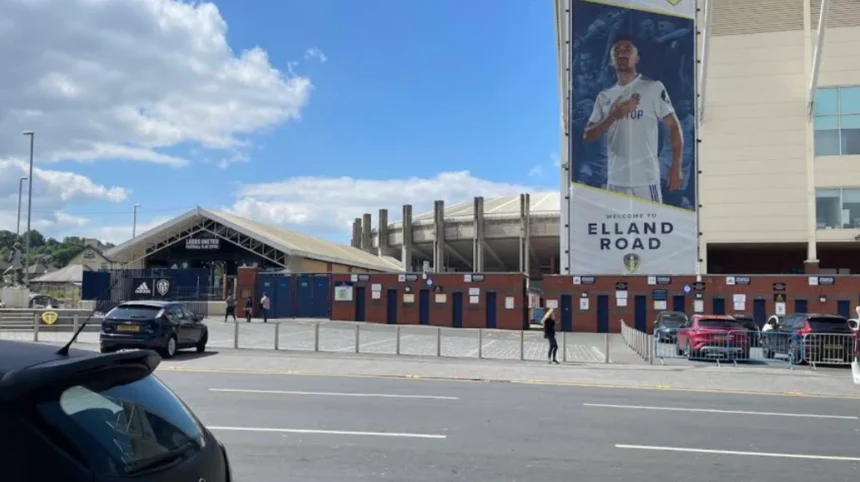
Leeds United (The Leeds Times), May 16, 2026 intends to transform Elland Road into a significantly larger stadium, accompanied by new transport connections and housing developments. The visual, which has not been publicly shown before, outlines the overall site plan for the expansion, including revised stand configurations and the integration of surrounding regeneration land owned principally by Leeds City Council.
- How much will the stadium capacity increase, and why is it needed?
- Who is designing the redevelopment, and what is their experience?
- What does the wider Elland Road neighbourhood regeneration plan include?
- How will transport and parking be handled around the expanded stadium?
- What is the timeline for the redevelopment, and when will fans see changes?
- Why is this redevelopment significant for Leeds and the Premier League?
- Background: How did the Elland Road redevelopment develop?
- Prediction: How will this development affect Leeds United supporters, local residents, and the city of Leeds?
As reported by the team at The Yorkshire Post, the image shows the expanded Elland Road with clear indications of how the West and North Stands will be rebuilt and how the South Stand will be altered. The rendering also depicts new pedestrian and cycling routes designed to improve connectivity between the stadium and the wider city, alongside potential sites for multi-storey car parks and relocated park-and-ride facilities.
How much will the stadium capacity increase, and why is it needed?
Leeds United has outlined plans to modernise Elland Road and increase capacity from 37,645 to up to 56,500, according to proposals approved in principle by Leeds City Council’s executive board.
The estimated final capacity of the design currently in progress is approximately 53,000, with the club aiming to reach 56,500, which would make Elland Road the seventh-largest stadium in England.
The club stated that the revitalisation of the West and North Stands, along with changes to the South Stand, will “greatly improve” general admission and hospitality facilities and help meet the overwhelming demand for tickets.
As reported by Leeds United in its official announcement, there are currently 26,000 supporters on the club’s season ticket waiting list.
Leeds United unveiled the conceptual images on 27 April 2025, following plans first outlined in September 2024 to modernise and improve the stadium.
The Championship club secured promotion to the Premier League the week before the images were released, after two seasons outside the top flight, which has intensified pressure to deliver a stadium fit for Premier League demands.
Who is designing the redevelopment, and what is their experience?
The practice appointed to design the revamped Elland Road is KSS, a specialist sports architecture firm that has previously worked on the redevelopment of Liverpool’s Anfield stadium and a new training ground for Leicester City.
KSS has been tasked with producing designs that increase capacity while preserving the character of Elland Road.
Leeds United described the project as
“an evolution of what makes Elland Road great,”
rather than a complete rebuild. The design team also includes specialist engineers Buro Happold, project management consultant Risa, and the Lowy Family Group as developer for the wider regeneration of the area.
What does the wider Elland Road neighbourhood regeneration plan include?
Beyond the stadium itself, Leeds City Council has launched a consultation on refreshed planning guidance for the future regeneration of around 30 acres of land surrounding Elland Road, which is principally owned by the council.
The document, titled the ‘Elland Road 2025 Informal Planning Statement’, could deliver a multi-billion-pound boost to the city’s economy.
As reported by Leeds City Council in its official news release, the proposals include the potential delivery of up to 2,000 new homes alongside high-quality public realm and facilities integrated with surrounding existing communities.
The draft document outlines other acceptable uses, including major new leisure opportunities such as a community sports arena, hotel accommodation, and workspaces, following the internationally recognised trend of using sport and football stadiums as a major catalyst for regeneration and investment.
There is also the potential for educational facilities linked to sport, health, and wellbeing. The council stated that the initiative aims to
“provide new housing, generate employment, and offer significant recreational options, along with community and educational amenities that will benefit both new and established communities”.
How will transport and parking be handled around the expanded stadium?
The proposals outline the future relocation of the temporary park-and-ride currently operating at the Elland Road site. Subject to demand being evidenced, one or more multi-storey car parks could be permitted, which could serve as matchday parking or other uses.
As reported by Leeds City Council, any changes to parking provision would be phased to ensure the local highway network can function on matchdays and minimise any adverse impact on neighbouring communities.
Alongside phased changes to car parking provision, the proposals highlight how the council will improve connectivity between Elland Road and the city, so improvements to walking and cycling routes make it easier and more attractive for people to choose active and sustainable methods of travel.
The council has indicated its intention to engage with local residents regarding potential traffic concerns and aims to enhance active transportation routes to and from Elland Road.
Explore More Leeds United News
Daniel Farke Future Uncertain at Leeds United – Leeds 2026
Leeds United vs Brighton: Final Home Game Secures Top-Flight Status 2026; Leeds
What is the timeline for the redevelopment, and when will fans see changes?
The entire development process is projected to span up to 20 years, according to BBC News coverage of the council’s proposals. Leeds City Council’s executive board unanimously agreed on the design last week, and Councillors are discussing the pre-application for the modernisation of Elland Road Stadium at a Plans Panel meeting on Thursday, 8 May 2025.
Leeds United is holding two public consultations on its plans in May 2025, allowing supporters and local residents to provide feedback on the proposed designs. The club described the unveiled images as “concepts” rather than final approved plans, indicating that further refinement may occur following public consultation.
Why is this redevelopment significant for Leeds and the Premier League?
The Elland Road redevelopment represents one of the most significant development opportunities in the country, with the potential to deliver a multi-billion-pound boost to the city’s economy. The initiative aligns with internationally recognised trends of using football stadiums as catalysts for wider urban regeneration, similar to projects seen in other major European cities.
As reported by BBC News, the first images showing what Leeds United’s Elland Road stadium could look like if expansion plans are given the go-ahead have been released, marking a pivotal moment in the club’s post-promotion strategy.
The initial visuals depict the potential transformation of the venue, contingent upon the approval of expansion plans, and encompass renovations to the West and North Stands, alterations to the South Stand, and improvements to both general admission and hospitality areas.
Background: How did the Elland Road redevelopment develop?
Leeds United first outlined plans in September 2024 to modernise Elland Road and increase capacity from 37,645 to up to 56,500. The club secured promotion to the Premier League in April 2025 after two seasons in the Championship, which intensified the need for a stadium capable of meeting Premier League standards and fan demand.
On 27 April 2025, Leeds United officially unveiled conceptual images for the enhancement of Elland Road, following approval in principle from Leeds City Council’s executive board.
The council’s executive board unanimously agreed to the regeneration vision the week before the images were released, with Councillors scheduled to discuss the pre-application at a Plans Panel meeting on 8 May 2025.
In June 2025, Leeds City Council launched a consultation on refreshed planning guidance for the Elland Road Neighbourhood, covering around 30 acres of land surrounding the stadium.
The ‘Elland Road 2025 Informal Planning Statement’ aims to guide future regeneration by landowners and developers in the area.
In February 2026, an ambitious vision to guide the transformation of land around Elland Road was set to go before senior councillors, reinforcing the long-term nature of the project. The statement emphasises the area’s potential as one of the most significant development opportunities in the country.
The exclusive image shared with The Yorkshire Post in May 2026 represents the first public visualisation of the overall site plan, including transport connections and housing developments, marking a new phase in the redevelopment process.
Prediction: How will this development affect Leeds United supporters, local residents, and the city of Leeds?
The expansion will directly address the 26,000 supporters currently on the season ticket waiting list by increasing capacity to between 53,000 and 56,500. Improved general admission and hospitality facilities are expected to enhance matchday experience, though the 20-year timeline means full benefits will be realised gradually. Public consultations in May 2025 give fans an opportunity to influence final designs.
Up to 2,000 new homes could be built on land surrounding the stadium, potentially changing the demographic and housing landscape of the area. The council has committed to engaging with local residents on traffic concerns and improving walking and cycling routes to minimise disruption. Multi-storey car parks and relocated park-and-ride facilities may reduce on-street parking pressure but could alter traffic patterns during matchdays.
The regeneration is projected to deliver a multi-billion-pound boost to Leeds’ economy, creating employment opportunities and attracting investment in leisure, education, and commercial sectors. Educational facilities linked to sport, health, and wellbeing could benefit both new and established communities. The project positions Leeds as a city using football-led regeneration on the scale seen in other major European cities, potentially attracting further investment beyond the stadium itself.