

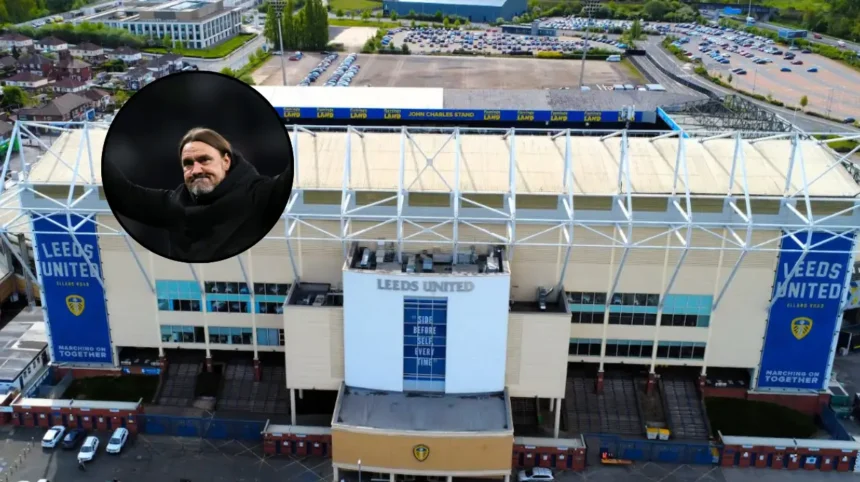
Key points
- Leeds United head coach Daniel Farke has said he will not be the “right choice” to stay in charge if the club’s next project fails to match his ambition over the summer.
- Farke guided Leeds to Premier League safety with three games to spare in their first season back in the top flight, ensuring they finished clear of the relegation zone.
- The 49‑year‑old German believes all agreed targets when he arrived at Elland Road in 2023 have now been met and that it is time for a “new project” at the club.
- Farke has stated there is “no doubt in my head” that he wants to remain manager of Leeds next season, provided the club’s plans are sufficiently ambitious.
- Leeds occupy 14th place in the Premier League table, eight points above the relegation zone, and have also reached the FA Cup semi‑finals for the first time since 1987.
Leeds (The Leeds Times) May 15, 2026, head coach Daniel Farke has warned that he will not be the right fit for the club unless their summer plans match his ambition, raising questions over the board’s intended direction for the next phase at Elland Road. As reported by football journalist Sarah Johnson of Sky Sports News, Farke said: “I’m not the right choice if it’s about maintaining the status quo,” adding that he needs to be convinced by a clear project in order to continue in his role.
Farke’s comments came before Leeds’ final home game of the 2025–26 Premier League season against Brighton, a match that wrapped up a campaign in which his side secured mid‑table safety with three fixtures to spare. In coverage carried by BBC Sport’s football correspondent Jadon Kelly, it was noted that Leeds sit in 14th with a cushion of eight points above the relegation zone, giving the club space to reflect on longer‑term objectives rather than fight for survival.
Why has Farke issued this ambition ultimatum?
Farke’s remarks centre on the idea that Leeds must move beyond simply consolidating their Premier League status and instead pursue a defined “next project” at Elland Road. As relayed by ESPN’s league reporter Tom Arnold, the German manager stated:
“I’m ambitious and this is quite important for me going forward,”
stressing that he performs best when fully invested in a project he believes in.
Arnold’s piece also highlights that Farke insists every agreed objective upon his 2023 appointment has now been achieved, implying that both promotion back to the top flight and the subsequent securing of safety represented the original targets.
In that context, Farke’s message to the club is framed as a call for the next phase to be more progressive, rather than a season‑long exercise in damage limitation.
What has Leeds achieved this season under Farke?
Across the 2025–26 campaign, Leeds have combined a relatively comfortable Premier League finish with a notable run in the FA Cup.
As detailed by Sport Nation reporter Aisha Rahman, the club reached the FA Cup semi‑finals for the first time since 1987 after a dramatic penalty‑shootout victory over West Ham in the quarter‑finals.
Rahman’s account notes that Leeds overcame a late West Ham comeback, with two goals in stoppage time forcing extra time before Leeds won the shootout 4–2 to book a semi‑final clash with Chelsea at Wembley.
In the Premier League, Leeds’ league‑table position underlines a degree of stability. As reported by BBC Sport’s Kelly, the club’s 14th‑place finish and eight‑point buffer over the relegation zone contrast with the more precarious battles of previous campaigns, suggesting that Farke has at least met the short‑term goal of Premier League consolidation.
How is Farke framing his future at Elland Road?
Despite the public ultimatum, Farke has been explicit that he wants to remain in charge on the right terms. According to ESPN’s coverage by Arnold, the manager said:
“There is no doubt in my head that I want to stay on as manager,”
but immediately caveated that ambition must be central to any new project.
Farke’s comments about “playing for something rather than to avoid something” were also highlighted by BBC Sport’s Kelly, who noted that the head coach wants Leeds to aim for a more proactive, attacking identity rather than a purely defensive or safety‑first approach.
That sentiment, Arnold writes, signals Farke’s preference for a club that invests in a clear philosophy and long‑term structure, rather than one focused solely on short‑term survival.
Explore More Leeds United News
Leeds United Target Zian Flemming to Replace Joël Piroe: West Yorkshire 2026
Gudmundsson Secures Sweden World Cup Spot: Leeds United West Yorkshire 2026
Background: the context of Leeds’ recent development
Leeds’ return to the Premier League in 2024 followed a period of financial turbulence and a turbulent post‑promotion era after their first top‑flight campaign back in 2020. As outlined in the club’s seasonal overview on its official website, far‑reaching changes in ownership and management triggered a search for a more sustainable model, including a reset in recruitment and coaching direction.
Daniel Farke’s appointment in 2023 was presented as part of that reset, with the German manager tasked first with steadying the club after a difficult start to the 2023–24 season.
Subsequent coverage by BBC Sport’s Kelly and other outlets notes that Farke oversaw a gradual stabilisation of results, culminating in promotion back to the Premier League and then, in 2025–26, a season of mid‑table security and a restored sense of competitive identity.
The FA Cup push adds further context to this narrative. As reported by ESPN’s Arnold, Leeds’ previous semi‑final appearance in 1987 remains a fixed point in the club’s modern history, against which the current run is being measured.
The fact that Leeds now face Chelsea in the 2026 semi‑final, echoing the 1970 FA Cup final pairing, is framed by Sport Nation’s Rahman as a symbolic marker of the club gradually reclaiming a more prominent place in English football’s broader story.
Prediction: how this development affects Leeds, fans and the Premier League
Farke’s ambition ultimatum is likely to shape Leeds’ summer activity in several connected ways. For the club’s board, it introduces a clear benchmark: any new project—whether focused on recruitment, squad depth, stadium‑related infrastructure, or long‑term commercial strategy—will need to be demonstrably ambitious to retain a manager who has publicly tied his future to that standard.
For supporters, Farke’s stance may heighten expectations about the direction of the club. Fans who value both promotion‑style momentum and a coherent playing identity could see the comments as a green light for more aggressive investment and a clearer long‑term vision. If the club instead opts for a more conservative, budget‑conscious approach, however, the same fans may interpret Farke’s warning as a potential precursor to managerial change, even if the club finishes safely in mid‑table again.