

Key Points
- Unbeaten Start Maintained: Leeds United extended their unbeaten start to the Premier League season to five matches following a hard-fought 0-0 draw against Crystal Palace.
- Defensive Resilience: The clean sheet ensured Leeds head into the international break boasting the division’s meanest goals-against tally, sitting fifth in the Premier League table.
- Pre-Match Warnings Justified: Manager Daniel Farke and defender James Justin had warned that Crystal Palace’s early-season league position did not reflect their true threat, a reality borne out during the match.
- Contested Encounters: Both sides traded long throws, meaty challenges, and yellow cards in a scrappy affair that lacked fluency in a congested midfield.
- VAR Reprieve: Crystal Palace thought they had broken the deadlock through Tyrick Mitchell, only for a VAR intervention to rule the effort out for a tight offside.
- Missed Opportunities: Leeds squandered moments of their own, including a fine save from Walter Benítez to deny Dominic Calvert-Lewin and missed efforts from Ao Tanaka.
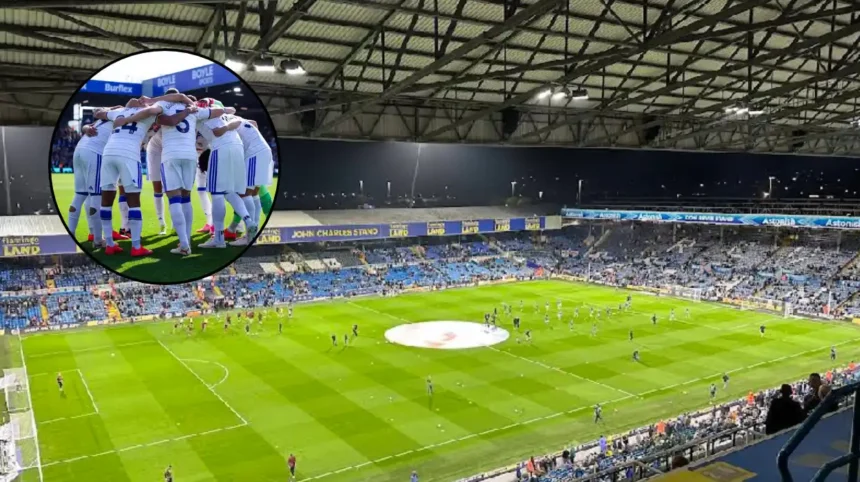
West Yorkshire (The Leeds Times) September 21, 2026 — Following up on a spectacular and high-scoring victory earlier in the week can often prove a tricky psychological hurdle, and so it proved for Daniel Farke’s side on home turf. As reported by Graham Smyth of the official Leeds United media, the emphatic Monday battering of Newcastle United was swiftly followed by a much more humdrum affair as Leeds played out a cautious 0-0 draw against Crystal Palace. While the fixture will not live long in the memory banks of neutral supporters, the resulting point leaves the Whites sitting proudly in fifth place in the Premier League table heading into the extended international hiatus as one of only five unbeaten sides in the division.
How Did Pre-Match Warnings Shape the Encounter at Elland Road?
The spectacular nature of the preceding win over Newcastle naturally fostered a high level of expectation among supporters prior to kick-off. However, manager Daniel Farke and defender James Justin both recognized those external expectations in their pre-game utterances, sounding respective warnings that Crystal Palace’s early points tally from their opening four matches did not tell the full story of their capabilities.
What transpired under the afternoon sun at Elland Road completely backed up that technical caution. Where the Magpies had previously been mauled by the Elland Road outfit, the Eagles arrived prepared to dig in resolutely. Leeds initially started on the front foot, forcing a pair of early free-kicks deep in opposition territory and immediately utilizing Ethan Ampadu’s trademark long throws into the penalty area. Palace successfully defended those initial set-pieces, breaking dangerously off the last one to issue their first warning when Quinten Timber fired a shot well over the crossbar.
What Key Battles Defined the Cagey First Half?
Action swung frantically from end to end during the opening exchanges without either side establishing true control. Tarik Muharemović busied himself at both ends of the pitch within the first 10 minutes, heading over from a corner before sliding in to deny Jørgen Strand Larsen with a perfectly timed and vital challenge inside his own box.
A heavily congested midfield made it exceptionally difficult for either team to string together fluid passing sequences through the central channel. Leeds continued to rely on alternative routes, primarily utilizing Ampadu’s long throws.
One such delivery was flicked toward the back post where Ao Tanaka wrapped his foot around the ball, only to send his effort high over the target. At the opposite end, Daichi Kamada squeezed a low shot through a crowded penalty area, forcing goalkeeper James Trafford into action.
With the majority of promising attacking moments emerging down the left flank, Leeds repeatedly exploited that channel. Gabriel Gudmundsson delivered a dangerous back-post cross met by Jayden Bogle, whose goal-bound shot was smartly blocked by Tyrick Mitchell.
Noah Okafor also grew increasingly influential, sending in a cross that forced goalkeeper Walter Benítez to punch clear, only for Tanaka to once more direct his rebound off target. Despite periods of pressure, the half ended goalless.
How Did Palace Apply Pressure After the Interval?
The opening minutes of the second half initiated a sudden flurry of dangerous moments for the visitors during their first sustained period of pressure. Trafford dropped sharply to tip Yéremy Pino’s curling free-kick around the post, after which Dominic Calvert-Lewin was forced into robust physical defending from the subsequent corner. Kamada then pushed another close-range effort narrowly past the far post.
The mounting pressure appeared to yield a breakthrough when Anan Khalaili burst onto a sharp pass down the right channel, squared the ball across the face of goal, and Mitchell fired it home.
However, a tense VAR intervention reviewed the tightest of offside calls in the build-up, successfully clipping the Eagles’ celebrations and prompting all four sides of Elland Road to roar back into life.
Why Did the Match Fail to Produce a Late Winner?
Leeds quickly revitalized their right flank in response. Bogle utilized quick footwork to beat his marker before releasing James Justin, whose pinpoint cross was met sweetly by Calvert-Lewin, only for Benítez to pull off a superb, acrobatic save.
Despite flashes of attacking enterprise, a truly free-flowing encounter never materialized. Instead, the two teams traded meaty challenges, long spells of physical tussling, and yellow cards distributed to Tanaka and Adam Wharton.
In a match characterized by a lack of sustained control, possession swung back and forth. General sloppiness in possession across the pitch made it remarkably difficult for either side to move the ball quickly enough to pull their opponents out of their defensive shapes.
As the match entered its final 10 minutes, it became glaringly obvious that a single piece of magic would be required to separate the combatants. Justin executed a vital interception to neutralize a dangerous delivery, chesting and poking the ball away while winning a crucial free-kick.
Shortly after, a free header for Kamada bounced agonizingly wide of the far post, eliciting an audible sigh of relief from the home crowd, before Ampadu intervened with another pristine defensive tackle inside his own box.
Late substitutions from Farke—including the introduction of Lukas Nmecha and debutant Jean-Mattéo Bahoya—won valuable free-kicks that induced yellow cards from frustrated opponents, but neither team could fashion a late winner.
Palace also introduced reinforcements, with former Leeds loanee Eddie Nketiah playing substitute Ismaïla Sarr into the area before Muharemović intervened with a decisive final toe-poke. When the final whistle blew, neither side could argue they deserved more than a share of the spoils.
Explore More Leeds United News
leeds united vs crystal palace match report at elland road 2026
Leeds United vs Crystal Palace Goalless Stalemate at Elland Road 2026
Background of the Development
The fixture represented the final round of Premier League matches before the September international break, capping off an intense opening stanza of the 2026/27 campaign. Leeds United entered the season with primary objectives centered on establishing long-term Premier League survival and building a robust, highly competitive identity under Daniel Farke. Having invested heavily in defensive solidity and structural discipline, the club’s early-season trajectory has heavily relied on clean sheets and a resilient spine.
Crystal Palace, meanwhile, arrived under pressure to build momentum following a slow start to their campaign, making the tactical chess match at Elland Road a vital barometer of both clubs’ current developmental stages.
Prediction and Impact on the Audience
For Leeds United supporters and the club’s wider technical staff, this result provides encouraging empirical evidence that the tactical foundations established last season remain firmly intact. While matches like the scoreless draw against Palace may lack immediate aesthetic appeal, the underlying defensive metrics—such as maintaining the division’s meanest goals-against tally—prove that Leeds are extraordinarily difficult to beat. Looking ahead to their upcoming clash away against reigning champions Arsenal on October 10th, this resilience will be severely tested.
However, the capacity to grind out points when performances are sub-par reassures fans that the team possesses the mental fortitude required to comfortably navigate a grueling Premier League campaign without getting dragged into relegation scraps.