

Key Points
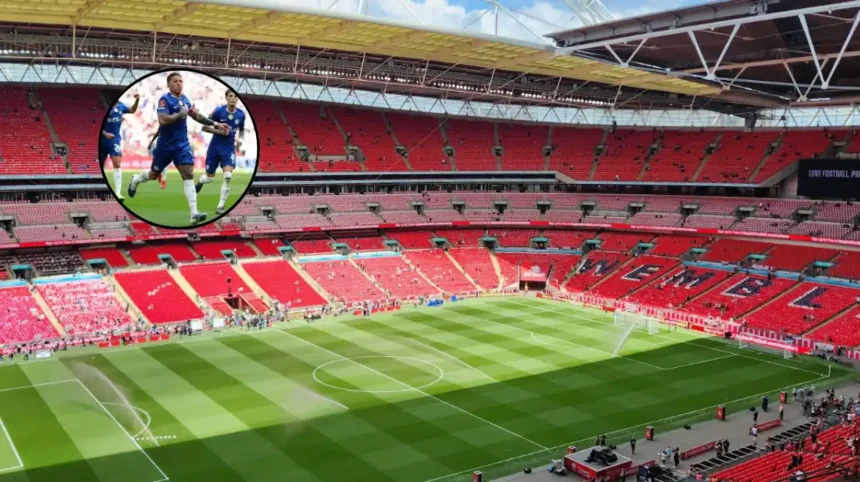
- Leeds United lost 0-1 to Chelsea in a match at Wembley, marking their fourth consecutive defeat at the stadium without scoring since 1919.
- The sole goal came from Enzo Fernández, who headed in a cross from Pedro Neto in the first half.
- Brenden Aaronson missed a significant chance, hitting Robert Sanchez’s foot after a through ball from Dominic Calvert-Lewin.
- Pascal Struijk lost possession leading to the goal following a challenge with Joao Pedro.
- Leeds created moments but failed to convert, with Chelsea dominating possession calmly.
- The loss extends Leeds’ Wembley hoodoo narrative, though described as a streak rather than a curse.
- Historical context includes prior Wembley losses and other playoff defeats, evoking fan memories.
- Performance was viewed as Leeds’ best among the four Wembley defeats, decided by fine margins.
Leeds United (The Leeds Times) April 28, 2026.Leeds, Wembley Stadium – Leeds United 0-1 Chelsea (North London News) April 28, 2026 – Leeds United fell to a narrow 1-0 defeat against Chelsea at Wembley Stadium, extending their unwanted record of four consecutive losses at the national stadium without scoring a goal since 1919. Enzo Fernandez headed the winner for Chelsea from a Pedro Neto cross, sealing the result in a match defined by fine margins.
- Key Points
- What Happened in the Leeds United vs Chelsea Match at Wembley?
- Why Is Leeds United’s Wembley Record Called a Hoodoo?
- How Did Key Players Perform in the Match?
- What Are the Historical Contexts of Leeds’ Wembley Struggles?
- Background of the Development
- Prediction: Impact on Leeds United Fans and Supporters
The game highlighted Leeds’ persistent struggles at Wembley, where they have now played 360 minutes across four defeats without finding the net. As noted in coverage by Rob Burrow of The Square Ball, this statistic marks Leeds as the first club to achieve such a run, breaking records “you really don’t want to break.”
What Happened in the Leeds United vs Chelsea Match at Wembley?
Leeds entered the semi-final carrying historical baggage from previous Wembley outings, including losses to Doncaster and Southampton, both 1-0 defeats. Despite this, the performance stood out as potentially their strongest in those encounters.
Early in the match, Brenden Aaronson received a through ball from Dominic Calvert-Lewin, created as two Chelsea defenders collided.
Aaronson, put through on goal, struck the ball against Robert Sanchez’s foot rather than the open net. Rob Burrow of The Square Ball described this as “The Moment,” drawing parallels to Adam Armstrong’s decisive chance in a prior playoff final two years ago.
Aaronson had shown clinical finishing earlier in the season against Manchester United and Newcastle, but his warm-up shooting practice has often betrayed his limitations in such situations.
Chelsea settled into a rhythm of calm possession after the early slip. Their centre-halves effectively nullified Calvert-Lewin physically. Joao Pedro’s movement troubled Leeds’ defence, hitting the near post after exploiting a sloppy clearing header from Jaka Bijol and getting behind James Justin.
In midfield, Ethan Ampadu and Ao Tanaka struggled to close down opponents. Pascal Struijk was nudged by Pedro Neto during a challenge for a long ball, then clumsily lost possession to Joao Pedro.
Pedro passed to Neto on the right, who crossed for Enzo Fernandez to head past Lucas Perri, standing unmarked between James Justin and Jayden Bogle. These events, eight minutes apart—Aaronson’s miss and Struijk’s error—defined the game’s fine margins.
As reported by Rob Burrow of The Square Ball, Chelsea were “freed up by no longer having to stomach Liam Rosenior’s word soup,” allowing them to control the ball. Leeds created chances to swing the match but fell short, consistent with 1-0 losses in prior Wembley games against Doncaster and Southampton.
Why Is Leeds United’s Wembley Record Called a Hoodoo?
The term “hoodoo” has surfaced in discussions, but Rob Burrow of The Square Ball dismissed it as merely a streak, not a curse. He compared it to the New Zealand Warriors’ 17-match losing run against Melbourne Storm in rugby league, which coach Andrew Webster called a “streak” after they snapped it earlier this month.
Leeds’ Wembley issues extend beyond these four games, evoking broader memories. Fans reminisced about a 3-0 playoff final loss to Watford in Cardiff and a defeat to Charlton in Birmingham.
The semi-final format added emotional weight from Derby in 2019, Millwall in 2009, and Coventry in 1987. Before kick-off, one fan account shared by Burrow involved a pub conversation about the 1977 FA Cup semi-final loss to “Scum,” illustrating how these bruises toughen supporters yet sting afresh.
Burrow noted post-match cliches like
“We didn’t turn up when it mattered”
and blame on manager Daniel Farke. After recording The Match Ball podcast, a fan shouted “Give ‘em hell, Rob!” but the day felt like “purgatory.” Despite this, Leeds showed more threat than in insipid prior defeats.
How Did Key Players Perform in the Match?
Brenden Aaronson’s miss proved pivotal. Dominic Calvert-Lewin provided the assist, but Aaronson’s shot mirrored his practice sessions, lacking precision. Joao Pedro gave Leeds’ backline headaches, contributing to Struijk’s error and the build-up to Fernandez’s goal.
Pedro Neto delivered the cross for the winner. Enzo Fernandez rose unmarked to head past Perri. Chelsea’s defence, including their centre-halves, handled Calvert-Lewin robustly. Robert Sanchez’s foot save preserved the clean sheet.
For Leeds, Jaka Bijol’s header led to Pedro’s chance, James Justin was exposed, and Jayden Bogle failed to track Fernandez. Midfielders Ampadu and Tanaka could not disrupt Chelsea’s play.
Lucas Perri had little to do beyond the goal. Steve Morison and Billy Paynter were referenced by Burrow as past forwards who struggled to score, underscoring the challenge.
What Are the Historical Contexts of Leeds’ Wembley Struggles?
The four-game, goalless Wembley streak spans 30 years, played in isolation. Broader history includes non-Wembley finals like Watford and Charlton. The 1977 FA Cup semi-final loss added to pre-match pub talk.
This season, Leeds have endured winless runs of four games or more three times already. The narrative persists despite fine margins deciding outcomes.
Background of the Development
Leeds United’s Wembley record stems from specific matches since 1919, with the latest four forming the goalless streak: defeats to Doncaster, Southampton, and now Chelsea, plus one prior. These occurred over decades, interspersed with other playoff heartbreaks in Cardiff, Birmingham, and elsewhere. Fan culture embraces these losses as character-building, with memories from 1977, 1987, 2009, and 2019 shared in supporter circles. The “hoodoo” label emerged from media and fan discourse, akin to rugby streaks, but rooted in repeated 1-0 margins where Leeds created but failed to convert.
Prediction: Impact on Leeds United Fans and Supporters
This development reinforces Wembley as a venue of narrow defeats for Leeds United fans, potentially deepening caution ahead of future national stadium appearances. Supporters may experience renewed emotional sting from historical parallels, affecting matchday atmosphere with pre-game reminiscences. For the team, it highlights midfield control and finishing issues, possibly influencing squad adjustments or mentality in high-stakes games. Community engagement, such as pub discussions and podcasts like The Match Ball, could see increased analysis, sustaining fan discourse without altering core loyalty.