
Key Points
- Leeds United’s core strategy never involved signing players on 1 September, as Managing Director Robbie Evans described it as a “terrible idea”.
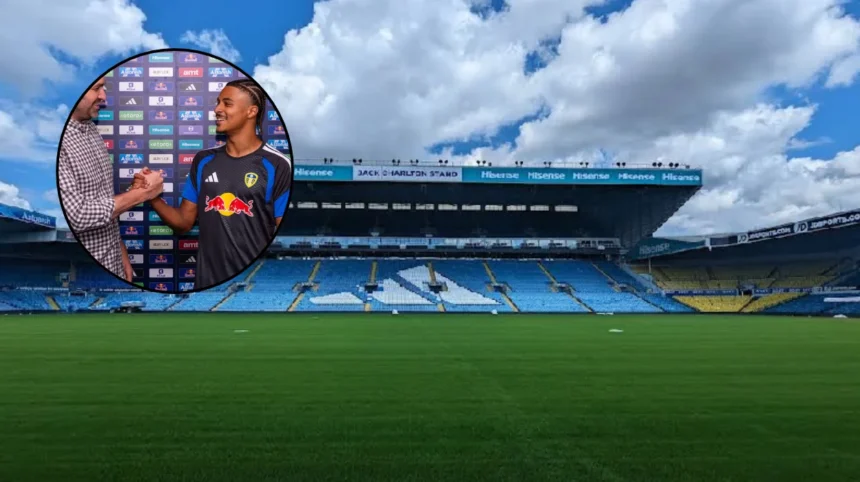
- Despite this, Leeds secured two deadline-day signings: left-back Melvin Bard and winger Jean-Mattéo Bahoya.
- Melvin Bard’s deal was largely agreed the day before, and he landed at Leeds Bradford Airport at 12.55 pm on deadline day to complete his medical and paperwork.
- Sporting Director Adam Underwood noted that Bard had been on Leeds’ radar for over a year, with the move reinforced by an injury to Joe Rodon.
- Leeds pursued Mykhailo Mudryk, but Chelsea’s structuring demands halted the move, leading Mudryk to join Tottenham on loan instead alongside Tosin Adarabioyo.
- The pursuit of a new winger was accelerated by Willy Gnonto’s pending departure to Fiorentina, with the Italian already in Florence awaiting final approval.
Leeds United (The Leeds Times) September 29, 2026 –From the very outset of the summer 2026 transfer window, it was never Leeds United’s intention to sign players on 1 September. As Managing Director Robbie Evans puts it:
“It’s genuinely a terrible idea to make deadline day part of your core strategy, if you can avoid it.”
There are deadline days that come and go without major incident and some that leave a mark, sometimes prompting a haunted look across certain faces inside Elland Road or Thorp Arch, with a high-ranking club official once joking that the words deadline day meant “PTSD.” Some windows become synonymous with the name of a player at the centre of the drama, such as Daniel James, Willy Gnonto, or Harry Wilson, where it took two attempts to secure each Welshman.
How did the deal for Melvin Bard materialize on deadline day?
Despite avoiding a reliance on the final day, Leeds United did sign two players on deadline day: left-back Melvin Bard and winger Jean-Mattéo Bahoya. As Sporting Director Adam Underwood explained: “We had Bard agreed for all intent and purpose the day before. The position had always been a consideration for us. Communicating with Daniel on a daily basis, you get a really clear gauge of where his priorities sit, and the injury to Joe [Rodon] reinforced the fact that we really needed to go and act on that one.” Bard had been on Leeds’ radar for over a year, having played in a pre-season friendly for Nice at Hull City where Leeds sent a scout for a ‘temperature check.’ Underwood added:
“Ultimately when we pushed forward and discussed it deeply with the coaching staff and with Daniel, we got a clear feel that he can be a really good fit and for the role we wanted, he’s ideal.”
On the evening of Monday 31 August, a deal was agreed swiftly with both the Ligue 1 outfit and the player, leaving only his travel, medical, and paperwork for deadline day. Bard landed at Leeds Bradford Airport at 12.55 pm.
How does the club’s operations team manage deadline day logistics?
Matt Robertshaw, Head of First Team Operations, detailed the meticulous preparation involved:
“In the lead up to deadline day, we’re preparing for any potential arrivals, reserving hotel rooms for players, family and agents. We’ll be booking slots for scans and booking vehicles for moving people around, whether that be Leeds or Manchester, depending on whether they need cardiac screening or not. Sometimes on a deadline day, it’s easier just to look at what commercial options there are for flights but normally I would touch base with our broker up at Multiflight [at Leeds Bradford Airport] to try and put them on standby for any potential private jets. As soon as we get the green light from Adam and Robbie, that’s when we’ll execute on a private jet. We were anticipating a signing so I had been speaking to all these different stakeholders. We got Melvin into the country. Then one member of my team looks after the family and the agents. I look after the player and the main agent that wants to be in and around the player. Then we have a third team member floating between the two for any ad hoc requirements.”
Why did the pursuit of Mykhailo Mudryk fail and how did it shift plans?
While Bard was halfway through his medical in the early afternoon, Robertshaw received word of another incoming development. Inside the transfer deadline day ‘war room’ at Thorp Arch training ground—which features a fully functional log-burning fire initially installed for Marcelo Bielsa—club chairman Paraag Marathe, Evans, Underwood, Head of Recruitment Alex Davies, Assistant Sporting Director Andrew Taylor, and First Team Scouting and Recruitment Manager Mark Moran were gathered.
As one transfer possibility cooled entirely, another heated up. Leeds had been pursuing Mykhailo Mudryk, a player keen on a move to Elland Road, but Chelsea’s preferred deal structure ended those hopes. Mudryk instead joined Tottenham on loan alongside Tosin Adarabioyo, who made a permanent move. Underwood noted:
“You never want to give up on the possibility. But as soon as it becomes abundantly clear that it just isn’t going to happen you cut it off. So on deadline day, early doors in this room, you’re rattling through what you think are suitable candidates to revisit with the manager. Ideally at that stage, none of the names are new to a manager because you’re putting on a whole heap of pressure that’s not necessary, unless it’s an exceptional profile. Daniel and his staff have a really good knowledge of the market anyway.”
The urgency to secure another winger was further intensified by the pending departure of Willy Gnonto to Fiorentina, with the Italian having said his goodbyes after the weekend fixture against Brentford and awaiting the green light in Florence.
Explore More Leeds United News
Daniel Farke Leeds United Contract Update, Leeds 2026
Wales Defeated by Denmark in Copenhagen 2026
Background of the Development
The late summer transfer window activity at Leeds United highlights the delicate balance between long-term strategic planning and reactionary adjustments dictated by unforeseen circumstances. Clubs across professional football frequently face compounding pressures during the final hours of the transfer window, where injuries, failed negotiations with rival clubs, and impending departures force leadership teams into high-stakes decision-making environments.
For Leeds United, managing contingencies such as defensive injuries alongside the potential exit of high-profile attacking assets like Willy Gnonto demonstrated how fluid a club’s recruitment blueprint must remain right up until the window shuts.
Prediction
This late window activity and the integration of new signings Melvin Bard and Jean-Mattéo Bahoya directly impact Leeds United’s squad depth and tactical flexibility for the remainder of the campaign.
For the supporters, coaching staff, and the players themselves, the arrival of fresh competition provides crucial cover across defensive and wide positions following key departures and fitness setbacks. How quickly these new additions adapt to the intensity of the squad under management will heavily influence the team’s consistency and overall performance in upcoming fixtures.