

Key Points
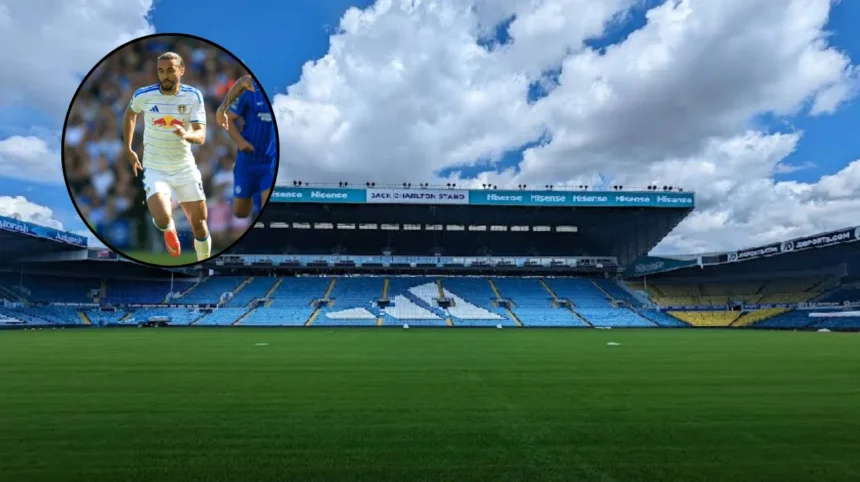
- Gabriel Gudmundsson made his first appearance of the season for Leeds United against Brighton & Hove Albion after recovering from a hamstring injury sustained during pre-season.
- Leeds manager Daniel Farke admitted he was surprised that Gudmundsson managed to play the full 90 minutes at the Amex Stadium given his lack of recent match fitness.
- Both Daniel Farke and Gabriel Gudmundsson highlighted a significant 10-month developmental growth in the squad’s resilience, tactical maturity, and structural stability since previous struggles on the south coast.
- The match concluded in a 1-1 draw after Brighton fought back in the second half, leaving the West Yorkshire club to reflect on a hard-earned away point.
Leeds United (The Leeds Times) September 7, 2026 — headed to the south coast aiming to banish memories of past difficulties, specifically a heavy 3-0 defeat at the Amex Stadium during the previous campaign. As reported by the Yorkshire Evening Post, the Whites arrived at the venue having sought to halt a prolonged winless run at Brighton, yet demonstrated a starkly different level of competitive maturity compared to previous outings. Both manager Daniel Farke and returning defender Gabriel Gudmundsson pointed toward a clear 10-month evolution in the team’s collective resilience, tactical understanding, and physical capability to compete at the highest level.
The fixture itself saw Leeds put on a disciplined display during the opening period, frustrating Fabian Hürzeler’s side before taking a well-earned advantage. Although Brighton mounted significant pressure after the interval to secure a 1-1 equalizer, the overall performance underscored a team infinitely more equipped for Premier League football than the side that struggled on previous visits to the AMEX Stadium.
What did Daniel Farke say about Gabriel Gudmundsson’s unexpected full match?
The return of Gabriel Gudmundsson provided a major boost for the visitors, though his involvement exceeded initial logistical plans mapped out by the coaching staff.
As detailed by Leeds Live, the Swedish left wing-back had missed over a month of action due to a hamstring injury picked up during the club’s pre-season tour of the United States. Daniel Farke confessed that he had originally intended to withdraw the defender around the 60 or 70-minute mark to manage his workload safely.
As reported by The Leeds Press, Daniel Farke stated that
“I wasn’t sure if he could really play all 90 minutes but he looked sharp and good, so I couldn’t afford to take him off.”
Farke further added,
“I was thinking perhaps 60 or 70 minutes but we needed him today. We didn’t want to take any risks at the last minute, we wanted to have some warriors on the pitch who have experience of the Premier League. So for that, it was not a game to bring Melvin Bard in. I’m pleased Gabi came through without any problems.”
How did Gabriel Gudmundsson evaluate his return and the team’s progress?
Gabriel Gudmundsson slotted seamlessly back into the starting lineup, providing defensive stability, winning crucial ground duels, and contributing heavily down the left flank. Speaking on the broader trajectory of the squad, the defender echoed his manager’s sentiments regarding the team’s steep upward curve over the preceding ten months.
Gudmundsson noted that the collective belief within the dressing room has shifted dramatically, allowing Leeds to travel to difficult away grounds with the tactical composure required to handle sustained periods of opposition pressure.
Background of the particular development
The context behind Leeds United’s gradual evolution stretches back through a demanding transition period in the Premier League, where squad depth and tactical flexibility were heavily tested. Over the course of ten months, manager Daniel Farke worked meticulously to alter structural flaws that previously exposed the side against possession-heavy opponents like Brighton & Hove Albion.
Key additions in the transfer market, alongside internal tactical tweaks, transformed players like Gabriel Gudmundsson into vital cogs within a wing-back system. Navigating injuries to core personnel necessitated smart recruitment—such as securing defensive cover late in the window—which ultimately insulated the squad against fatigue and allowed Leeds to measure their developmental milestones against established top-flight opponents.
Prediction
This upward developmental trajectory suggests that Leeds United are increasingly capable of avoiding relegation battles and cementing themselves as a stable, tactically astute Premier League outfit. For the supporters, traveling fans, and the club’s wider audience, this newfound resilience means fewer harrowing away defeats and a much higher competitive ceiling against mid-to-upper-tier opponents.
As squad rotation improves and key players return to full fitness, the team is well-positioned to grind out crucial away points, directly translating into a more comfortable and progressive campaign ahead.